



%20(1).png?width=508&height=121&name=flourish-primary-logo@2x%20(1)%20(1).png)


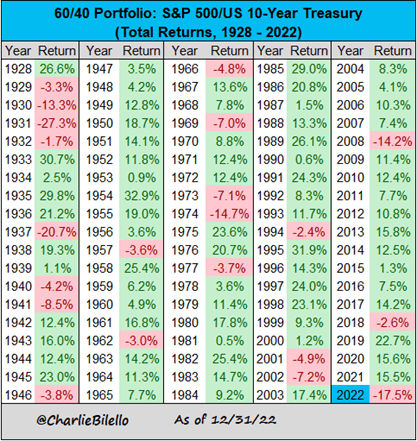
Other asset classes that operate with a lag, like venture capital, private equity, and private debt, sharply marked down their values as well. Even housing prices found their way lower towards year-end. In short, only investors long in commodities stimulated by war profited in 2022. But that was last year.
2023: The Fed vs. Employers
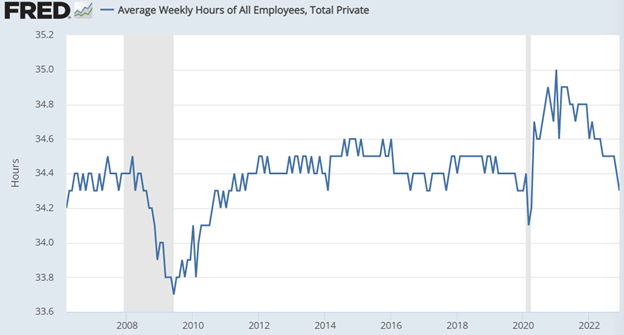
The Fed has a mandate from Congress to throttle the US economy to a pace that maintains price stability and maximum employment. With the US unemployment rate at historic lows, half of the Fed’s Congressional mandate has been met. But with inflation at 7% versus the Fed’s 2% target, half of the Fed’s Congressional mandate has not been completed. Therefore, the Fed has a constitutional obligation to lower price levels. Since stimulus over-throttling in response to COVID caused excessive demand per unit of supply, the Fed must diminish demand. Structurally, 70% of the US economy is consumer based. If you want to lower consumer demand, you must lower consumer wages. But while CPI inflation has fallen over the past six months by 2% from 9% to 7%, wage inflation at 5% hasn’t budged. Getting this number down below 3% is the Fed’s primary objective for 2023. As investors learned in 2022, what the Fed wants, the Fed gets. Unfortunately, a rapid wage decline likely requires a rapid increase in the unemployment rate, meaning the Fed’s mandate to lower inflation has become an employer mandate to fire workers. While it may appear that employers are not complying with the headline as the unemployment rate is pegged at historic lows (3.5%), leading employment data tells us a different story.
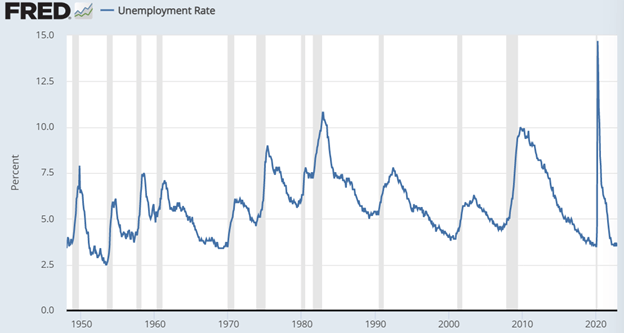
Job openings have declined:
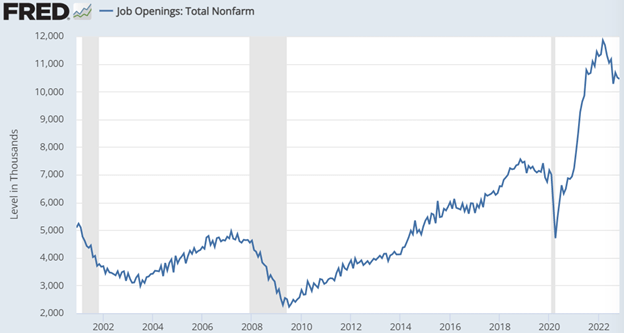
Weekly work hours per employee have declined:
Temporary labor levels have declined:
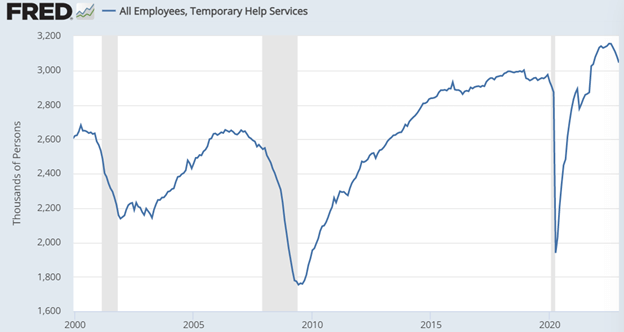
And overtime levels have declined:
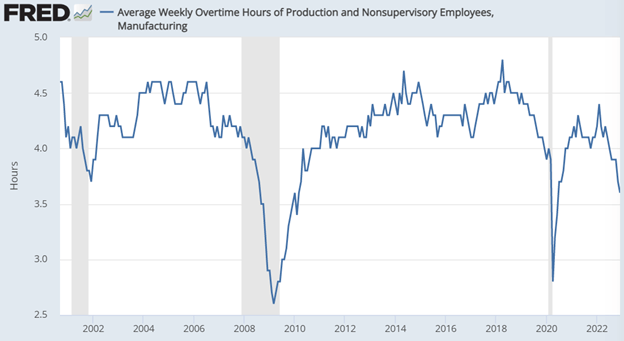
So, while the lagging unemployment rate indicator remains hot, the leading unemployment indicators are cold. Employers have smartly begun complying with the Fed’s unemployment mandate; from here, it’s merely a question of pace. The faster employers shed labor and the faster wages fall, the sooner the Fed completes its disinflationary campaign. Therefore, the MOST IMPORTANT ECONOMIC INDICATOR FOR 2023 is the AVERAGE HOURLY EARNINGS report issued monthly by the Bureau of Labor Statistics (BLS). This report will arrive 12 times this year, on the first Friday of every month. Given the massive policy implications of each release, 2023 will feel like a 12-game playoff season for investors, with each release bound to drive significant upside or downside market volatility.
The first release, and therefore, the first wage playoff game results, arrived Friday morning. And the winner was… Investors!
Wage Playoff Game 1
Average Hourly Earnings fell significantly in December from a previously reported 5.1% to 4.6%, well below the 5% anticipated by economists. Furthermore, the BLS downgraded November’s average hourly earnings gain from 5.1% to 4.8%. These numbers firmly establish a declining wage trend, as seen in the chart below:
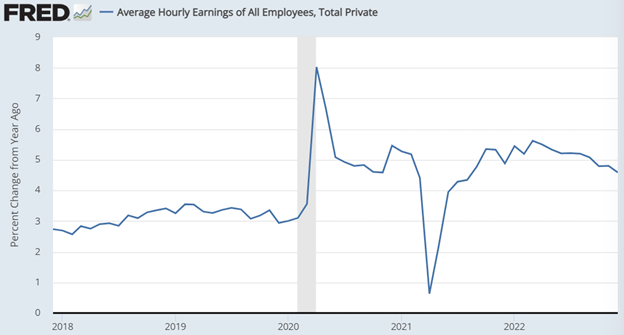
Remember, the Fed wants this number below 3%, likely closer to 2.5%. We will get there faster if employers cut more high-wage jobs proportionally than low-wage jobs. Note the opposite dynamic in the chart above. When COVID quarantine mandates forced consumer services businesses closures (retail, restaurants, theatres, etc.), lower wage unemployment levels skyrocketed. With the rapid elimination of lower-wage workers, average hourly earnings spiked 5%, even as the unemployment rate spiked 10%! It’s possible the opposite could occur now.
Given the structural scarcity of service laborers, employers might prefer eliminating bureaucratic redundancies, technology overstaffing levels, and tenured underperformers proportionately more. If so, the surprise for 2023 could be that wages fall faster than expected, the Fed pivots faster than expected, unemployment rises less than expected, and markets rise instead of fall, contrary to the consensus. It’s possible. But it’s also a long playoff season, and we have 11 more games to go.
Series score to date: Bulls 1, Bears 0.
Have a great Sunday!
Sources: BLS, FRED Database, Bloomberg
">Happy New Year?
Other asset classes that operate with a lag, like venture capital, private equity, and private debt, sharply marked down their values as well. Even housing prices found their way lower towards year-end. In short, only investors long in commodities stimulated by war profited in 2022. But that was last year.
2023: The Fed vs. Employers
The Fed has a mandate from Congress to throttle the US economy to a pace that maintains price stability and maximum employment. With the US unemployment rate at historic lows, half of the Fed’s Congressional mandate has been met. But with inflation at 7% versus the Fed’s 2% target, half of the Fed’s Congressional mandate has not been completed. Therefore, the Fed has a constitutional obligation to lower price levels. Since stimulus over-throttling in response to COVID caused excessive demand per unit of supply, the Fed must diminish demand. Structurally, 70% of the US economy is consumer based. If you want to lower consumer demand, you must lower consumer wages. But while CPI inflation has fallen over the past six months by 2% from 9% to 7%, wage inflation at 5% hasn’t budged. Getting this number down below 3% is the Fed’s primary objective for 2023. As investors learned in 2022, what the Fed wants, the Fed gets. Unfortunately, a rapid wage decline likely requires a rapid increase in the unemployment rate, meaning the Fed’s mandate to lower inflation has become an employer mandate to fire workers. While it may appear that employers are not complying with the headline as the unemployment rate is pegged at historic lows (3.5%), leading employment data tells us a different story.
Job openings have declined:
Weekly work hours per employee have declined:
Temporary labor levels have declined:
And overtime levels have declined:
So, while the lagging unemployment rate indicator remains hot, the leading unemployment indicators are cold. Employers have smartly begun complying with the Fed’s unemployment mandate; from here, it’s merely a question of pace. The faster employers shed labor and the faster wages fall, the sooner the Fed completes its disinflationary campaign. Therefore, the MOST IMPORTANT ECONOMIC INDICATOR FOR 2023 is the AVERAGE HOURLY EARNINGS report issued monthly by the Bureau of Labor Statistics (BLS). This report will arrive 12 times this year, on the first Friday of every month. Given the massive policy implications of each release, 2023 will feel like a 12-game playoff season for investors, with each release bound to drive significant upside or downside market volatility.
The first release, and therefore, the first wage playoff game results, arrived Friday morning. And the winner was… Investors!
Wage Playoff Game 1
Average Hourly Earnings fell significantly in December from a previously reported 5.1% to 4.6%, well below the 5% anticipated by economists. Furthermore, the BLS downgraded November’s average hourly earnings gain from 5.1% to 4.8%. These numbers firmly establish a declining wage trend, as seen in the chart below:
Remember, the Fed wants this number below 3%, likely closer to 2.5%. We will get there faster if employers cut more high-wage jobs proportionally than low-wage jobs. Note the opposite dynamic in the chart above. When COVID quarantine mandates forced consumer services businesses closures (retail, restaurants, theatres, etc.), lower wage unemployment levels skyrocketed. With the rapid elimination of lower-wage workers, average hourly earnings spiked 5%, even as the unemployment rate spiked 10%! It’s possible the opposite could occur now.
Given the structural scarcity of service laborers, employers might prefer eliminating bureaucratic redundancies, technology overstaffing levels, and tenured underperformers proportionately more. If so, the surprise for 2023 could be that wages fall faster than expected, the Fed pivots faster than expected, unemployment rises less than expected, and markets rise instead of fall, contrary to the consensus. It’s possible. But it’s also a long playoff season, and we have 11 more games to go.
Series score to date: Bulls 1, Bears 0.
Have a great Sunday!
Sources: BLS, FRED Database, Bloomberg
" class="link-chevron">
Friday’s report should reinforce expectations that the Fed will accelerate the tapering of Quantitative Easing at its meeting this next week and potentially raise rates as soon as June 2022. Naturally, some investors fear equity market volatility as the Fed starts to reduce liquidity injections into the system and embarks on a rate-hiking cycle; however, equities historically have held up well during tapering and the start of Fed rate hikes. It is only toward the end of Fed cycles that we tend to get more serious volatility, which is unlikely to be in the next 18 months.
I also think it’s noteworthy that Jerome Powell started his term as Fed Chair in February 2018 and presided over the last cycle of rate hikes including the overtightening and resulting stock market correction during the fourth quarter of 2018. I’m hopeful that lessons were learned.
Omicron
The Omicron variant of Covid-19 first became a news headline and market concern on the day after Thanksgiving and the following week. The S&P 500 saw its worst 2-day performance in over a year and the Volatility Index rose to above 30 for the first time since February. Also, that same week in testimony before Congress, Fed Chair Jerome Powell suggested that inflation was no longer transitory and that the pace of tapering might be accelerated at the Fed’s December meeting. Both contributed to market stress and the risk-off selling mentioned previously.
Thankfully, Omicron-induced pressure has been slightly easing. On Friday, the CDC released a report on the first studied cases in the U.S. and many of the omicron variant infections appear to be mild. They did note that it was a very small sample size (43 cases), it can take several days or weeks before severe symptoms appear in some individuals, and symptoms would be expected to be milder in infected vaccinated people and in those with a previous coronavirus infection.
The CDC report aligns with similar early reports from South Africa. The South African Medical Research Council reported that most hospitalized patients who tested positive did not need supplemental oxygen, few developed pneumonia, few required high-level care, and few were admitted to intensive care. The average length of hospital stays was below 3 days, compared to 8.5 days over the last 18 months.
BioNTech and Pfizer expect to deliver an Omicron-specific vaccine by March 2022. The companies also reported that in laboratory tests, a three-shot regimen (including the booster) may be just as effective in neutralizing the new Omicron variant as their original two-shot regimen was in neutralizing Alpha.
While it seems highly unlikely that we were ever headed back into a lockdown, social distancing restrictions impacting hospitality, leisure, food & beverage, and entertainment industries as well as the availability of workers all have real economic impacts.
Have a great Sunday!
Timothy W. Ellis, Jr., CPA/PFS, CFP®
Senior Investment Strategist, Wealth Strategist
Sources: JPMorgan, Edward Jones, Bloomberg
">The New Powell Pivot
Friday’s report should reinforce expectations that the Fed will accelerate the tapering of Quantitative Easing at its meeting this next week and potentially raise rates as soon as June 2022. Naturally, some investors fear equity market volatility as the Fed starts to reduce liquidity injections into the system and embarks on a rate-hiking cycle; however, equities historically have held up well during tapering and the start of Fed rate hikes. It is only toward the end of Fed cycles that we tend to get more serious volatility, which is unlikely to be in the next 18 months.
I also think it’s noteworthy that Jerome Powell started his term as Fed Chair in February 2018 and presided over the last cycle of rate hikes including the overtightening and resulting stock market correction during the fourth quarter of 2018. I’m hopeful that lessons were learned.
Omicron
The Omicron variant of Covid-19 first became a news headline and market concern on the day after Thanksgiving and the following week. The S&P 500 saw its worst 2-day performance in over a year and the Volatility Index rose to above 30 for the first time since February. Also, that same week in testimony before Congress, Fed Chair Jerome Powell suggested that inflation was no longer transitory and that the pace of tapering might be accelerated at the Fed’s December meeting. Both contributed to market stress and the risk-off selling mentioned previously.
Thankfully, Omicron-induced pressure has been slightly easing. On Friday, the CDC released a report on the first studied cases in the U.S. and many of the omicron variant infections appear to be mild. They did note that it was a very small sample size (43 cases), it can take several days or weeks before severe symptoms appear in some individuals, and symptoms would be expected to be milder in infected vaccinated people and in those with a previous coronavirus infection.
The CDC report aligns with similar early reports from South Africa. The South African Medical Research Council reported that most hospitalized patients who tested positive did not need supplemental oxygen, few developed pneumonia, few required high-level care, and few were admitted to intensive care. The average length of hospital stays was below 3 days, compared to 8.5 days over the last 18 months.
BioNTech and Pfizer expect to deliver an Omicron-specific vaccine by March 2022. The companies also reported that in laboratory tests, a three-shot regimen (including the booster) may be just as effective in neutralizing the new Omicron variant as their original two-shot regimen was in neutralizing Alpha.
While it seems highly unlikely that we were ever headed back into a lockdown, social distancing restrictions impacting hospitality, leisure, food & beverage, and entertainment industries as well as the availability of workers all have real economic impacts.
Have a great Sunday!
Timothy W. Ellis, Jr., CPA/PFS, CFP®
Senior Investment Strategist, Wealth Strategist
Sources: JPMorgan, Edward Jones, Bloomberg
" class="link-chevron">
Friday’s report should reinforce expectations that the Fed will accelerate the tapering of Quantitative Easing at its meeting this next week and potentially raise rates as soon as June 2022. Naturally, some investors fear equity market volatility as the Fed starts to reduce liquidity injections into the system and embarks on a rate-hiking cycle; however, equities historically have held up well during tapering and the start of Fed rate hikes. It is only toward the end of Fed cycles that we tend to get more serious volatility, which is unlikely to be in the next 18 months.
I also think it’s noteworthy that Jerome Powell started his term as Fed Chair in February 2018 and presided over the last cycle of rate hikes including the overtightening and resulting stock market correction during the fourth quarter of 2018. I’m hopeful that lessons were learned.
Omicron
The Omicron variant of Covid-19 first became a news headline and market concern on the day after Thanksgiving and the following week. The S&P 500 saw its worst 2-day performance in over a year and the Volatility Index rose to above 30 for the first time since February. Also, that same week in testimony before Congress, Fed Chair Jerome Powell suggested that inflation was no longer transitory and that the pace of tapering might be accelerated at the Fed’s December meeting. Both contributed to market stress and the risk-off selling mentioned previously.
Thankfully, Omicron-induced pressure has been slightly easing. On Friday, the CDC released a report on the first studied cases in the U.S. and many of the omicron variant infections appear to be mild. They did note that it was a very small sample size (43 cases), it can take several days or weeks before severe symptoms appear in some individuals, and symptoms would be expected to be milder in infected vaccinated people and in those with a previous coronavirus infection.
The CDC report aligns with similar early reports from South Africa. The South African Medical Research Council reported that most hospitalized patients who tested positive did not need supplemental oxygen, few developed pneumonia, few required high-level care, and few were admitted to intensive care. The average length of hospital stays was below 3 days, compared to 8.5 days over the last 18 months.
BioNTech and Pfizer expect to deliver an Omicron-specific vaccine by March 2022. The companies also reported that in laboratory tests, a three-shot regimen (including the booster) may be just as effective in neutralizing the new Omicron variant as their original two-shot regimen was in neutralizing Alpha.
While it seems highly unlikely that we were ever headed back into a lockdown, social distancing restrictions impacting hospitality, leisure, food & beverage, and entertainment industries as well as the availability of workers all have real economic impacts.
Have a great Sunday!
Timothy W. Ellis, Jr., CPA/PFS, CFP®
Senior Investment Strategist, Wealth Strategist
Sources: JPMorgan, Edward Jones, Bloomberg
">The Drive For 5
Friday’s report should reinforce expectations that the Fed will accelerate the tapering of Quantitative Easing at its meeting this next week and potentially raise rates as soon as June 2022. Naturally, some investors fear equity market volatility as the Fed starts to reduce liquidity injections into the system and embarks on a rate-hiking cycle; however, equities historically have held up well during tapering and the start of Fed rate hikes. It is only toward the end of Fed cycles that we tend to get more serious volatility, which is unlikely to be in the next 18 months.
I also think it’s noteworthy that Jerome Powell started his term as Fed Chair in February 2018 and presided over the last cycle of rate hikes including the overtightening and resulting stock market correction during the fourth quarter of 2018. I’m hopeful that lessons were learned.
Omicron
The Omicron variant of Covid-19 first became a news headline and market concern on the day after Thanksgiving and the following week. The S&P 500 saw its worst 2-day performance in over a year and the Volatility Index rose to above 30 for the first time since February. Also, that same week in testimony before Congress, Fed Chair Jerome Powell suggested that inflation was no longer transitory and that the pace of tapering might be accelerated at the Fed’s December meeting. Both contributed to market stress and the risk-off selling mentioned previously.
Thankfully, Omicron-induced pressure has been slightly easing. On Friday, the CDC released a report on the first studied cases in the U.S. and many of the omicron variant infections appear to be mild. They did note that it was a very small sample size (43 cases), it can take several days or weeks before severe symptoms appear in some individuals, and symptoms would be expected to be milder in infected vaccinated people and in those with a previous coronavirus infection.
The CDC report aligns with similar early reports from South Africa. The South African Medical Research Council reported that most hospitalized patients who tested positive did not need supplemental oxygen, few developed pneumonia, few required high-level care, and few were admitted to intensive care. The average length of hospital stays was below 3 days, compared to 8.5 days over the last 18 months.
BioNTech and Pfizer expect to deliver an Omicron-specific vaccine by March 2022. The companies also reported that in laboratory tests, a three-shot regimen (including the booster) may be just as effective in neutralizing the new Omicron variant as their original two-shot regimen was in neutralizing Alpha.
While it seems highly unlikely that we were ever headed back into a lockdown, social distancing restrictions impacting hospitality, leisure, food & beverage, and entertainment industries as well as the availability of workers all have real economic impacts.
Have a great Sunday!
Timothy W. Ellis, Jr., CPA/PFS, CFP®
Senior Investment Strategist, Wealth Strategist
Sources: JPMorgan, Edward Jones, Bloomberg
" class="link-chevron">
Friday’s report should reinforce expectations that the Fed will accelerate the tapering of Quantitative Easing at its meeting this next week and potentially raise rates as soon as June 2022. Naturally, some investors fear equity market volatility as the Fed starts to reduce liquidity injections into the system and embarks on a rate-hiking cycle; however, equities historically have held up well during tapering and the start of Fed rate hikes. It is only toward the end of Fed cycles that we tend to get more serious volatility, which is unlikely to be in the next 18 months.
I also think it’s noteworthy that Jerome Powell started his term as Fed Chair in February 2018 and presided over the last cycle of rate hikes including the overtightening and resulting stock market correction during the fourth quarter of 2018. I’m hopeful that lessons were learned.
Omicron
The Omicron variant of Covid-19 first became a news headline and market concern on the day after Thanksgiving and the following week. The S&P 500 saw its worst 2-day performance in over a year and the Volatility Index rose to above 30 for the first time since February. Also, that same week in testimony before Congress, Fed Chair Jerome Powell suggested that inflation was no longer transitory and that the pace of tapering might be accelerated at the Fed’s December meeting. Both contributed to market stress and the risk-off selling mentioned previously.
Thankfully, Omicron-induced pressure has been slightly easing. On Friday, the CDC released a report on the first studied cases in the U.S. and many of the omicron variant infections appear to be mild. They did note that it was a very small sample size (43 cases), it can take several days or weeks before severe symptoms appear in some individuals, and symptoms would be expected to be milder in infected vaccinated people and in those with a previous coronavirus infection.
The CDC report aligns with similar early reports from South Africa. The South African Medical Research Council reported that most hospitalized patients who tested positive did not need supplemental oxygen, few developed pneumonia, few required high-level care, and few were admitted to intensive care. The average length of hospital stays was below 3 days, compared to 8.5 days over the last 18 months.
BioNTech and Pfizer expect to deliver an Omicron-specific vaccine by March 2022. The companies also reported that in laboratory tests, a three-shot regimen (including the booster) may be just as effective in neutralizing the new Omicron variant as their original two-shot regimen was in neutralizing Alpha.
While it seems highly unlikely that we were ever headed back into a lockdown, social distancing restrictions impacting hospitality, leisure, food & beverage, and entertainment industries as well as the availability of workers all have real economic impacts.
Have a great Sunday!
Timothy W. Ellis, Jr., CPA/PFS, CFP®
Senior Investment Strategist, Wealth Strategist
Sources: JPMorgan, Edward Jones, Bloomberg
">Powell Claus
Friday’s report should reinforce expectations that the Fed will accelerate the tapering of Quantitative Easing at its meeting this next week and potentially raise rates as soon as June 2022. Naturally, some investors fear equity market volatility as the Fed starts to reduce liquidity injections into the system and embarks on a rate-hiking cycle; however, equities historically have held up well during tapering and the start of Fed rate hikes. It is only toward the end of Fed cycles that we tend to get more serious volatility, which is unlikely to be in the next 18 months.
I also think it’s noteworthy that Jerome Powell started his term as Fed Chair in February 2018 and presided over the last cycle of rate hikes including the overtightening and resulting stock market correction during the fourth quarter of 2018. I’m hopeful that lessons were learned.
Omicron
The Omicron variant of Covid-19 first became a news headline and market concern on the day after Thanksgiving and the following week. The S&P 500 saw its worst 2-day performance in over a year and the Volatility Index rose to above 30 for the first time since February. Also, that same week in testimony before Congress, Fed Chair Jerome Powell suggested that inflation was no longer transitory and that the pace of tapering might be accelerated at the Fed’s December meeting. Both contributed to market stress and the risk-off selling mentioned previously.
Thankfully, Omicron-induced pressure has been slightly easing. On Friday, the CDC released a report on the first studied cases in the U.S. and many of the omicron variant infections appear to be mild. They did note that it was a very small sample size (43 cases), it can take several days or weeks before severe symptoms appear in some individuals, and symptoms would be expected to be milder in infected vaccinated people and in those with a previous coronavirus infection.
The CDC report aligns with similar early reports from South Africa. The South African Medical Research Council reported that most hospitalized patients who tested positive did not need supplemental oxygen, few developed pneumonia, few required high-level care, and few were admitted to intensive care. The average length of hospital stays was below 3 days, compared to 8.5 days over the last 18 months.
BioNTech and Pfizer expect to deliver an Omicron-specific vaccine by March 2022. The companies also reported that in laboratory tests, a three-shot regimen (including the booster) may be just as effective in neutralizing the new Omicron variant as their original two-shot regimen was in neutralizing Alpha.
While it seems highly unlikely that we were ever headed back into a lockdown, social distancing restrictions impacting hospitality, leisure, food & beverage, and entertainment industries as well as the availability of workers all have real economic impacts.
Have a great Sunday!
Timothy W. Ellis, Jr., CPA/PFS, CFP®
Senior Investment Strategist, Wealth Strategist
Sources: JPMorgan, Edward Jones, Bloomberg
" class="link-chevron">
Friday’s report should reinforce expectations that the Fed will accelerate the tapering of Quantitative Easing at its meeting this next week and potentially raise rates as soon as June 2022. Naturally, some investors fear equity market volatility as the Fed starts to reduce liquidity injections into the system and embarks on a rate-hiking cycle; however, equities historically have held up well during tapering and the start of Fed rate hikes. It is only toward the end of Fed cycles that we tend to get more serious volatility, which is unlikely to be in the next 18 months.
I also think it’s noteworthy that Jerome Powell started his term as Fed Chair in February 2018 and presided over the last cycle of rate hikes including the overtightening and resulting stock market correction during the fourth quarter of 2018. I’m hopeful that lessons were learned.
Omicron
The Omicron variant of Covid-19 first became a news headline and market concern on the day after Thanksgiving and the following week. The S&P 500 saw its worst 2-day performance in over a year and the Volatility Index rose to above 30 for the first time since February. Also, that same week in testimony before Congress, Fed Chair Jerome Powell suggested that inflation was no longer transitory and that the pace of tapering might be accelerated at the Fed’s December meeting. Both contributed to market stress and the risk-off selling mentioned previously.
Thankfully, Omicron-induced pressure has been slightly easing. On Friday, the CDC released a report on the first studied cases in the U.S. and many of the omicron variant infections appear to be mild. They did note that it was a very small sample size (43 cases), it can take several days or weeks before severe symptoms appear in some individuals, and symptoms would be expected to be milder in infected vaccinated people and in those with a previous coronavirus infection.
The CDC report aligns with similar early reports from South Africa. The South African Medical Research Council reported that most hospitalized patients who tested positive did not need supplemental oxygen, few developed pneumonia, few required high-level care, and few were admitted to intensive care. The average length of hospital stays was below 3 days, compared to 8.5 days over the last 18 months.
BioNTech and Pfizer expect to deliver an Omicron-specific vaccine by March 2022. The companies also reported that in laboratory tests, a three-shot regimen (including the booster) may be just as effective in neutralizing the new Omicron variant as their original two-shot regimen was in neutralizing Alpha.
While it seems highly unlikely that we were ever headed back into a lockdown, social distancing restrictions impacting hospitality, leisure, food & beverage, and entertainment industries as well as the availability of workers all have real economic impacts.
Have a great Sunday!
Timothy W. Ellis, Jr., CPA/PFS, CFP®
Senior Investment Strategist, Wealth Strategist
Sources: JPMorgan, Edward Jones, Bloomberg
">Rally Reasons for the Season
Friday’s report should reinforce expectations that the Fed will accelerate the tapering of Quantitative Easing at its meeting this next week and potentially raise rates as soon as June 2022. Naturally, some investors fear equity market volatility as the Fed starts to reduce liquidity injections into the system and embarks on a rate-hiking cycle; however, equities historically have held up well during tapering and the start of Fed rate hikes. It is only toward the end of Fed cycles that we tend to get more serious volatility, which is unlikely to be in the next 18 months.
I also think it’s noteworthy that Jerome Powell started his term as Fed Chair in February 2018 and presided over the last cycle of rate hikes including the overtightening and resulting stock market correction during the fourth quarter of 2018. I’m hopeful that lessons were learned.
Omicron
The Omicron variant of Covid-19 first became a news headline and market concern on the day after Thanksgiving and the following week. The S&P 500 saw its worst 2-day performance in over a year and the Volatility Index rose to above 30 for the first time since February. Also, that same week in testimony before Congress, Fed Chair Jerome Powell suggested that inflation was no longer transitory and that the pace of tapering might be accelerated at the Fed’s December meeting. Both contributed to market stress and the risk-off selling mentioned previously.
Thankfully, Omicron-induced pressure has been slightly easing. On Friday, the CDC released a report on the first studied cases in the U.S. and many of the omicron variant infections appear to be mild. They did note that it was a very small sample size (43 cases), it can take several days or weeks before severe symptoms appear in some individuals, and symptoms would be expected to be milder in infected vaccinated people and in those with a previous coronavirus infection.
The CDC report aligns with similar early reports from South Africa. The South African Medical Research Council reported that most hospitalized patients who tested positive did not need supplemental oxygen, few developed pneumonia, few required high-level care, and few were admitted to intensive care. The average length of hospital stays was below 3 days, compared to 8.5 days over the last 18 months.
BioNTech and Pfizer expect to deliver an Omicron-specific vaccine by March 2022. The companies also reported that in laboratory tests, a three-shot regimen (including the booster) may be just as effective in neutralizing the new Omicron variant as their original two-shot regimen was in neutralizing Alpha.
While it seems highly unlikely that we were ever headed back into a lockdown, social distancing restrictions impacting hospitality, leisure, food & beverage, and entertainment industries as well as the availability of workers all have real economic impacts.
Have a great Sunday!
Timothy W. Ellis, Jr., CPA/PFS, CFP®
Senior Investment Strategist, Wealth Strategist
Sources: JPMorgan, Edward Jones, Bloomberg
" class="link-chevron">
Friday’s report should reinforce expectations that the Fed will accelerate the tapering of Quantitative Easing at its meeting this next week and potentially raise rates as soon as June 2022. Naturally, some investors fear equity market volatility as the Fed starts to reduce liquidity injections into the system and embarks on a rate-hiking cycle; however, equities historically have held up well during tapering and the start of Fed rate hikes. It is only toward the end of Fed cycles that we tend to get more serious volatility, which is unlikely to be in the next 18 months.
I also think it’s noteworthy that Jerome Powell started his term as Fed Chair in February 2018 and presided over the last cycle of rate hikes including the overtightening and resulting stock market correction during the fourth quarter of 2018. I’m hopeful that lessons were learned.
Omicron
The Omicron variant of Covid-19 first became a news headline and market concern on the day after Thanksgiving and the following week. The S&P 500 saw its worst 2-day performance in over a year and the Volatility Index rose to above 30 for the first time since February. Also, that same week in testimony before Congress, Fed Chair Jerome Powell suggested that inflation was no longer transitory and that the pace of tapering might be accelerated at the Fed’s December meeting. Both contributed to market stress and the risk-off selling mentioned previously.
Thankfully, Omicron-induced pressure has been slightly easing. On Friday, the CDC released a report on the first studied cases in the U.S. and many of the omicron variant infections appear to be mild. They did note that it was a very small sample size (43 cases), it can take several days or weeks before severe symptoms appear in some individuals, and symptoms would be expected to be milder in infected vaccinated people and in those with a previous coronavirus infection.
The CDC report aligns with similar early reports from South Africa. The South African Medical Research Council reported that most hospitalized patients who tested positive did not need supplemental oxygen, few developed pneumonia, few required high-level care, and few were admitted to intensive care. The average length of hospital stays was below 3 days, compared to 8.5 days over the last 18 months.
BioNTech and Pfizer expect to deliver an Omicron-specific vaccine by March 2022. The companies also reported that in laboratory tests, a three-shot regimen (including the booster) may be just as effective in neutralizing the new Omicron variant as their original two-shot regimen was in neutralizing Alpha.
While it seems highly unlikely that we were ever headed back into a lockdown, social distancing restrictions impacting hospitality, leisure, food & beverage, and entertainment industries as well as the availability of workers all have real economic impacts.
Have a great Sunday!
Timothy W. Ellis, Jr., CPA/PFS, CFP®
Senior Investment Strategist, Wealth Strategist
Sources: JPMorgan, Edward Jones, Bloomberg
">The FOMO Rally!
Friday’s report should reinforce expectations that the Fed will accelerate the tapering of Quantitative Easing at its meeting this next week and potentially raise rates as soon as June 2022. Naturally, some investors fear equity market volatility as the Fed starts to reduce liquidity injections into the system and embarks on a rate-hiking cycle; however, equities historically have held up well during tapering and the start of Fed rate hikes. It is only toward the end of Fed cycles that we tend to get more serious volatility, which is unlikely to be in the next 18 months.
I also think it’s noteworthy that Jerome Powell started his term as Fed Chair in February 2018 and presided over the last cycle of rate hikes including the overtightening and resulting stock market correction during the fourth quarter of 2018. I’m hopeful that lessons were learned.
Omicron
The Omicron variant of Covid-19 first became a news headline and market concern on the day after Thanksgiving and the following week. The S&P 500 saw its worst 2-day performance in over a year and the Volatility Index rose to above 30 for the first time since February. Also, that same week in testimony before Congress, Fed Chair Jerome Powell suggested that inflation was no longer transitory and that the pace of tapering might be accelerated at the Fed’s December meeting. Both contributed to market stress and the risk-off selling mentioned previously.
Thankfully, Omicron-induced pressure has been slightly easing. On Friday, the CDC released a report on the first studied cases in the U.S. and many of the omicron variant infections appear to be mild. They did note that it was a very small sample size (43 cases), it can take several days or weeks before severe symptoms appear in some individuals, and symptoms would be expected to be milder in infected vaccinated people and in those with a previous coronavirus infection.
The CDC report aligns with similar early reports from South Africa. The South African Medical Research Council reported that most hospitalized patients who tested positive did not need supplemental oxygen, few developed pneumonia, few required high-level care, and few were admitted to intensive care. The average length of hospital stays was below 3 days, compared to 8.5 days over the last 18 months.
BioNTech and Pfizer expect to deliver an Omicron-specific vaccine by March 2022. The companies also reported that in laboratory tests, a three-shot regimen (including the booster) may be just as effective in neutralizing the new Omicron variant as their original two-shot regimen was in neutralizing Alpha.
While it seems highly unlikely that we were ever headed back into a lockdown, social distancing restrictions impacting hospitality, leisure, food & beverage, and entertainment industries as well as the availability of workers all have real economic impacts.
Have a great Sunday!
Timothy W. Ellis, Jr., CPA/PFS, CFP®
Senior Investment Strategist, Wealth Strategist
Sources: JPMorgan, Edward Jones, Bloomberg
" class="link-chevron">
Friday’s report should reinforce expectations that the Fed will accelerate the tapering of Quantitative Easing at its meeting this next week and potentially raise rates as soon as June 2022. Naturally, some investors fear equity market volatility as the Fed starts to reduce liquidity injections into the system and embarks on a rate-hiking cycle; however, equities historically have held up well during tapering and the start of Fed rate hikes. It is only toward the end of Fed cycles that we tend to get more serious volatility, which is unlikely to be in the next 18 months.
I also think it’s noteworthy that Jerome Powell started his term as Fed Chair in February 2018 and presided over the last cycle of rate hikes including the overtightening and resulting stock market correction during the fourth quarter of 2018. I’m hopeful that lessons were learned.
Omicron
The Omicron variant of Covid-19 first became a news headline and market concern on the day after Thanksgiving and the following week. The S&P 500 saw its worst 2-day performance in over a year and the Volatility Index rose to above 30 for the first time since February. Also, that same week in testimony before Congress, Fed Chair Jerome Powell suggested that inflation was no longer transitory and that the pace of tapering might be accelerated at the Fed’s December meeting. Both contributed to market stress and the risk-off selling mentioned previously.
Thankfully, Omicron-induced pressure has been slightly easing. On Friday, the CDC released a report on the first studied cases in the U.S. and many of the omicron variant infections appear to be mild. They did note that it was a very small sample size (43 cases), it can take several days or weeks before severe symptoms appear in some individuals, and symptoms would be expected to be milder in infected vaccinated people and in those with a previous coronavirus infection.
The CDC report aligns with similar early reports from South Africa. The South African Medical Research Council reported that most hospitalized patients who tested positive did not need supplemental oxygen, few developed pneumonia, few required high-level care, and few were admitted to intensive care. The average length of hospital stays was below 3 days, compared to 8.5 days over the last 18 months.
BioNTech and Pfizer expect to deliver an Omicron-specific vaccine by March 2022. The companies also reported that in laboratory tests, a three-shot regimen (including the booster) may be just as effective in neutralizing the new Omicron variant as their original two-shot regimen was in neutralizing Alpha.
While it seems highly unlikely that we were ever headed back into a lockdown, social distancing restrictions impacting hospitality, leisure, food & beverage, and entertainment industries as well as the availability of workers all have real economic impacts.
Have a great Sunday!
Timothy W. Ellis, Jr., CPA/PFS, CFP®
Senior Investment Strategist, Wealth Strategist
Sources: JPMorgan, Edward Jones, Bloomberg
">What a Week
Friday’s report should reinforce expectations that the Fed will accelerate the tapering of Quantitative Easing at its meeting this next week and potentially raise rates as soon as June 2022. Naturally, some investors fear equity market volatility as the Fed starts to reduce liquidity injections into the system and embarks on a rate-hiking cycle; however, equities historically have held up well during tapering and the start of Fed rate hikes. It is only toward the end of Fed cycles that we tend to get more serious volatility, which is unlikely to be in the next 18 months.
I also think it’s noteworthy that Jerome Powell started his term as Fed Chair in February 2018 and presided over the last cycle of rate hikes including the overtightening and resulting stock market correction during the fourth quarter of 2018. I’m hopeful that lessons were learned.
Omicron
The Omicron variant of Covid-19 first became a news headline and market concern on the day after Thanksgiving and the following week. The S&P 500 saw its worst 2-day performance in over a year and the Volatility Index rose to above 30 for the first time since February. Also, that same week in testimony before Congress, Fed Chair Jerome Powell suggested that inflation was no longer transitory and that the pace of tapering might be accelerated at the Fed’s December meeting. Both contributed to market stress and the risk-off selling mentioned previously.
Thankfully, Omicron-induced pressure has been slightly easing. On Friday, the CDC released a report on the first studied cases in the U.S. and many of the omicron variant infections appear to be mild. They did note that it was a very small sample size (43 cases), it can take several days or weeks before severe symptoms appear in some individuals, and symptoms would be expected to be milder in infected vaccinated people and in those with a previous coronavirus infection.
The CDC report aligns with similar early reports from South Africa. The South African Medical Research Council reported that most hospitalized patients who tested positive did not need supplemental oxygen, few developed pneumonia, few required high-level care, and few were admitted to intensive care. The average length of hospital stays was below 3 days, compared to 8.5 days over the last 18 months.
BioNTech and Pfizer expect to deliver an Omicron-specific vaccine by March 2022. The companies also reported that in laboratory tests, a three-shot regimen (including the booster) may be just as effective in neutralizing the new Omicron variant as their original two-shot regimen was in neutralizing Alpha.
While it seems highly unlikely that we were ever headed back into a lockdown, social distancing restrictions impacting hospitality, leisure, food & beverage, and entertainment industries as well as the availability of workers all have real economic impacts.
Have a great Sunday!
Timothy W. Ellis, Jr., CPA/PFS, CFP®
Senior Investment Strategist, Wealth Strategist
Sources: JPMorgan, Edward Jones, Bloomberg
" class="link-chevron">
Friday’s report should reinforce expectations that the Fed will accelerate the tapering of Quantitative Easing at its meeting this next week and potentially raise rates as soon as June 2022. Naturally, some investors fear equity market volatility as the Fed starts to reduce liquidity injections into the system and embarks on a rate-hiking cycle; however, equities historically have held up well during tapering and the start of Fed rate hikes. It is only toward the end of Fed cycles that we tend to get more serious volatility, which is unlikely to be in the next 18 months.
I also think it’s noteworthy that Jerome Powell started his term as Fed Chair in February 2018 and presided over the last cycle of rate hikes including the overtightening and resulting stock market correction during the fourth quarter of 2018. I’m hopeful that lessons were learned.
Omicron
The Omicron variant of Covid-19 first became a news headline and market concern on the day after Thanksgiving and the following week. The S&P 500 saw its worst 2-day performance in over a year and the Volatility Index rose to above 30 for the first time since February. Also, that same week in testimony before Congress, Fed Chair Jerome Powell suggested that inflation was no longer transitory and that the pace of tapering might be accelerated at the Fed’s December meeting. Both contributed to market stress and the risk-off selling mentioned previously.
Thankfully, Omicron-induced pressure has been slightly easing. On Friday, the CDC released a report on the first studied cases in the U.S. and many of the omicron variant infections appear to be mild. They did note that it was a very small sample size (43 cases), it can take several days or weeks before severe symptoms appear in some individuals, and symptoms would be expected to be milder in infected vaccinated people and in those with a previous coronavirus infection.
The CDC report aligns with similar early reports from South Africa. The South African Medical Research Council reported that most hospitalized patients who tested positive did not need supplemental oxygen, few developed pneumonia, few required high-level care, and few were admitted to intensive care. The average length of hospital stays was below 3 days, compared to 8.5 days over the last 18 months.
BioNTech and Pfizer expect to deliver an Omicron-specific vaccine by March 2022. The companies also reported that in laboratory tests, a three-shot regimen (including the booster) may be just as effective in neutralizing the new Omicron variant as their original two-shot regimen was in neutralizing Alpha.
While it seems highly unlikely that we were ever headed back into a lockdown, social distancing restrictions impacting hospitality, leisure, food & beverage, and entertainment industries as well as the availability of workers all have real economic impacts.
Have a great Sunday!
Timothy W. Ellis, Jr., CPA/PFS, CFP®
Senior Investment Strategist, Wealth Strategist
Sources: JPMorgan, Edward Jones, Bloomberg
">Keep Your Dollars and Sense Within the Vehicle
Friday’s report should reinforce expectations that the Fed will accelerate the tapering of Quantitative Easing at its meeting this next week and potentially raise rates as soon as June 2022. Naturally, some investors fear equity market volatility as the Fed starts to reduce liquidity injections into the system and embarks on a rate-hiking cycle; however, equities historically have held up well during tapering and the start of Fed rate hikes. It is only toward the end of Fed cycles that we tend to get more serious volatility, which is unlikely to be in the next 18 months.
I also think it’s noteworthy that Jerome Powell started his term as Fed Chair in February 2018 and presided over the last cycle of rate hikes including the overtightening and resulting stock market correction during the fourth quarter of 2018. I’m hopeful that lessons were learned.
Omicron
The Omicron variant of Covid-19 first became a news headline and market concern on the day after Thanksgiving and the following week. The S&P 500 saw its worst 2-day performance in over a year and the Volatility Index rose to above 30 for the first time since February. Also, that same week in testimony before Congress, Fed Chair Jerome Powell suggested that inflation was no longer transitory and that the pace of tapering might be accelerated at the Fed’s December meeting. Both contributed to market stress and the risk-off selling mentioned previously.
Thankfully, Omicron-induced pressure has been slightly easing. On Friday, the CDC released a report on the first studied cases in the U.S. and many of the omicron variant infections appear to be mild. They did note that it was a very small sample size (43 cases), it can take several days or weeks before severe symptoms appear in some individuals, and symptoms would be expected to be milder in infected vaccinated people and in those with a previous coronavirus infection.
The CDC report aligns with similar early reports from South Africa. The South African Medical Research Council reported that most hospitalized patients who tested positive did not need supplemental oxygen, few developed pneumonia, few required high-level care, and few were admitted to intensive care. The average length of hospital stays was below 3 days, compared to 8.5 days over the last 18 months.
BioNTech and Pfizer expect to deliver an Omicron-specific vaccine by March 2022. The companies also reported that in laboratory tests, a three-shot regimen (including the booster) may be just as effective in neutralizing the new Omicron variant as their original two-shot regimen was in neutralizing Alpha.
While it seems highly unlikely that we were ever headed back into a lockdown, social distancing restrictions impacting hospitality, leisure, food & beverage, and entertainment industries as well as the availability of workers all have real economic impacts.
Have a great Sunday!
Timothy W. Ellis, Jr., CPA/PFS, CFP®
Senior Investment Strategist, Wealth Strategist
Sources: JPMorgan, Edward Jones, Bloomberg
" class="link-chevron">
Friday’s report should reinforce expectations that the Fed will accelerate the tapering of Quantitative Easing at its meeting this next week and potentially raise rates as soon as June 2022. Naturally, some investors fear equity market volatility as the Fed starts to reduce liquidity injections into the system and embarks on a rate-hiking cycle; however, equities historically have held up well during tapering and the start of Fed rate hikes. It is only toward the end of Fed cycles that we tend to get more serious volatility, which is unlikely to be in the next 18 months.
I also think it’s noteworthy that Jerome Powell started his term as Fed Chair in February 2018 and presided over the last cycle of rate hikes including the overtightening and resulting stock market correction during the fourth quarter of 2018. I’m hopeful that lessons were learned.
Omicron
The Omicron variant of Covid-19 first became a news headline and market concern on the day after Thanksgiving and the following week. The S&P 500 saw its worst 2-day performance in over a year and the Volatility Index rose to above 30 for the first time since February. Also, that same week in testimony before Congress, Fed Chair Jerome Powell suggested that inflation was no longer transitory and that the pace of tapering might be accelerated at the Fed’s December meeting. Both contributed to market stress and the risk-off selling mentioned previously.
Thankfully, Omicron-induced pressure has been slightly easing. On Friday, the CDC released a report on the first studied cases in the U.S. and many of the omicron variant infections appear to be mild. They did note that it was a very small sample size (43 cases), it can take several days or weeks before severe symptoms appear in some individuals, and symptoms would be expected to be milder in infected vaccinated people and in those with a previous coronavirus infection.
The CDC report aligns with similar early reports from South Africa. The South African Medical Research Council reported that most hospitalized patients who tested positive did not need supplemental oxygen, few developed pneumonia, few required high-level care, and few were admitted to intensive care. The average length of hospital stays was below 3 days, compared to 8.5 days over the last 18 months.
BioNTech and Pfizer expect to deliver an Omicron-specific vaccine by March 2022. The companies also reported that in laboratory tests, a three-shot regimen (including the booster) may be just as effective in neutralizing the new Omicron variant as their original two-shot regimen was in neutralizing Alpha.
While it seems highly unlikely that we were ever headed back into a lockdown, social distancing restrictions impacting hospitality, leisure, food & beverage, and entertainment industries as well as the availability of workers all have real economic impacts.
Have a great Sunday!
Timothy W. Ellis, Jr., CPA/PFS, CFP®
Senior Investment Strategist, Wealth Strategist
Sources: JPMorgan, Edward Jones, Bloomberg
">Patience Plays
Friday’s report should reinforce expectations that the Fed will accelerate the tapering of Quantitative Easing at its meeting this next week and potentially raise rates as soon as June 2022. Naturally, some investors fear equity market volatility as the Fed starts to reduce liquidity injections into the system and embarks on a rate-hiking cycle; however, equities historically have held up well during tapering and the start of Fed rate hikes. It is only toward the end of Fed cycles that we tend to get more serious volatility, which is unlikely to be in the next 18 months.
I also think it’s noteworthy that Jerome Powell started his term as Fed Chair in February 2018 and presided over the last cycle of rate hikes including the overtightening and resulting stock market correction during the fourth quarter of 2018. I’m hopeful that lessons were learned.
Omicron
The Omicron variant of Covid-19 first became a news headline and market concern on the day after Thanksgiving and the following week. The S&P 500 saw its worst 2-day performance in over a year and the Volatility Index rose to above 30 for the first time since February. Also, that same week in testimony before Congress, Fed Chair Jerome Powell suggested that inflation was no longer transitory and that the pace of tapering might be accelerated at the Fed’s December meeting. Both contributed to market stress and the risk-off selling mentioned previously.
Thankfully, Omicron-induced pressure has been slightly easing. On Friday, the CDC released a report on the first studied cases in the U.S. and many of the omicron variant infections appear to be mild. They did note that it was a very small sample size (43 cases), it can take several days or weeks before severe symptoms appear in some individuals, and symptoms would be expected to be milder in infected vaccinated people and in those with a previous coronavirus infection.
The CDC report aligns with similar early reports from South Africa. The South African Medical Research Council reported that most hospitalized patients who tested positive did not need supplemental oxygen, few developed pneumonia, few required high-level care, and few were admitted to intensive care. The average length of hospital stays was below 3 days, compared to 8.5 days over the last 18 months.
BioNTech and Pfizer expect to deliver an Omicron-specific vaccine by March 2022. The companies also reported that in laboratory tests, a three-shot regimen (including the booster) may be just as effective in neutralizing the new Omicron variant as their original two-shot regimen was in neutralizing Alpha.
While it seems highly unlikely that we were ever headed back into a lockdown, social distancing restrictions impacting hospitality, leisure, food & beverage, and entertainment industries as well as the availability of workers all have real economic impacts.
Have a great Sunday!
Timothy W. Ellis, Jr., CPA/PFS, CFP®
Senior Investment Strategist, Wealth Strategist
Sources: JPMorgan, Edward Jones, Bloomberg
" class="link-chevron">
Friday’s report should reinforce expectations that the Fed will accelerate the tapering of Quantitative Easing at its meeting this next week and potentially raise rates as soon as June 2022. Naturally, some investors fear equity market volatility as the Fed starts to reduce liquidity injections into the system and embarks on a rate-hiking cycle; however, equities historically have held up well during tapering and the start of Fed rate hikes. It is only toward the end of Fed cycles that we tend to get more serious volatility, which is unlikely to be in the next 18 months.
I also think it’s noteworthy that Jerome Powell started his term as Fed Chair in February 2018 and presided over the last cycle of rate hikes including the overtightening and resulting stock market correction during the fourth quarter of 2018. I’m hopeful that lessons were learned.
Omicron
The Omicron variant of Covid-19 first became a news headline and market concern on the day after Thanksgiving and the following week. The S&P 500 saw its worst 2-day performance in over a year and the Volatility Index rose to above 30 for the first time since February. Also, that same week in testimony before Congress, Fed Chair Jerome Powell suggested that inflation was no longer transitory and that the pace of tapering might be accelerated at the Fed’s December meeting. Both contributed to market stress and the risk-off selling mentioned previously.
Thankfully, Omicron-induced pressure has been slightly easing. On Friday, the CDC released a report on the first studied cases in the U.S. and many of the omicron variant infections appear to be mild. They did note that it was a very small sample size (43 cases), it can take several days or weeks before severe symptoms appear in some individuals, and symptoms would be expected to be milder in infected vaccinated people and in those with a previous coronavirus infection.
The CDC report aligns with similar early reports from South Africa. The South African Medical Research Council reported that most hospitalized patients who tested positive did not need supplemental oxygen, few developed pneumonia, few required high-level care, and few were admitted to intensive care. The average length of hospital stays was below 3 days, compared to 8.5 days over the last 18 months.
BioNTech and Pfizer expect to deliver an Omicron-specific vaccine by March 2022. The companies also reported that in laboratory tests, a three-shot regimen (including the booster) may be just as effective in neutralizing the new Omicron variant as their original two-shot regimen was in neutralizing Alpha.
While it seems highly unlikely that we were ever headed back into a lockdown, social distancing restrictions impacting hospitality, leisure, food & beverage, and entertainment industries as well as the availability of workers all have real economic impacts.
Have a great Sunday!
Timothy W. Ellis, Jr., CPA/PFS, CFP®
Senior Investment Strategist, Wealth Strategist
Sources: JPMorgan, Edward Jones, Bloomberg
">The Beatings Will Continue Until Inflation Improves
Friday’s report should reinforce expectations that the Fed will accelerate the tapering of Quantitative Easing at its meeting this next week and potentially raise rates as soon as June 2022. Naturally, some investors fear equity market volatility as the Fed starts to reduce liquidity injections into the system and embarks on a rate-hiking cycle; however, equities historically have held up well during tapering and the start of Fed rate hikes. It is only toward the end of Fed cycles that we tend to get more serious volatility, which is unlikely to be in the next 18 months.
I also think it’s noteworthy that Jerome Powell started his term as Fed Chair in February 2018 and presided over the last cycle of rate hikes including the overtightening and resulting stock market correction during the fourth quarter of 2018. I’m hopeful that lessons were learned.
Omicron
The Omicron variant of Covid-19 first became a news headline and market concern on the day after Thanksgiving and the following week. The S&P 500 saw its worst 2-day performance in over a year and the Volatility Index rose to above 30 for the first time since February. Also, that same week in testimony before Congress, Fed Chair Jerome Powell suggested that inflation was no longer transitory and that the pace of tapering might be accelerated at the Fed’s December meeting. Both contributed to market stress and the risk-off selling mentioned previously.
Thankfully, Omicron-induced pressure has been slightly easing. On Friday, the CDC released a report on the first studied cases in the U.S. and many of the omicron variant infections appear to be mild. They did note that it was a very small sample size (43 cases), it can take several days or weeks before severe symptoms appear in some individuals, and symptoms would be expected to be milder in infected vaccinated people and in those with a previous coronavirus infection.
The CDC report aligns with similar early reports from South Africa. The South African Medical Research Council reported that most hospitalized patients who tested positive did not need supplemental oxygen, few developed pneumonia, few required high-level care, and few were admitted to intensive care. The average length of hospital stays was below 3 days, compared to 8.5 days over the last 18 months.
BioNTech and Pfizer expect to deliver an Omicron-specific vaccine by March 2022. The companies also reported that in laboratory tests, a three-shot regimen (including the booster) may be just as effective in neutralizing the new Omicron variant as their original two-shot regimen was in neutralizing Alpha.
While it seems highly unlikely that we were ever headed back into a lockdown, social distancing restrictions impacting hospitality, leisure, food & beverage, and entertainment industries as well as the availability of workers all have real economic impacts.
Have a great Sunday!
Timothy W. Ellis, Jr., CPA/PFS, CFP®
Senior Investment Strategist, Wealth Strategist