



%20(1).png?width=508&height=121&name=flourish-primary-logo@2x%20(1)%20(1).png)

As markets continue to push higher, I’ve been asking myself: what are the strategic questions investors should be considering right now?
When portfolios are performing well, the natural instinct is either to lock in gains or chase what’s working even harder. In our experience, acting on these impulses without a broader plan can sometimes create long-term challenges.
Here’s how we’re approaching these decisions with clients right now.
The Economic Engine Running Hot
Before we talk strategy, let me what I believe may be helping to push markets higher.
We’re seeing four types of economic support working together, as noted in our Halftime Report:
- Monetary stimulus – Central banks have been cutting rates, and recent data suggests money has been growing around 5% year-over-year
- Currency effects – The dollar weakened by roughly 11% in the first half, which can benefit overseas earnings when American companies translate foreign profits back to dollars
- Fiscal stimulus – Recent tax legislation has been estimated at around $3.5 trillion, including roughly $1 trillion in new spending beyond extending previous tax cuts
- Capital expenditure surge – Companies have been increasing their spending on artificial intelligence infrastructure, approaching $500 billion annually
Altogether, that represents roughly $4.5 trillion in potential stimulus flowing through our $30 trillion economy. In my view, that could provide meaningful support for corporate earnings and broader economic activity.
In my experience, this much coordinated stimulus overlaps, it can create real opportunities for investors – but it can also lead to “market giddiness.” And that’s where things get interesting.
When Markets Start Acting “Giddy”
Here’s what has my attention right now.
I believe we’re seeing signs of speculative behavior return. SPACs are back, these are essentially blank check companies that raise money to buy other businesses later. Many investors faced losses in 2021 when SPAC enthusiasm faded, but renewed sentiment appears to be driving their resurgence.
So-called meme stocks are rallying again. Companies like Krispy Kreme, GoPro, and Kohl’s are trading up substantially based on social media momentum rather than business improvements.
Cryptocurrency markets continue pushing higher despite regulatory uncertainty. Bitcoin, Ethereum, Solana, they’re all rallying on speculation rather than fundamental adoption.
Most notably, the largest technology companies (what market watchers call the “Magnificent 7”) now trade at 30 times their annual earnings. That’s actually higher than comparable technology stocks traded at the peak of the internet bubble in 2000.
I find this concerning because markets tend to get less forgiving when speculation runs this high.
Our Framework for Smart Positioning
Here’s how I’m thinking through portfolio decisions with clients today.
We want to participate in legitimate economic growth. With this much stimulus support, staying completely defensive would likely be a costly mistake.
But we don’t need to chase speculative areas to benefit from the expansion.
Our research shows mid-sized company stocks trading at about 17.5 times earnings and smaller company stocks at 17.1 times earnings. Those are reasonable valuations compared to the broader market’s current 24 times earnings, which sits near 2000 peak levels.
We’re also finding opportunities in sectors positioned to benefit from infrastructure spending. Industrial companies, materials producers, and utilities should see increased demand from the massive data center construction required for artificial intelligence, without the speculative premiums attached to the technology giants themselves.
The Real Decisions You’re Facing
When markets hit new highs, emotion can override strategy. I see this with even the most sophisticated investors.
The questions I’m working through with clients right now center on managing success without getting complacent.
- Concentration concerns
How much of your portfolio should remain in the stocks that got you here? Many clients have significant exposure to large technology companies through various holdings. We’re reviewing whether that concentration still makes sense given current valuations.
- The rebalancing discipline
Should you be taking profits from areas that have performed exceptionally well? This feels counterintuitive when things are working, but systematic rebalancing often captures gains from speculative areas and redeploys them into more reasonable opportunities.
- Growth without speculation
Where do you find growth opportunities without paying bubble-level prices? We can model different approaches and stress-test them against various market scenarios.
- Timeline reality
How does your need for portfolio liquidity affect these decisions? If you’re planning major expenses or lifestyle changes in the next 2-3 years, that changes how we think about current positioning.
What the Market Is Actually Telling Us
The behavioral patterns I’m tracking suggest markets are becoming more discriminating.
During this earnings season, companies beating expectations are getting smaller positive reactions than usual. Companies missing expectations are getting punished about 2% more severely than the 10-year average.
This shift toward selectivity typically happens when valuations stretch, and investors become more careful about where they place bets. It’s a warning sign that the easy money phase of this cycle may be ending.
We’re also seeing that while the economic fundamentals remain strong, unemployment at 4.1% and more job openings than workers to fill them, the psychology of investing is shifting toward caution.
How We Navigate This Together
Rather than making dramatic changes based on where markets sit today, I’m helping clients fine-tune positions based on their complete financial picture.
For some clients, that means reducing concentration in the largest technology names while maintaining growth exposure through mid-sized company positions. For others, it means adding some defensive positioning without abandoning growth entirely.
The key is making these adjustments systematically rather than emotionally.
We can review your current allocation and discuss whether modifications make sense given your specific goals and timeline. We can also model how different positioning approaches might perform across various market scenarios, including what happens if speculation cools or if stimulus drives markets even higher.
Staying Smart When Markets Get Exciting
I often tell clients to “party on, but stay sober.” Markets with this much stimulus support tend to continue higher over 12-24 month periods. But they also tend to be more volatile along the way.
The question isn’t whether to stay invested. The question is how to stay invested intelligently.
If you’re feeling the urge to make changes, either to lock in gains or chase what’s working, that’s normal. We can channel that energy into strategic portfolio improvements rather than emotional reactions.
The stimulus environment creates real opportunities. We can help you capture them without taking unnecessary risks.
If you want the complete analysis behind this strategic thinking, you can watch our full 2025 Halftime Report on our website. And if you’d like to discuss how these market dynamics affect your specific portfolio, please reach out to your W&A wealth strategist to schedule a conversation.
New here? Learn about the Waddell & Associates difference and explore how you can work with us. We’d love to hear from you.
">
When and how to adjust positioning in rising markets
As markets continue to push higher, I’ve been asking myself: what are the strategic questions investors should be considering right now?
When portfolios are performing well, the natural instinct is either to lock in gains or chase what’s working even harder. In our experience, acting on these impulses without a broader plan can sometimes create long-term challenges.
Here’s how we’re approaching these decisions with clients right now.
The Economic Engine Running Hot
Before we talk strategy, let me what I believe may be helping to push markets higher.
We’re seeing four types of economic support working together, as noted in our Halftime Report:
- Monetary stimulus – Central banks have been cutting rates, and recent data suggests money has been growing around 5% year-over-year
- Currency effects – The dollar weakened by roughly 11% in the first half, which can benefit overseas earnings when American companies translate foreign profits back to dollars
- Fiscal stimulus – Recent tax legislation has been estimated at around $3.5 trillion, including roughly $1 trillion in new spending beyond extending previous tax cuts
- Capital expenditure surge – Companies have been increasing their spending on artificial intelligence infrastructure, approaching $500 billion annually
Altogether, that represents roughly $4.5 trillion in potential stimulus flowing through our $30 trillion economy. In my view, that could provide meaningful support for corporate earnings and broader economic activity.
In my experience, this much coordinated stimulus overlaps, it can create real opportunities for investors – but it can also lead to “market giddiness.” And that’s where things get interesting.
When Markets Start Acting “Giddy”
Here’s what has my attention right now.
I believe we’re seeing signs of speculative behavior return. SPACs are back, these are essentially blank check companies that raise money to buy other businesses later. Many investors faced losses in 2021 when SPAC enthusiasm faded, but renewed sentiment appears to be driving their resurgence.
So-called meme stocks are rallying again. Companies like Krispy Kreme, GoPro, and Kohl’s are trading up substantially based on social media momentum rather than business improvements.
Cryptocurrency markets continue pushing higher despite regulatory uncertainty. Bitcoin, Ethereum, Solana, they’re all rallying on speculation rather than fundamental adoption.
Most notably, the largest technology companies (what market watchers call the “Magnificent 7”) now trade at 30 times their annual earnings. That’s actually higher than comparable technology stocks traded at the peak of the internet bubble in 2000.
I find this concerning because markets tend to get less forgiving when speculation runs this high.
Our Framework for Smart Positioning
Here’s how I’m thinking through portfolio decisions with clients today.
We want to participate in legitimate economic growth. With this much stimulus support, staying completely defensive would likely be a costly mistake.
But we don’t need to chase speculative areas to benefit from the expansion.
Our research shows mid-sized company stocks trading at about 17.5 times earnings and smaller company stocks at 17.1 times earnings. Those are reasonable valuations compared to the broader market’s current 24 times earnings, which sits near 2000 peak levels.
We’re also finding opportunities in sectors positioned to benefit from infrastructure spending. Industrial companies, materials producers, and utilities should see increased demand from the massive data center construction required for artificial intelligence, without the speculative premiums attached to the technology giants themselves.
The Real Decisions You’re Facing
When markets hit new highs, emotion can override strategy. I see this with even the most sophisticated investors.
The questions I’m working through with clients right now center on managing success without getting complacent.
- Concentration concerns
How much of your portfolio should remain in the stocks that got you here? Many clients have significant exposure to large technology companies through various holdings. We’re reviewing whether that concentration still makes sense given current valuations.
- The rebalancing discipline
Should you be taking profits from areas that have performed exceptionally well? This feels counterintuitive when things are working, but systematic rebalancing often captures gains from speculative areas and redeploys them into more reasonable opportunities.
- Growth without speculation
Where do you find growth opportunities without paying bubble-level prices? We can model different approaches and stress-test them against various market scenarios.
- Timeline reality
How does your need for portfolio liquidity affect these decisions? If you’re planning major expenses or lifestyle changes in the next 2-3 years, that changes how we think about current positioning.
What the Market Is Actually Telling Us
The behavioral patterns I’m tracking suggest markets are becoming more discriminating.
During this earnings season, companies beating expectations are getting smaller positive reactions than usual. Companies missing expectations are getting punished about 2% more severely than the 10-year average.
This shift toward selectivity typically happens when valuations stretch, and investors become more careful about where they place bets. It’s a warning sign that the easy money phase of this cycle may be ending.
We’re also seeing that while the economic fundamentals remain strong, unemployment at 4.1% and more job openings than workers to fill them, the psychology of investing is shifting toward caution.
How We Navigate This Together
Rather than making dramatic changes based on where markets sit today, I’m helping clients fine-tune positions based on their complete financial picture.
For some clients, that means reducing concentration in the largest technology names while maintaining growth exposure through mid-sized company positions. For others, it means adding some defensive positioning without abandoning growth entirely.
The key is making these adjustments systematically rather than emotionally.
We can review your current allocation and discuss whether modifications make sense given your specific goals and timeline. We can also model how different positioning approaches might perform across various market scenarios, including what happens if speculation cools or if stimulus drives markets even higher.
Staying Smart When Markets Get Exciting
I often tell clients to “party on, but stay sober.” Markets with this much stimulus support tend to continue higher over 12-24 month periods. But they also tend to be more volatile along the way.
The question isn’t whether to stay invested. The question is how to stay invested intelligently.
If you’re feeling the urge to make changes, either to lock in gains or chase what’s working, that’s normal. We can channel that energy into strategic portfolio improvements rather than emotional reactions.
The stimulus environment creates real opportunities. We can help you capture them without taking unnecessary risks.
If you want the complete analysis behind this strategic thinking, you can watch our full 2025 Halftime Report on our website. And if you’d like to discuss how these market dynamics affect your specific portfolio, please reach out to your W&A wealth strategist to schedule a conversation.
New here? Learn about the Waddell & Associates difference and explore how you can work with us. We’d love to hear from you.
">The Strategic Questions Every Sophisticated Investor Should Ask Right Now When and how to adjust positioning in rising marketsAs markets continue to push higher, I’ve been asking myself: what are the strategic questions investors should be considering right now?
When portfolios are performing well, the natural instinct is either to lock in gains or chase what’s working even harder. In our experience, acting on these impulses without a broader plan can sometimes create long-term challenges.
Here’s how we’re approaching these decisions with clients right now.
The Economic Engine Running Hot
Before we talk strategy, let me what I believe may be helping to push markets higher.
We’re seeing four types of economic support working together, as noted in our Halftime Report:
- Monetary stimulus – Central banks have been cutting rates, and recent data suggests money has been growing around 5% year-over-year
- Currency effects – The dollar weakened by roughly 11% in the first half, which can benefit overseas earnings when American companies translate foreign profits back to dollars
- Fiscal stimulus – Recent tax legislation has been estimated at around $3.5 trillion, including roughly $1 trillion in new spending beyond extending previous tax cuts
- Capital expenditure surge – Companies have been increasing their spending on artificial intelligence infrastructure, approaching $500 billion annually
Altogether, that represents roughly $4.5 trillion in potential stimulus flowing through our $30 trillion economy. In my view, that could provide meaningful support for corporate earnings and broader economic activity.
In my experience, this much coordinated stimulus overlaps, it can create real opportunities for investors – but it can also lead to “market giddiness.” And that’s where things get interesting.
When Markets Start Acting “Giddy”
Here’s what has my attention right now.
I believe we’re seeing signs of speculative behavior return. SPACs are back, these are essentially blank check companies that raise money to buy other businesses later. Many investors faced losses in 2021 when SPAC enthusiasm faded, but renewed sentiment appears to be driving their resurgence.
So-called meme stocks are rallying again. Companies like Krispy Kreme, GoPro, and Kohl’s are trading up substantially based on social media momentum rather than business improvements.
Cryptocurrency markets continue pushing higher despite regulatory uncertainty. Bitcoin, Ethereum, Solana, they’re all rallying on speculation rather than fundamental adoption.
Most notably, the largest technology companies (what market watchers call the “Magnificent 7”) now trade at 30 times their annual earnings. That’s actually higher than comparable technology stocks traded at the peak of the internet bubble in 2000.
I find this concerning because markets tend to get less forgiving when speculation runs this high.
Our Framework for Smart Positioning
Here’s how I’m thinking through portfolio decisions with clients today.
We want to participate in legitimate economic growth. With this much stimulus support, staying completely defensive would likely be a costly mistake.
But we don’t need to chase speculative areas to benefit from the expansion.
Our research shows mid-sized company stocks trading at about 17.5 times earnings and smaller company stocks at 17.1 times earnings. Those are reasonable valuations compared to the broader market’s current 24 times earnings, which sits near 2000 peak levels.
We’re also finding opportunities in sectors positioned to benefit from infrastructure spending. Industrial companies, materials producers, and utilities should see increased demand from the massive data center construction required for artificial intelligence, without the speculative premiums attached to the technology giants themselves.
The Real Decisions You’re Facing
When markets hit new highs, emotion can override strategy. I see this with even the most sophisticated investors.
The questions I’m working through with clients right now center on managing success without getting complacent.
- Concentration concerns
How much of your portfolio should remain in the stocks that got you here? Many clients have significant exposure to large technology companies through various holdings. We’re reviewing whether that concentration still makes sense given current valuations.
- The rebalancing discipline
Should you be taking profits from areas that have performed exceptionally well? This feels counterintuitive when things are working, but systematic rebalancing often captures gains from speculative areas and redeploys them into more reasonable opportunities.
- Growth without speculation
Where do you find growth opportunities without paying bubble-level prices? We can model different approaches and stress-test them against various market scenarios.
- Timeline reality
How does your need for portfolio liquidity affect these decisions? If you’re planning major expenses or lifestyle changes in the next 2-3 years, that changes how we think about current positioning.
What the Market Is Actually Telling Us
The behavioral patterns I’m tracking suggest markets are becoming more discriminating.
During this earnings season, companies beating expectations are getting smaller positive reactions than usual. Companies missing expectations are getting punished about 2% more severely than the 10-year average.
This shift toward selectivity typically happens when valuations stretch, and investors become more careful about where they place bets. It’s a warning sign that the easy money phase of this cycle may be ending.
We’re also seeing that while the economic fundamentals remain strong, unemployment at 4.1% and more job openings than workers to fill them, the psychology of investing is shifting toward caution.
How We Navigate This Together
Rather than making dramatic changes based on where markets sit today, I’m helping clients fine-tune positions based on their complete financial picture.
For some clients, that means reducing concentration in the largest technology names while maintaining growth exposure through mid-sized company positions. For others, it means adding some defensive positioning without abandoning growth entirely.
The key is making these adjustments systematically rather than emotionally.
We can review your current allocation and discuss whether modifications make sense given your specific goals and timeline. We can also model how different positioning approaches might perform across various market scenarios, including what happens if speculation cools or if stimulus drives markets even higher.
Staying Smart When Markets Get Exciting
I often tell clients to “party on, but stay sober.” Markets with this much stimulus support tend to continue higher over 12-24 month periods. But they also tend to be more volatile along the way.
The question isn’t whether to stay invested. The question is how to stay invested intelligently.
If you’re feeling the urge to make changes, either to lock in gains or chase what’s working, that’s normal. We can channel that energy into strategic portfolio improvements rather than emotional reactions.
The stimulus environment creates real opportunities. We can help you capture them without taking unnecessary risks.
If you want the complete analysis behind this strategic thinking, you can watch our full 2025 Halftime Report on our website. And if you’d like to discuss how these market dynamics affect your specific portfolio, please reach out to your W&A wealth strategist to schedule a conversation.
New here? Learn about the Waddell & Associates difference and explore how you can work with us. We’d love to hear from you.
" class="link-chevron">
Central banks worldwide spent much of 2022–2023 draining the liquidity they had pumped into markets after COVID to combat accelerating inflation. Since then, inflationary pressures have cooled, and asset prices have rewarded investors with strong gains. But beneath the surface, a global easing cycle, rising liquidity, and loosening financial conditions have been a key support, and they remain firmly in place. Let’s review.
The Global Easing Cycle
Last week we highlighted Jerome Powell’s 25-basis point “risk management” rate cut. But zoom out, and it’s only one piece of a much larger puzzle. Across the globe, central banks are cutting in unison to the tune of 168 rate cuts since mid-2023. When central banks ease in lockstep, liquidity rises system wide. Stress across funding markets is relieved, capital becomes cheaper, and risk appetite improves.
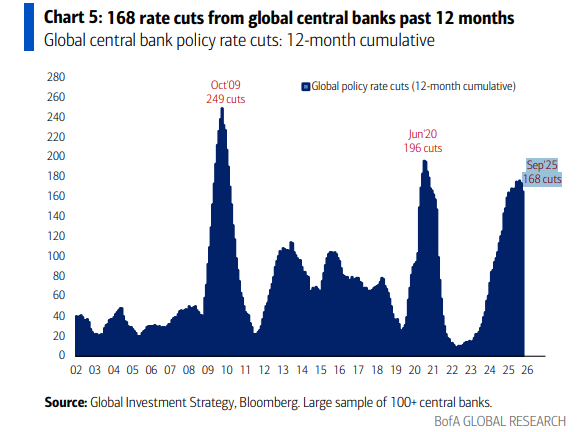
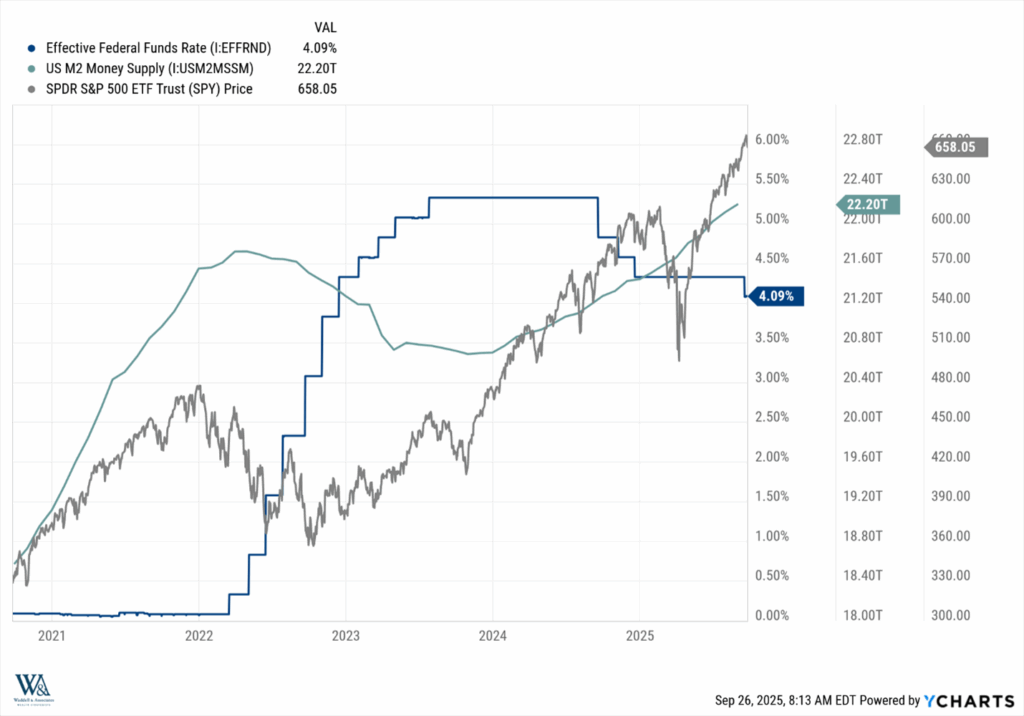
The chart below tells the story. The overlay in the chart is the US federal funds rate, the M2 money supply index, and the S&P500 index (Ticker $SPY). As the Fed raised rates through 2022–2023, money supply contracted, draining liquidity, and pushing stocks lower. But once money supply leveled off and began to rise again, equities moved higher in lockstep. This is no coincidence. Increasing money supply is naturally supportive of capital markets and public equity flows.
Loosening Conditions
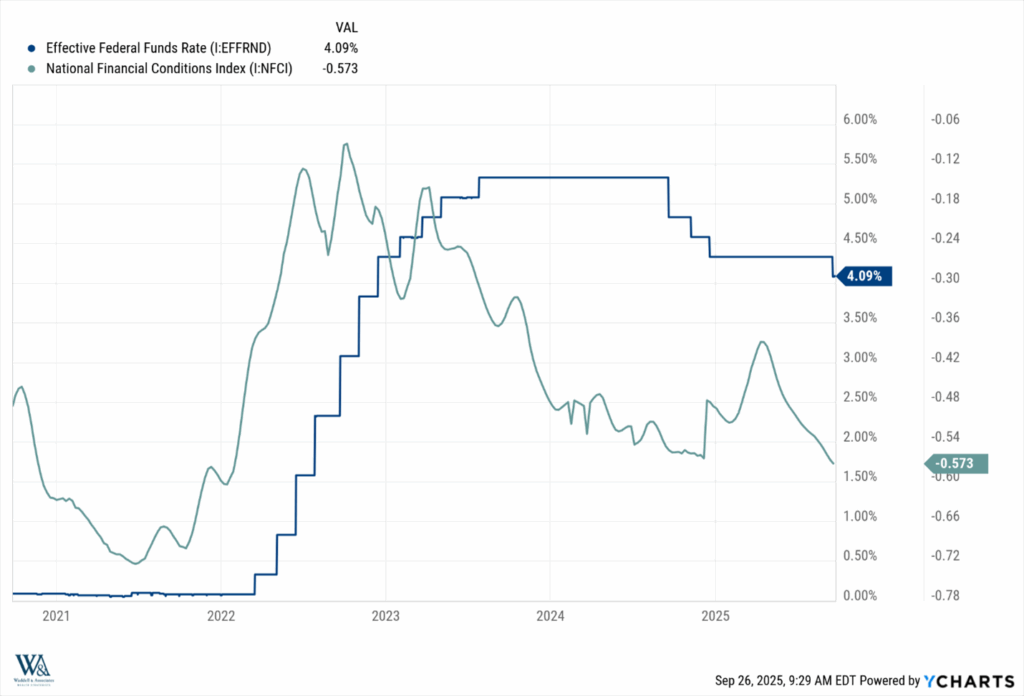
Financial conditions confirm the same trend. Once the Fed stopped hiking rates in 2023, financial conditions loosened and continue their same trajectory today. After the Fed rate cut earlier this month, financial conditions now sit at their easiest since late 2021. This translates to cheaper financing, stronger issuance, and again, healthy capital markets.
Credit spreads!
The market’s vote of confidence shows up in corporate credit spreads, and they too confirm the same trend. As rates rose and liquidity dropped throughout 2022, spreads widened out, reflecting the increase in credit and default risk across the system. But since then, it’s been trending back lower as rates dropped, liquidity rose, and conditions loosened.
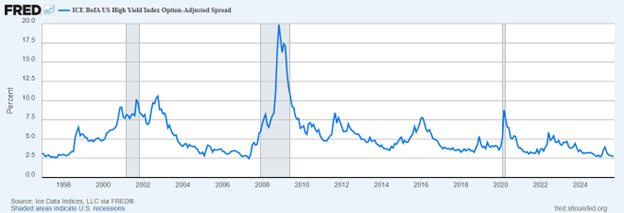
Tight spreads do more than send a signal—they actively reinforce easier conditions. Narrower spreads lower the cost of capital for companies, making refinancing and new issuance more attractive. They reduce the odds of a credit crunch, encourage investment, and extend the cycle.
In the end, markets are being carried by a powerful current: a synchronized global easing cycle, abundant liquidity, loosening financial conditions, and tight credit spreads that signal confidence rather than stress. These forces don’t remove risk, but they do create an environment where capital is plentiful and the path of least resistance for asset prices remains higher. For investors, the message is simple: liquidity drives markets, and right now, the money is still flowing.
That’s all for this week!
-Matt
Sources: Bank of America Global Research, YCharts, Federal Reserve Bank of St. Louis
This communication and its contents are for informational and educational purposes only and should not be used as the sole basis for any investment decision. The information contained herein is based on publicly available sources believed to be reliable but is not a representation, expressed or implied, as to the accuracy, completeness, or correctness of said information. References to political figures or policies are for informational purposes only and do not represent an endorsement by Waddell & Associates. Any forward-looking statements reflect current opinions and assumptions and are subject to change without notice; actual results may differ materially. Past performance does not guarantee future results. Waddell & Associates may use artificial intelligence tools to help generate or summarize content; all outputs are reviewed by our team for accuracy and relevance.
">Show Me The Money!
Central banks worldwide spent much of 2022–2023 draining the liquidity they had pumped into markets after COVID to combat accelerating inflation. Since then, inflationary pressures have cooled, and asset prices have rewarded investors with strong gains. But beneath the surface, a global easing cycle, rising liquidity, and loosening financial conditions have been a key support, and they remain firmly in place. Let’s review.
The Global Easing Cycle
Last week we highlighted Jerome Powell’s 25-basis point “risk management” rate cut. But zoom out, and it’s only one piece of a much larger puzzle. Across the globe, central banks are cutting in unison to the tune of 168 rate cuts since mid-2023. When central banks ease in lockstep, liquidity rises system wide. Stress across funding markets is relieved, capital becomes cheaper, and risk appetite improves.
The chart below tells the story. The overlay in the chart is the US federal funds rate, the M2 money supply index, and the S&P500 index (Ticker $SPY). As the Fed raised rates through 2022–2023, money supply contracted, draining liquidity, and pushing stocks lower. But once money supply leveled off and began to rise again, equities moved higher in lockstep. This is no coincidence. Increasing money supply is naturally supportive of capital markets and public equity flows.
Loosening Conditions
Financial conditions confirm the same trend. Once the Fed stopped hiking rates in 2023, financial conditions loosened and continue their same trajectory today. After the Fed rate cut earlier this month, financial conditions now sit at their easiest since late 2021. This translates to cheaper financing, stronger issuance, and again, healthy capital markets.
Credit spreads!
The market’s vote of confidence shows up in corporate credit spreads, and they too confirm the same trend. As rates rose and liquidity dropped throughout 2022, spreads widened out, reflecting the increase in credit and default risk across the system. But since then, it’s been trending back lower as rates dropped, liquidity rose, and conditions loosened.
Tight spreads do more than send a signal—they actively reinforce easier conditions. Narrower spreads lower the cost of capital for companies, making refinancing and new issuance more attractive. They reduce the odds of a credit crunch, encourage investment, and extend the cycle.
In the end, markets are being carried by a powerful current: a synchronized global easing cycle, abundant liquidity, loosening financial conditions, and tight credit spreads that signal confidence rather than stress. These forces don’t remove risk, but they do create an environment where capital is plentiful and the path of least resistance for asset prices remains higher. For investors, the message is simple: liquidity drives markets, and right now, the money is still flowing.
That’s all for this week!
-Matt
Sources: Bank of America Global Research, YCharts, Federal Reserve Bank of St. Louis
This communication and its contents are for informational and educational purposes only and should not be used as the sole basis for any investment decision. The information contained herein is based on publicly available sources believed to be reliable but is not a representation, expressed or implied, as to the accuracy, completeness, or correctness of said information. References to political figures or policies are for informational purposes only and do not represent an endorsement by Waddell & Associates. Any forward-looking statements reflect current opinions and assumptions and are subject to change without notice; actual results may differ materially. Past performance does not guarantee future results. Waddell & Associates may use artificial intelligence tools to help generate or summarize content; all outputs are reviewed by our team for accuracy and relevance.
" class="link-chevron">
The Fed convened last week and cut base interest rate policy by 0.25%. In the press conference that followed, Fed Chair Jerome Powell described this as a “Risk Management Cut.”
In the investment world, “risk management” is a familiar phrase, and with Powell’s background, he surely understands it well. But what exactly are the risks of raising, holding, or cutting interest rates, and what is the appropriate path of monetary policy given the data at hand?
With recent revisions in employment data and tone surrounding this rate cut, the Fed appears to be shifting the balance of its dual mandate more towards maximum employment than price stability. Powell has repeatedly emphasized that this Fed is data dependent. So, what does the data actually show, and is there cause for rising economic risk? Let’s tour a few government offices and see what their data had to say last week!
First Stop: Atlanta
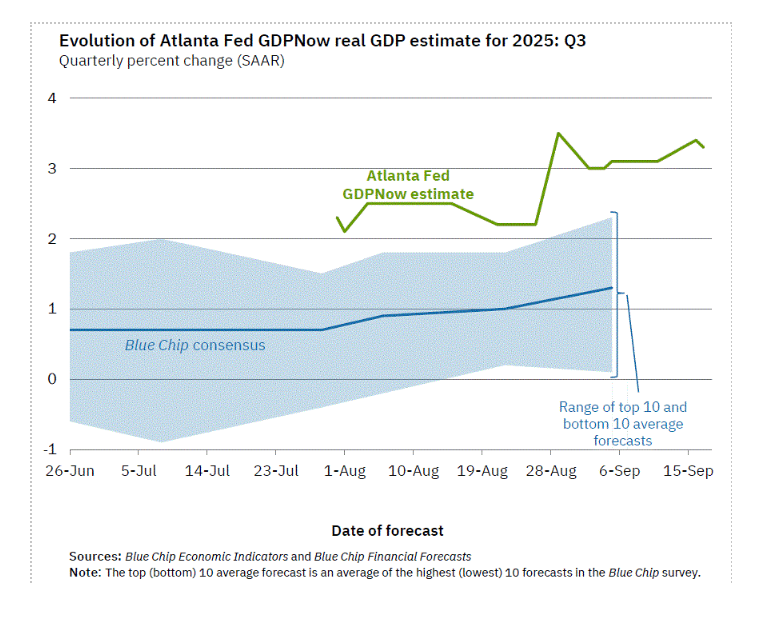
The Atlanta office of the Federal Reserve produces a “GDPNow” forecasting model. It provides a “nowcast” of the official estimate of GDP. It estimates growth using a methodology similar to the official one used by the US Bureau of Economic Analysis. Last week, the latest release estimated 2025 GDP growth at 3.3%, well above long-run potential growth of 1.8%.
Next Stop: Philly
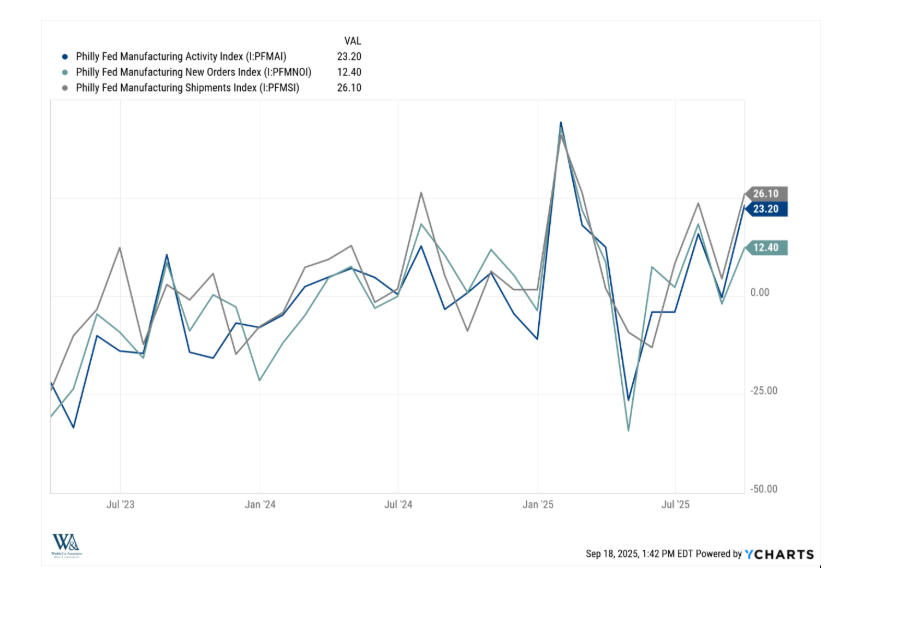
The Philadelphia office of the Fed conducts a monthly manufacturing business survey. While not a nationwide survey, its local scope often makes it a reliable, real-time signal. September’s results indicated regional manufacturing activity expanded. Indicators for activity, new orders, and shipments all rose month over month and have been in a relative uptrend since mid-2022.
Next stop: Washington, D.C.
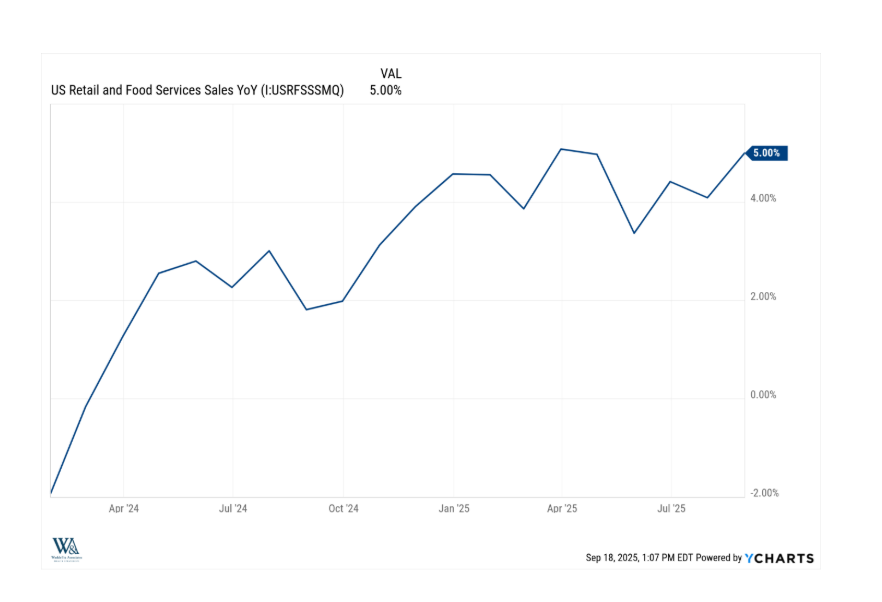
The US Census Bureau released advanced monthly sales for retail and food last week. Investor and consumer spending accounts for over 70% of US GDP. Incrementally, spending increased month over month and now sits 5% higher year-over-year, and it too remains in a relative uptrend.
Last Stop… The Federal Reserve
Once a quarter, the Federal Reserve releases its Summary of Economic Projections (SEP). This report contains FOMC member projections for the unemployment rate, inflation, and GDP. It provides a median forecast of the members which serves as a guide for projected path of monetary policy. This quarter, you’ll see that FOMC members increased their GDP projections, decreased their unemployment projections, and mostly held their inflation estimates in line.
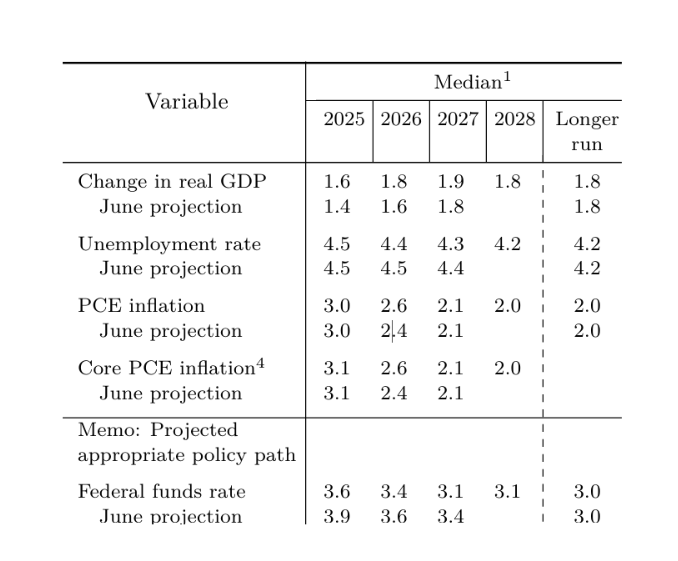
Of course, Powell would tell you these numbers are not predictions, more suggestions as to the appropriate path of monetary policy alongside the dual mandate of price stability and maximum employment.
In the end, Powell may frame the latest rate cut as a matter of “risk management”, but the Fed’s own projections and last week’s data tell a different story. Strong GDP growth, improving manufacturing data, and a spending consumer make this economy healthier than they think!
That’s all for this week!
-Matt
Sources: YCharts, Federal Reserve Bank of Philadelphia, Federal Reserve Bank of Atlanta, Federal Open Market Committee Summary of Economic Projections
This communication and its contents are for informational and educational purposes only and should not be used as the sole basis for any investment decision. The information contained herein is based on publicly available sources believed to be reliable but is not a representation, expressed or implied, as to the accuracy, completeness, or correctness of said information. References to political figures or policies are for informational purposes only and do not represent an endorsement by Waddell & Associates. Any forward-looking statements reflect current opinions and assumptions and are subject to change without notice; actual results may differ materially. Past performance does not guarantee future results. Waddell & Associates may use artificial intelligence tools to help generate or summarize content; all outputs are reviewed by our team for accuracy and relevance.
">A Risk Management Cut
The Fed convened last week and cut base interest rate policy by 0.25%. In the press conference that followed, Fed Chair Jerome Powell described this as a “Risk Management Cut.”
In the investment world, “risk management” is a familiar phrase, and with Powell’s background, he surely understands it well. But what exactly are the risks of raising, holding, or cutting interest rates, and what is the appropriate path of monetary policy given the data at hand?
With recent revisions in employment data and tone surrounding this rate cut, the Fed appears to be shifting the balance of its dual mandate more towards maximum employment than price stability. Powell has repeatedly emphasized that this Fed is data dependent. So, what does the data actually show, and is there cause for rising economic risk? Let’s tour a few government offices and see what their data had to say last week!
First Stop: Atlanta
The Atlanta office of the Federal Reserve produces a “GDPNow” forecasting model. It provides a “nowcast” of the official estimate of GDP. It estimates growth using a methodology similar to the official one used by the US Bureau of Economic Analysis. Last week, the latest release estimated 2025 GDP growth at 3.3%, well above long-run potential growth of 1.8%.
Next Stop: Philly
The Philadelphia office of the Fed conducts a monthly manufacturing business survey. While not a nationwide survey, its local scope often makes it a reliable, real-time signal. September’s results indicated regional manufacturing activity expanded. Indicators for activity, new orders, and shipments all rose month over month and have been in a relative uptrend since mid-2022.
Next stop: Washington, D.C.
The US Census Bureau released advanced monthly sales for retail and food last week. Investor and consumer spending accounts for over 70% of US GDP. Incrementally, spending increased month over month and now sits 5% higher year-over-year, and it too remains in a relative uptrend.
Last Stop… The Federal Reserve
Once a quarter, the Federal Reserve releases its Summary of Economic Projections (SEP). This report contains FOMC member projections for the unemployment rate, inflation, and GDP. It provides a median forecast of the members which serves as a guide for projected path of monetary policy. This quarter, you’ll see that FOMC members increased their GDP projections, decreased their unemployment projections, and mostly held their inflation estimates in line.
Of course, Powell would tell you these numbers are not predictions, more suggestions as to the appropriate path of monetary policy alongside the dual mandate of price stability and maximum employment.
In the end, Powell may frame the latest rate cut as a matter of “risk management”, but the Fed’s own projections and last week’s data tell a different story. Strong GDP growth, improving manufacturing data, and a spending consumer make this economy healthier than they think!
That’s all for this week!
-Matt
Sources: YCharts, Federal Reserve Bank of Philadelphia, Federal Reserve Bank of Atlanta, Federal Open Market Committee Summary of Economic Projections
This communication and its contents are for informational and educational purposes only and should not be used as the sole basis for any investment decision. The information contained herein is based on publicly available sources believed to be reliable but is not a representation, expressed or implied, as to the accuracy, completeness, or correctness of said information. References to political figures or policies are for informational purposes only and do not represent an endorsement by Waddell & Associates. Any forward-looking statements reflect current opinions and assumptions and are subject to change without notice; actual results may differ materially. Past performance does not guarantee future results. Waddell & Associates may use artificial intelligence tools to help generate or summarize content; all outputs are reviewed by our team for accuracy and relevance.
" class="link-chevron">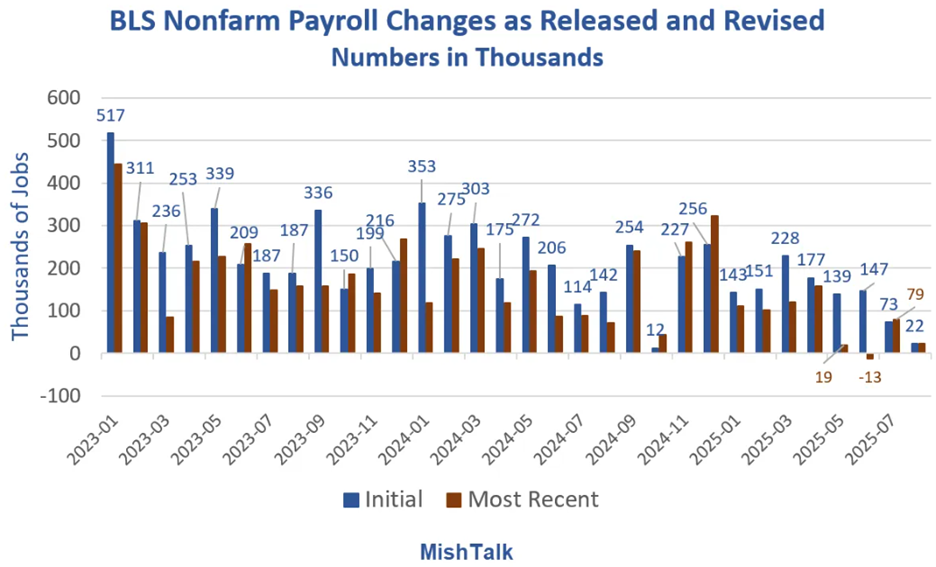
Once a year, the BLS reconciles its data with data from a slower, but more extensive, government survey (The Quarterly Census of Employment and Wages). Over the past few years, these surveys have strongly diverged. Many reasons account for the discrepancy, but most notably, undocumented workers that show up in the BLS survey do not appear in the QCEW report. As illegal immigration increased, so has the size of the downward revisions. For the year ending in March, the government revised payroll gains down by 911,000. That takes away roughly HALF of the job gains previously reported. Furthermore, this marks a record for an annual revision as seen in the chart below:
This week we also received higher than expected unemployment claims over the past week. This caught the market’s attention, but the continuing unemployment claims didn’t point to major deterioration. Nonetheless, it’s another negative data point. In sum, the BLS has overstated the strength of the US labor market for some time and recent reports show that softness driven by tariff, DOGE and immigration policy changes could reinforce the tepid trends. This will certainly shift the Fed’s narrative away from inflation concerns toward employment concerns, leading traders to price in three rate cuts before year end:
Given that the stock market uses earnings data and prevailing interest rates to calculate value, weak job growth does not imply weak stock market performance. In fact, stocks usually rally on layoff announcements as lower labor costs imply higher profits. Additionally, lower employment growth implies lower interest rates which support higher valuation multiples. As evidence, despite the gloomy labor data, the NASDAQ and S&P 500 hit record highs on Wednesday.
Get Real
Remember, jobs themselves do not power the economy. Spending does. With all of the goofiness associated with labor market calculations, we prefer to track real disposable income as a more accurate read on the consumer:
As you can see, real disposable income has downshifted slightly over the past year but remains healthy overall. The 2022 and 2023 highs and lows reflect inflationary distortions. Removing those leaves real disposable income performing right around long-term trends associated with healthy economic growth.
Lastly, if labor force growth isn’t driving economic growth, productivity growth must be. Enhancements in technology should be driving more output per unit of labor. Should the promise of AI and robotics prove true, we should see accelerating productivity trends. We have:
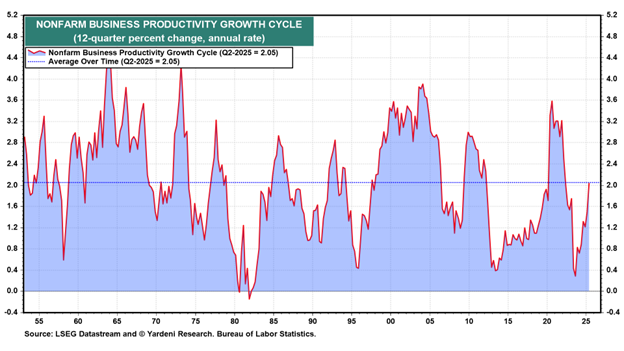
While the current level reflects long-term averages, productivity clearly has upside momentum. Should this persist, the economy can afford both higher wages for workers and higher profits for investors. The first will power consumption, the latter will power even more productivity enhancing investments. Virtuous!
Enjoy the rest of your Sunday!
-David
Sources: MishTalk, Yardeni Research, Federal Reserve Bank of St. Louis, Wolfstreet, Bureau of Labor Statistics
This communication and its contents are for informational and educational purposes only and should not be used as the sole basis for any investment decision. The information contained herein is based on publicly available sources believed to be reliable but is not a representation, expressed or implied, as to the accuracy, completeness, or correctness of said information. References to political figures or policies are for informational purposes only and do not represent an endorsement by Waddell & Associates. Any forward-looking statements reflect current opinions and assumptions and are subject to change without notice; actual results may differ materially. Past performance does not guarantee future results. Waddell & Associates may use artificial intelligence tools to help generate or summarize content; all outputs are reviewed by our team for accuracy and relevance.
">
Recent reports on the state of the US labor market have been dispiriting to say the least. Last Friday, the Bureau of Labor Statistics (BLS) released its monthly employment report showing 22,000 jobs were created in August versus 77,000 expected. Each monthly release also provides revisions to past month’s figures—these figures come from survey data. The initial release, like the one last Friday, only includes about 60% of the survey respondents. Revisions occur as more data arrives. For instance, the BLS estimated that the US created 147,000 jobs in June only to revise this number to 13,000 jobs lost. That’s the first month since December of 2020 that the US shed workers with more negative revisions likely to come. In fact, most revisions tend to reduce initial estimates. Consider the differences between the first and final reads on monthly job creation below:
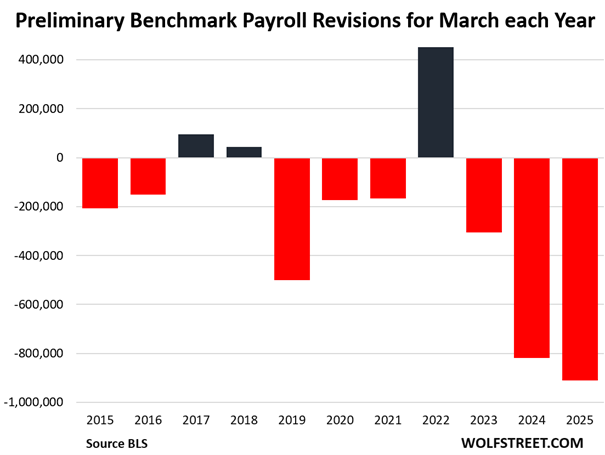
Once a year, the BLS reconciles its data with data from a slower, but more extensive, government survey (The Quarterly Census of Employment and Wages). Over the past few years, these surveys have strongly diverged. Many reasons account for the discrepancy, but most notably, undocumented workers that show up in the BLS survey do not appear in the QCEW report. As illegal immigration increased, so has the size of the downward revisions. For the year ending in March, the government revised payroll gains down by 911,000. That takes away roughly HALF of the job gains previously reported. Furthermore, this marks a record for an annual revision as seen in the chart below:
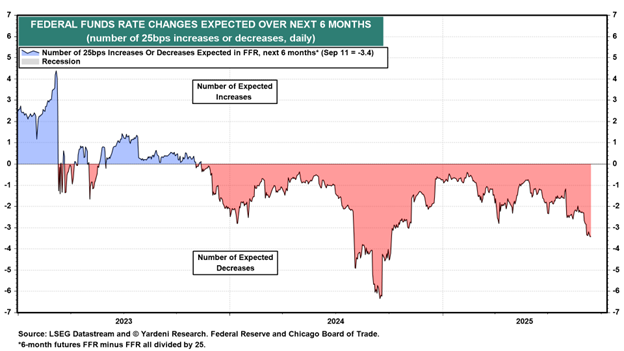
This week we also received higher than expected unemployment claims over the past week. This caught the market’s attention, but the continuing unemployment claims didn’t point to major deterioration. Nonetheless, it’s another negative data point. In sum, the BLS has overstated the strength of the US labor market for some time and recent reports show that softness driven by tariff, DOGE and immigration policy changes could reinforce the tepid trends. This will certainly shift the Fed’s narrative away from inflation concerns toward employment concerns, leading traders to price in three rate cuts before year end:
Given that the stock market uses earnings data and prevailing interest rates to calculate value, weak job growth does not imply weak stock market performance. In fact, stocks usually rally on layoff announcements as lower labor costs imply higher profits. Additionally, lower employment growth implies lower interest rates which support higher valuation multiples. As evidence, despite the gloomy labor data, the NASDAQ and S&P 500 hit record highs on Wednesday.
Get Real
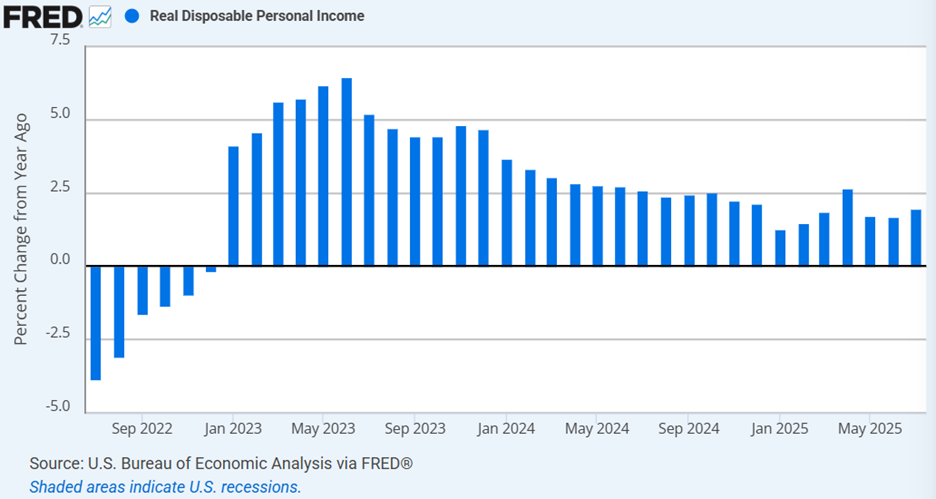
Remember, jobs themselves do not power the economy. Spending does. With all of the goofiness associated with labor market calculations, we prefer to track real disposable income as a more accurate read on the consumer:
As you can see, real disposable income has downshifted slightly over the past year but remains healthy overall. The 2022 and 2023 highs and lows reflect inflationary distortions. Removing those leaves real disposable income performing right around long-term trends associated with healthy economic growth.
Lastly, if labor force growth isn’t driving economic growth, productivity growth must be. Enhancements in technology should be driving more output per unit of labor. Should the promise of AI and robotics prove true, we should see accelerating productivity trends. We have:
While the current level reflects long-term averages, productivity clearly has upside momentum. Should this persist, the economy can afford both higher wages for workers and higher profits for investors. The first will power consumption, the latter will power even more productivity enhancing investments. Virtuous!
Enjoy the rest of your Sunday!
-David
Sources: MishTalk, Yardeni Research, Federal Reserve Bank of St. Louis, Wolfstreet, Bureau of Labor Statistics
This communication and its contents are for informational and educational purposes only and should not be used as the sole basis for any investment decision. The information contained herein is based on publicly available sources believed to be reliable but is not a representation, expressed or implied, as to the accuracy, completeness, or correctness of said information. References to political figures or policies are for informational purposes only and do not represent an endorsement by Waddell & Associates. Any forward-looking statements reflect current opinions and assumptions and are subject to change without notice; actual results may differ materially. Past performance does not guarantee future results. Waddell & Associates may use artificial intelligence tools to help generate or summarize content; all outputs are reviewed by our team for accuracy and relevance.
">Lower Jobs, Higher Stocks Recent reports on the state of the US labor market have been dispiriting to say the least. Last Friday, the Bureau of Labor Statistics (BLS) released its monthly employment report showing 22,000 jobs were created in August versus 77,000 expected. Each monthly release also provides revisions to past month’s figures—these figures come from survey data. The initial release, like the one last Friday, only includes about 60% of the survey respondents. Revisions occur as more data arrives. For instance, the BLS estimated that the US created 147,000 jobs in June only to revise this number to 13,000 jobs lost. That’s the first month since December of 2020 that the US shed workers with more negative revisions likely to come. In fact, most revisions tend to reduce initial estimates. Consider the differences between the first and final reads on monthly job creation below:
Once a year, the BLS reconciles its data with data from a slower, but more extensive, government survey (The Quarterly Census of Employment and Wages). Over the past few years, these surveys have strongly diverged. Many reasons account for the discrepancy, but most notably, undocumented workers that show up in the BLS survey do not appear in the QCEW report. As illegal immigration increased, so has the size of the downward revisions. For the year ending in March, the government revised payroll gains down by 911,000. That takes away roughly HALF of the job gains previously reported. Furthermore, this marks a record for an annual revision as seen in the chart below:
This week we also received higher than expected unemployment claims over the past week. This caught the market’s attention, but the continuing unemployment claims didn’t point to major deterioration. Nonetheless, it’s another negative data point. In sum, the BLS has overstated the strength of the US labor market for some time and recent reports show that softness driven by tariff, DOGE and immigration policy changes could reinforce the tepid trends. This will certainly shift the Fed’s narrative away from inflation concerns toward employment concerns, leading traders to price in three rate cuts before year end:
Given that the stock market uses earnings data and prevailing interest rates to calculate value, weak job growth does not imply weak stock market performance. In fact, stocks usually rally on layoff announcements as lower labor costs imply higher profits. Additionally, lower employment growth implies lower interest rates which support higher valuation multiples. As evidence, despite the gloomy labor data, the NASDAQ and S&P 500 hit record highs on Wednesday.
Get Real
Remember, jobs themselves do not power the economy. Spending does. With all of the goofiness associated with labor market calculations, we prefer to track real disposable income as a more accurate read on the consumer:
As you can see, real disposable income has downshifted slightly over the past year but remains healthy overall. The 2022 and 2023 highs and lows reflect inflationary distortions. Removing those leaves real disposable income performing right around long-term trends associated with healthy economic growth.
Lastly, if labor force growth isn’t driving economic growth, productivity growth must be. Enhancements in technology should be driving more output per unit of labor. Should the promise of AI and robotics prove true, we should see accelerating productivity trends. We have:
While the current level reflects long-term averages, productivity clearly has upside momentum. Should this persist, the economy can afford both higher wages for workers and higher profits for investors. The first will power consumption, the latter will power even more productivity enhancing investments. Virtuous!
Enjoy the rest of your Sunday!
-David
Sources: MishTalk, Yardeni Research, Federal Reserve Bank of St. Louis, Wolfstreet, Bureau of Labor Statistics
This communication and its contents are for informational and educational purposes only and should not be used as the sole basis for any investment decision. The information contained herein is based on publicly available sources believed to be reliable but is not a representation, expressed or implied, as to the accuracy, completeness, or correctness of said information. References to political figures or policies are for informational purposes only and do not represent an endorsement by Waddell & Associates. Any forward-looking statements reflect current opinions and assumptions and are subject to change without notice; actual results may differ materially. Past performance does not guarantee future results. Waddell & Associates may use artificial intelligence tools to help generate or summarize content; all outputs are reviewed by our team for accuracy and relevance.
" class="link-chevron">
September and October have always carried weight in markets. They’re months when volatility tends to pick up, mutual fund fiscal years come to an end, and the year’s outlook can shift quickly. As we kick off this fall, three forces are now front and center: Powell, Trump, and the data!
Powell: A Near Certain Cut
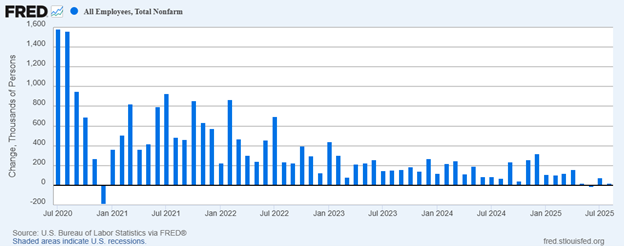
The next Federal Reserve meeting on monetary policy is scheduled for September 16th and 17th, meaning we are less than two weeks away. After Friday’s job numbers, fed-funds futures imply over a 99% chance of at least a 25bp cut this month. Some traders are even pricing in the chance of a 50bps cut. The fed’s dual mandate of maximum employment and 2% inflation has become harder to balance, but the backdrop certainly justifies a cut, and perhaps more going forward. Job growth and inflation momentum have slowed. Since January’s Fed pause, monthly payroll gains have been positive, but meaningfully lower, and the trend lower in payroll growth is clear:
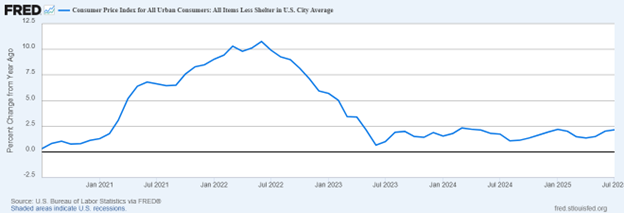
Then consider inflation. The largest component of the consumer price index measurement of inflation is housing and shelter. It makes up about 1/3 of CPI. Without it, CPI has been relatively unchanged since mid-2023:
With it, housing costs continue to moderate back to pre-pandemic levels. The owners-equivalent rent component inside of CPI continues to drag lower, with it’s month over month impact continuing to slide south:
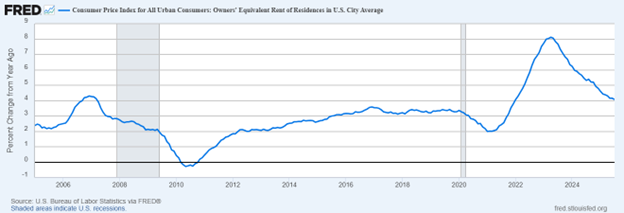
Unlocking the housing market is an important relief valve for the Fed, releasing more inventory and taking pressure from affordability issues. With only one inflation report left before the Fed meeting, the focus of the Fed mandate has shifted toward employment. But the real driver won’t be the cut itself, it will be Powell’s messaging thereafter. If he cuts and signals patience, markets may retrace their October and December rate expectations. If he cuts and focuses on the weakening labor market, future rate cut expectations will accelerate.
Trump: Tariffs in Legal Limbo
Was Powell too late? Trump may be right, but he has his own fiscal issues to deal with. The one big, beautiful bill was passed on the backs of tariff revenue that is now hanging in the balance of the courts. Tariffs have long been one of Trump’s hallmark economic weapons. They’ve reshaped supply chains, boosted certain domestic industries, and become a central talking point around American competitiveness. But now the legal ground has slightly shifted. On August 29th, (yes, the Friday before a long holiday weekend!), a Federal Court of Appeals ruled that the President’s use of the International Emergency Economic Powers Act (IEEPA) to impose reciprocal tariffs exceeded his authority. The court concluded IEEPA does not provide a blanket authority to the executive branch to levy sweeping tariff programs.
Importantly, the court withheld its mandate until October 14th, keeping tariffs in place while the administration seeks an emergency appeal in the Supreme Court. The government has already petitioned the justices for expedited review, arguing the tariffs are essential.
The near-term fork in the road is two-fold:
- If the Supreme Court grants a stay, the tariffs keep running during the appeal process.
- If the stay is denied, collection halts and importers could begin seeking refunds.
Either outcome carries some market consequence. For investors, this is not just about a legal circus; it’s about whether Q4 starts with tariff revenues or refunds and how they shift the dynamics. Historically, September and October are already prone to market weakness and volatility, and this ruling simply reinforces that historical pattern.
The Data
Payrolls are still growing but at a slower pace. Inflation ex-shelter has been relatively flat since mid-2023, and housing costs, the largest component of CPI, are trending lower.
Despite these crosscurrents, equities remain near all-time highs. What makes this interesting is the contrast: markets keep grinding higher as sentiment surveys show more pessimism. The chart below illustrates the S&P 500 and bearish investor sentiment levels. As markets have rebounded off the April lows, bearishness, though lower, has remained elevated. So long as the pessimism persists, it will continue to create opportunity for long-term investors as the skepticism of future market returns helps propel them higher!
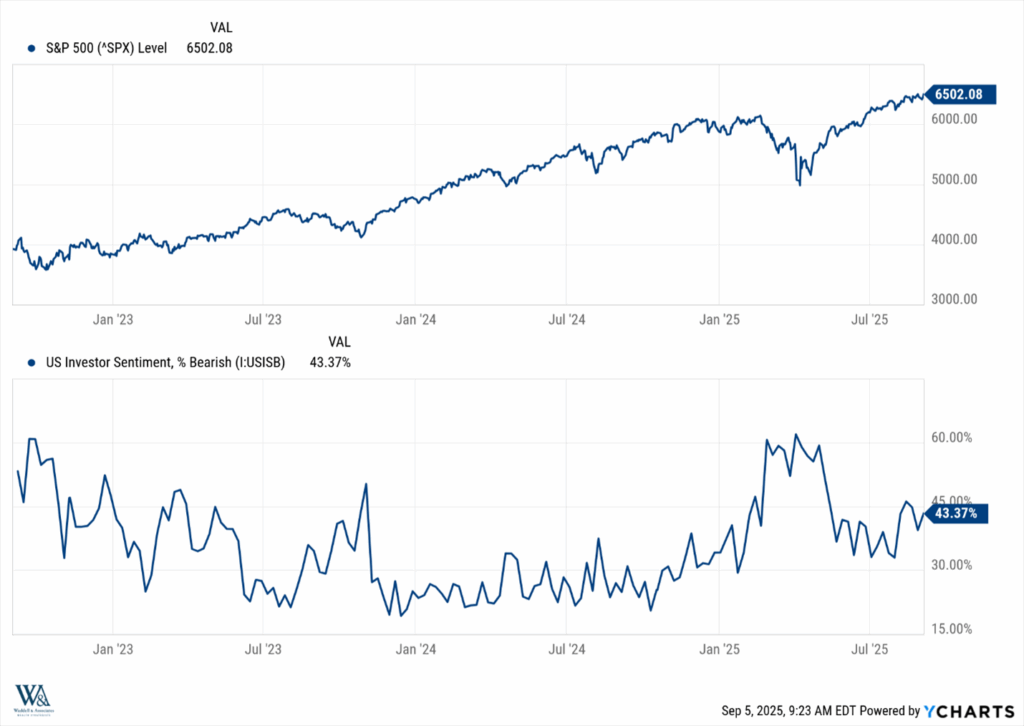
That’s all for this week!
-Matt
Sources: YCharts, Federal Reserve Bank of St. Louis, CME Group FedWatch
This communication and its contents are for informational and educational purposes only and should not be used as the sole basis for any investment decision. The information contained herein is based on publicly available sources believed to be reliable but is not a representation, expressed or implied, as to the accuracy, completeness, or correctness of said information. References to political figures or policies are for informational purposes only and do not represent an endorsement by Waddell & Associates. Any forward-looking statements reflect current opinions and assumptions and are subject to change without notice; actual results may differ materially. Past performance does not guarantee future results. Waddell & Associates may use artificial intelligence tools to help generate or summarize content; all outputs are reviewed by our team for accuracy and relevance.
">The Boys of Fall: Powell, Trump, and the Data
September and October have always carried weight in markets. They’re months when volatility tends to pick up, mutual fund fiscal years come to an end, and the year’s outlook can shift quickly. As we kick off this fall, three forces are now front and center: Powell, Trump, and the data!
Powell: A Near Certain Cut
The next Federal Reserve meeting on monetary policy is scheduled for September 16th and 17th, meaning we are less than two weeks away. After Friday’s job numbers, fed-funds futures imply over a 99% chance of at least a 25bp cut this month. Some traders are even pricing in the chance of a 50bps cut. The fed’s dual mandate of maximum employment and 2% inflation has become harder to balance, but the backdrop certainly justifies a cut, and perhaps more going forward. Job growth and inflation momentum have slowed. Since January’s Fed pause, monthly payroll gains have been positive, but meaningfully lower, and the trend lower in payroll growth is clear:
Then consider inflation. The largest component of the consumer price index measurement of inflation is housing and shelter. It makes up about 1/3 of CPI. Without it, CPI has been relatively unchanged since mid-2023:
With it, housing costs continue to moderate back to pre-pandemic levels. The owners-equivalent rent component inside of CPI continues to drag lower, with it’s month over month impact continuing to slide south:
Unlocking the housing market is an important relief valve for the Fed, releasing more inventory and taking pressure from affordability issues. With only one inflation report left before the Fed meeting, the focus of the Fed mandate has shifted toward employment. But the real driver won’t be the cut itself, it will be Powell’s messaging thereafter. If he cuts and signals patience, markets may retrace their October and December rate expectations. If he cuts and focuses on the weakening labor market, future rate cut expectations will accelerate.
Trump: Tariffs in Legal Limbo
Was Powell too late? Trump may be right, but he has his own fiscal issues to deal with. The one big, beautiful bill was passed on the backs of tariff revenue that is now hanging in the balance of the courts. Tariffs have long been one of Trump’s hallmark economic weapons. They’ve reshaped supply chains, boosted certain domestic industries, and become a central talking point around American competitiveness. But now the legal ground has slightly shifted. On August 29th, (yes, the Friday before a long holiday weekend!), a Federal Court of Appeals ruled that the President’s use of the International Emergency Economic Powers Act (IEEPA) to impose reciprocal tariffs exceeded his authority. The court concluded IEEPA does not provide a blanket authority to the executive branch to levy sweeping tariff programs.
Importantly, the court withheld its mandate until October 14th, keeping tariffs in place while the administration seeks an emergency appeal in the Supreme Court. The government has already petitioned the justices for expedited review, arguing the tariffs are essential.
The near-term fork in the road is two-fold:
- If the Supreme Court grants a stay, the tariffs keep running during the appeal process.
- If the stay is denied, collection halts and importers could begin seeking refunds.
Either outcome carries some market consequence. For investors, this is not just about a legal circus; it’s about whether Q4 starts with tariff revenues or refunds and how they shift the dynamics. Historically, September and October are already prone to market weakness and volatility, and this ruling simply reinforces that historical pattern.
The Data
Payrolls are still growing but at a slower pace. Inflation ex-shelter has been relatively flat since mid-2023, and housing costs, the largest component of CPI, are trending lower.
Despite these crosscurrents, equities remain near all-time highs. What makes this interesting is the contrast: markets keep grinding higher as sentiment surveys show more pessimism. The chart below illustrates the S&P 500 and bearish investor sentiment levels. As markets have rebounded off the April lows, bearishness, though lower, has remained elevated. So long as the pessimism persists, it will continue to create opportunity for long-term investors as the skepticism of future market returns helps propel them higher!
That’s all for this week!
-Matt
Sources: YCharts, Federal Reserve Bank of St. Louis, CME Group FedWatch
This communication and its contents are for informational and educational purposes only and should not be used as the sole basis for any investment decision. The information contained herein is based on publicly available sources believed to be reliable but is not a representation, expressed or implied, as to the accuracy, completeness, or correctness of said information. References to political figures or policies are for informational purposes only and do not represent an endorsement by Waddell & Associates. Any forward-looking statements reflect current opinions and assumptions and are subject to change without notice; actual results may differ materially. Past performance does not guarantee future results. Waddell & Associates may use artificial intelligence tools to help generate or summarize content; all outputs are reviewed by our team for accuracy and relevance.
" class="link-chevron">
As a Philadelphia Philles baseball fan, I often spend late August dreaming of “Red October”. With 162 games played in a season, baseball is an endurance sport. Only one month remains in the season, and postseason success depends heavily upon momentum entering the playoffs. To evaluate the quality of a team’s momentum, fans analyze each game’s box score which tallies the performance statistics of each individual player. Entering October, fans might want to see rising trends in batting average, home runs, or even walks depending on the player. To illustrate the matrix, here is a superlative box score from a Phillies Mariners game this week:

For Phillies fans, 20 hits on 41 at bats with 11 runs spread across the roster bodes well for post-season aspirations. But momentum can change on a dime and shifts often appear in the box score before they appear on the scoreboard. For investors, the same framework applies. The stock market has its own daily box score, and momentum shifts often carry greater meaning. Over the past month, momentum trends within the market have changed. Whether these shifts will threaten or support investors returns into year end remains to be seen, but it pays to do the analysis and consider year-end rostering.
The Investment Style Box
Morningstar created stock market style box analysis in the late 90’s to help investors understand an investment manager’s strategy. The matrix contains 9 boxes. The vertical axis groups stocks by size; (market capitalization) small, medium, or large. The horizontal axis groups stocks by style; value, blend or growth. Here is the theory illustration provided by Christine Benz in 1992:
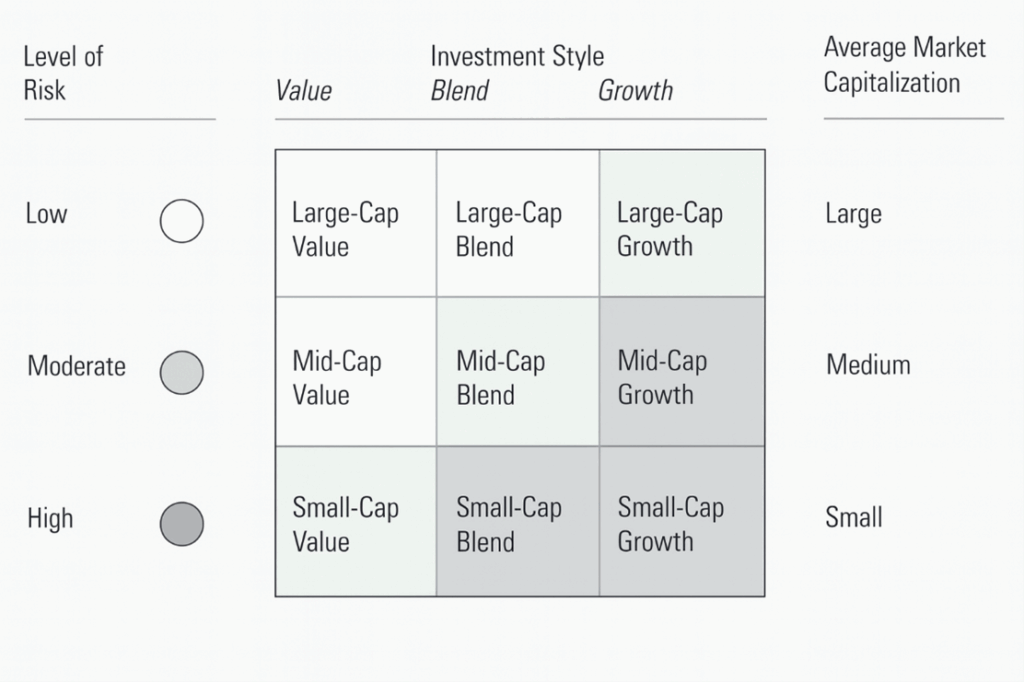
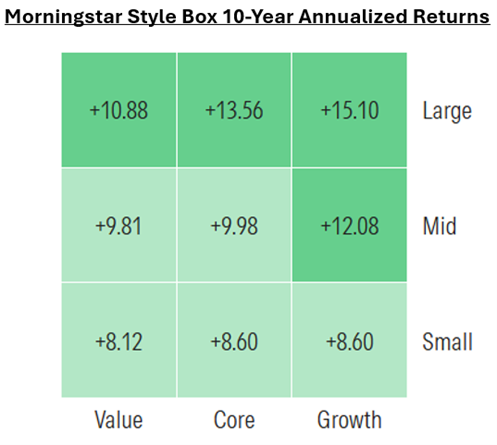
At the time, active money managers managed most investor assets by picking stocks. This grid allowed investors in mutual funds to decode portfolios and determine return drivers. Today, most investor assets are managed passively within index funds. Therefore, rather than using the style box to decode managed portfolios, investors now use the style box to construct passive portfolios. How investors move aggregate assets around the style box reveals trends. Over the last 10 years, the rise of the Mag 7 has driven return differentials for the Large Cap Growth box to historic levels comparable to the 1990s:
But this run didn’t occur without interruption, the following chart details Large Cap Growth style box drawdowns over the past 5 years (I included Nvidia, its leader, as well). The recession scare of 2022 drove Large Cap Growth down 33%, while Nvidia shed 66% into October. This year, the Deep Seek scare followed by the Tariff Turmoil, drove Large Cap Growth down 22% while Nvidia shed 40%.
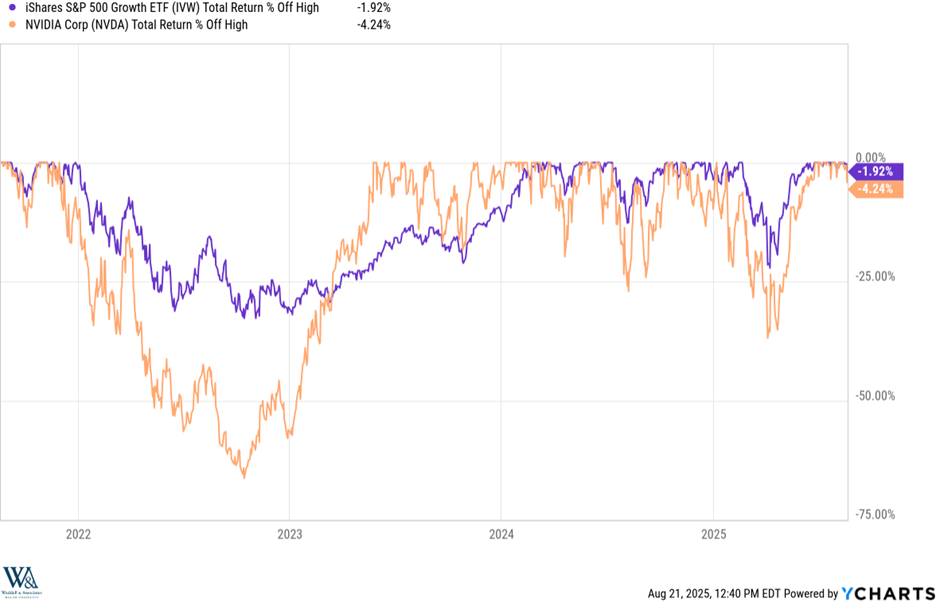
Within the last two weeks, Nvidia and its large cap tech brethren have started shedding altitude causing some to question this current break in momentum. They are right to question. Expectations for AI came under scrutiny when MIT released a report questioning its business utility and anxieties rose about Nvidia’s upcoming earnings release. Tech rallied 45% off the April lows in a straight line so some rest is well-earned. However, the selling doesn’t seem to represent selling of the market overall, just repositioning as momentum has begun appearing elsewhere:
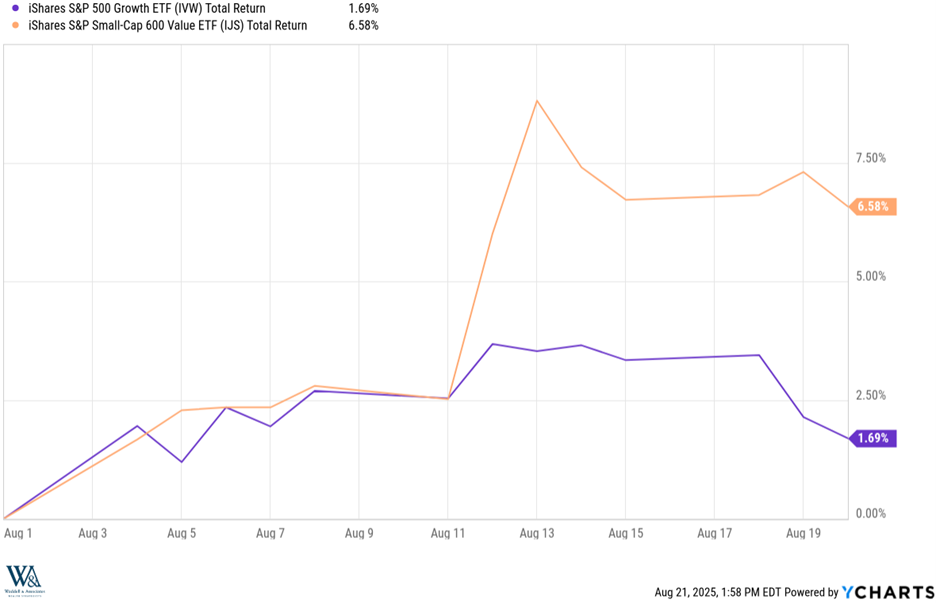
A prolonged hot streak, weak seasonals and a downbeat AI report from MIT explains the drawdown in Large Cap Growth box as shown above, but what explains the surge higher in the Small Cap Value box?
Second Half Playbook
As we discussed in our halftime report, the combination of fiscal stimulus, monetary stimulus, currency stimulus and AI Capital Expenditures stimulus will far outweigh the tariff drag, sequester recession risks, and drive stock prices higher. During the first half of 2025, earnings resiliency amidst ambiguity drove investors into the earnings juggernauts within the Large Cap Growth box. But in the second half, earnings participation should broaden out as Trumps stimulus packages bite and interest rates fall. Small companies rely much more heavily on debt than large companies, benefiting disproportionately from rate cuts. Regulatory relief reduces compliance drags and encourages mergers and acquisitions, disproportionately benefiting small companies. Policy-inspired recoveries in US manufacturing activity will also disproportionately benefit smaller cap industrial companies more than larger cap technology companies. From a valuation perspective, the Small Cap Value box trades for 15x earnings, while the Large Cap Growth box trades for 34x earnings, creating a sizable discount for the smalls. Lastly, while the Large Cap Growth box has a total market value of $40.1 trillion, the Small Cap Value box has a total market value of less than $1 trillion. It doesn’t take much of a rotation between boxes to create meaningful lift as demonstrated in the chart above. While earnings resilience gave the Large Cap Growth box advantage in the first half of the year, low valuations and interest rate cuts should give the Small Cap Value box advantage in the second half of the year. Time to sketch out year-end playbooks, evaluate your rosters, and ensure you have the right batters… in the box.
Or leave it to us. We would be happy to manage your team!
Have a great weekend!
-David
Sources: YCharts, Morningstar
This communication and its contents are for informational and educational purposes only and should not be used as the sole basis for any investment decision. The information contained herein is based on publicly available sources believed to be reliable but is not a representation, expressed or implied, as to the accuracy, completeness, or correctness of said information. References to political figures or policies are for informational purposes only and do not represent an endorsement by Waddell & Associates. Any forward-looking statements reflect current opinions and assumptions and are subject to change without notice; actual results may differ materially. Past performance does not guarantee future results. Waddell & Associates may use artificial intelligence tools to help generate or summarize content; all outputs are reviewed by our team for accuracy and relevance.
">Checking the Boxes
As a Philadelphia Philles baseball fan, I often spend late August dreaming of “Red October”. With 162 games played in a season, baseball is an endurance sport. Only one month remains in the season, and postseason success depends heavily upon momentum entering the playoffs. To evaluate the quality of a team’s momentum, fans analyze each game’s box score which tallies the performance statistics of each individual player. Entering October, fans might want to see rising trends in batting average, home runs, or even walks depending on the player. To illustrate the matrix, here is a superlative box score from a Phillies Mariners game this week:
For Phillies fans, 20 hits on 41 at bats with 11 runs spread across the roster bodes well for post-season aspirations. But momentum can change on a dime and shifts often appear in the box score before they appear on the scoreboard. For investors, the same framework applies. The stock market has its own daily box score, and momentum shifts often carry greater meaning. Over the past month, momentum trends within the market have changed. Whether these shifts will threaten or support investors returns into year end remains to be seen, but it pays to do the analysis and consider year-end rostering.
The Investment Style Box
Morningstar created stock market style box analysis in the late 90’s to help investors understand an investment manager’s strategy. The matrix contains 9 boxes. The vertical axis groups stocks by size; (market capitalization) small, medium, or large. The horizontal axis groups stocks by style; value, blend or growth. Here is the theory illustration provided by Christine Benz in 1992:
At the time, active money managers managed most investor assets by picking stocks. This grid allowed investors in mutual funds to decode portfolios and determine return drivers. Today, most investor assets are managed passively within index funds. Therefore, rather than using the style box to decode managed portfolios, investors now use the style box to construct passive portfolios. How investors move aggregate assets around the style box reveals trends. Over the last 10 years, the rise of the Mag 7 has driven return differentials for the Large Cap Growth box to historic levels comparable to the 1990s:
But this run didn’t occur without interruption, the following chart details Large Cap Growth style box drawdowns over the past 5 years (I included Nvidia, its leader, as well). The recession scare of 2022 drove Large Cap Growth down 33%, while Nvidia shed 66% into October. This year, the Deep Seek scare followed by the Tariff Turmoil, drove Large Cap Growth down 22% while Nvidia shed 40%.
Within the last two weeks, Nvidia and its large cap tech brethren have started shedding altitude causing some to question this current break in momentum. They are right to question. Expectations for AI came under scrutiny when MIT released a report questioning its business utility and anxieties rose about Nvidia’s upcoming earnings release. Tech rallied 45% off the April lows in a straight line so some rest is well-earned. However, the selling doesn’t seem to represent selling of the market overall, just repositioning as momentum has begun appearing elsewhere:
A prolonged hot streak, weak seasonals and a downbeat AI report from MIT explains the drawdown in Large Cap Growth box as shown above, but what explains the surge higher in the Small Cap Value box?
Second Half Playbook
As we discussed in our halftime report, the combination of fiscal stimulus, monetary stimulus, currency stimulus and AI Capital Expenditures stimulus will far outweigh the tariff drag, sequester recession risks, and drive stock prices higher. During the first half of 2025, earnings resiliency amidst ambiguity drove investors into the earnings juggernauts within the Large Cap Growth box. But in the second half, earnings participation should broaden out as Trumps stimulus packages bite and interest rates fall. Small companies rely much more heavily on debt than large companies, benefiting disproportionately from rate cuts. Regulatory relief reduces compliance drags and encourages mergers and acquisitions, disproportionately benefiting small companies. Policy-inspired recoveries in US manufacturing activity will also disproportionately benefit smaller cap industrial companies more than larger cap technology companies. From a valuation perspective, the Small Cap Value box trades for 15x earnings, while the Large Cap Growth box trades for 34x earnings, creating a sizable discount for the smalls. Lastly, while the Large Cap Growth box has a total market value of $40.1 trillion, the Small Cap Value box has a total market value of less than $1 trillion. It doesn’t take much of a rotation between boxes to create meaningful lift as demonstrated in the chart above. While earnings resilience gave the Large Cap Growth box advantage in the first half of the year, low valuations and interest rate cuts should give the Small Cap Value box advantage in the second half of the year. Time to sketch out year-end playbooks, evaluate your rosters, and ensure you have the right batters… in the box.
Or leave it to us. We would be happy to manage your team!
Have a great weekend!
-David
Sources: YCharts, Morningstar
This communication and its contents are for informational and educational purposes only and should not be used as the sole basis for any investment decision. The information contained herein is based on publicly available sources believed to be reliable but is not a representation, expressed or implied, as to the accuracy, completeness, or correctness of said information. References to political figures or policies are for informational purposes only and do not represent an endorsement by Waddell & Associates. Any forward-looking statements reflect current opinions and assumptions and are subject to change without notice; actual results may differ materially. Past performance does not guarantee future results. Waddell & Associates may use artificial intelligence tools to help generate or summarize content; all outputs are reviewed by our team for accuracy and relevance.
" class="link-chevron">On Policy & Economic Outlook
From The Golden Age of America (January 24, 2025)
In January, the launch of Trump’s second term brought bold promises but also the challenges of high interest rates, tariff policy, and inflation risk:
- Then: “Trump had his ‘return to glory’ last week, but this week the focus will shift to Jerome Powell’s response to Trump’s demand on interest rates. The Fed will convene on January 28–29th… Powell will surely not budge at the President’s call for lowering interest rates.”
- Now: What began as a quiet standoff has turned into a headline-grabbing feud. Trump now calls him “Too Late Powell.” While rates remain elevated, the tug-of-war between pro-growth policy goals and Fed caution has defined much of the year’s narrative. I couldn’t dream of a better picture to come back then!

On Market Corrections
From The Madness of March (March 22, 2025)
Back in March, the market hit its first technical correction since 2022, shaking investor confidence but also opening the door for opportunity:
- Then: “The S&P 500 has experienced a 10% correction… In the short term, they serve as a reset for market structure, volatility, and valuations. More importantly, corrections create opportunities for those with cash on the sidelines and for investors who are dollar-cost averaging into equities.”
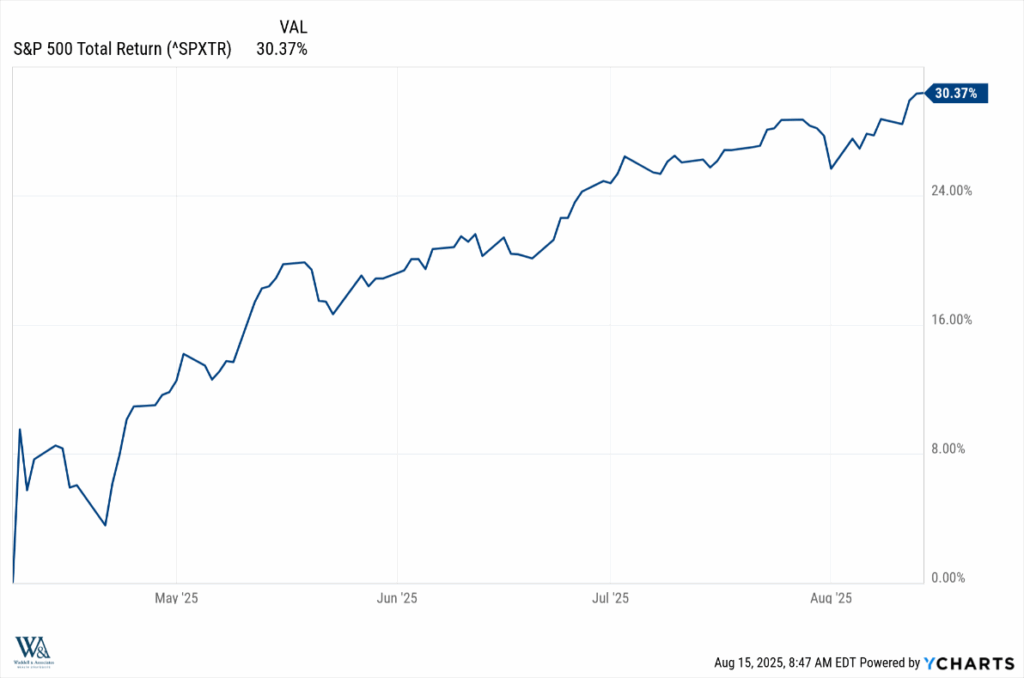
- Now: The S&P500 roars back, up roughly 30% from the lows of April 8th to new all-time highs this week, rewarding those who “avoided panic and strategically invested their cash.”
Market Support from Buybacks
From Corporate Buybacks: Inspiring Confidence or Engineering Financials? (May 9, 2025)
Earlier in the year, record-setting corporate share repurchases provided a notable undercurrent of support for equity markets:
- Then: “Corporate share buyback announcements hit record highs in Q1 2025… These supportive equity flows… signal management team confidence… You can call it a buyback or financial engineering, but it’s just math, and buybacks are naturally supportive of equity prices, ultimately benefiting investors.”
- Now: The buyback wave has only accelerated! 2025 is on pace to hit $1.1 trillion in repurchases, surpassing the 2022 record. Meanwhile, markets are at all-time highs, providing a steady tailwind despite volatility in policy headlines.
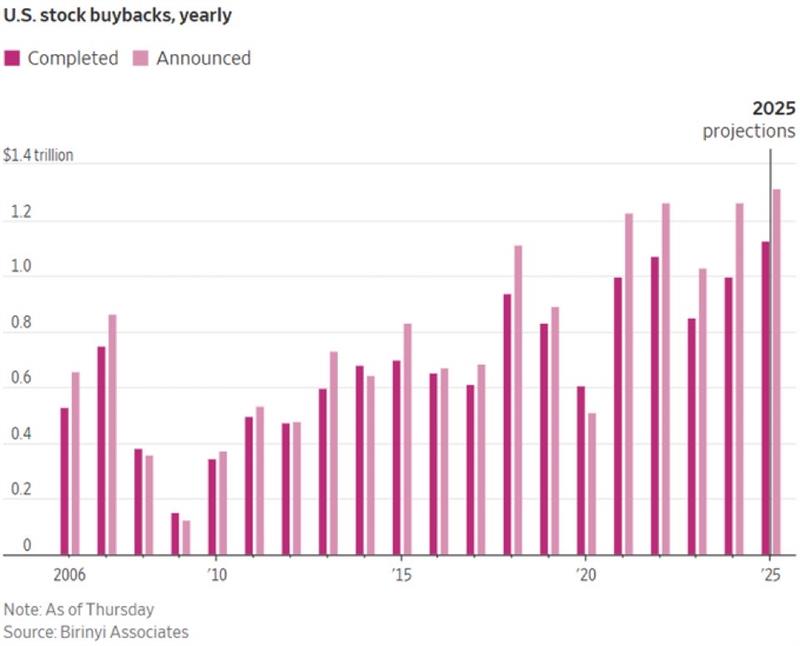
The first half of 2025 have reminded us that markets are a constant push and pull of policy, sentiment, and structural forces. The Powell–Trump rate standoff, the recovery from the March correction, and the record pace of buybacks all tell the same story: investors who kept their cool and stayed the course were rewarded. Looking back on my insights then, and now, provides an opportunity to refine perspective, challenge assumptions, and provide clarity!
Have a great week!
-David
Sources: YCharts; Birinyi Associates
This communication and its contents are for informational and educational purposes only and should not be used as the sole basis for any investment decision. The information contained herein is based on publicly available sources believed to be reliable but is not a representation, expressed or implied, as to the accuracy, completeness, or correctness of said information. References to political figures or policies are for informational purposes only and do not represent an endorsement by Waddell & Associates. Any forward-looking statements reflect current opinions and assumptions and are subject to change without notice; actual results may differ materially. Past performance does not guarantee future results. Waddell & Associates may use artificial intelligence tools to help generate or summarize content; all outputs are reviewed by our team for accuracy and relevance.
">
The first half of 2025 has been anything but dull. In my blog posts so far this year, I’ve covered everything from policy shifts in Washington to market corrections to record-setting corporate buybacks. Some of these commentaries were shaped by optimism, others by caution—but all were rooted in the goal of providing clarity. Now that we’ve crossed the halfway mark, it’s time to check the scorecard. In this “Then and Now” review, I’ll revisit three themes from earlier in the year and see how they’ve unfolded!
On Policy & Economic Outlook
From The Golden Age of America (January 24, 2025)
In January, the launch of Trump’s second term brought bold promises but also the challenges of high interest rates, tariff policy, and inflation risk:
- Then: “Trump had his ‘return to glory’ last week, but this week the focus will shift to Jerome Powell’s response to Trump’s demand on interest rates. The Fed will convene on January 28–29th… Powell will surely not budge at the President’s call for lowering interest rates.”
- Now: What began as a quiet standoff has turned into a headline-grabbing feud. Trump now calls him “Too Late Powell.” While rates remain elevated, the tug-of-war between pro-growth policy goals and Fed caution has defined much of the year’s narrative. I couldn’t dream of a better picture to come back then!
On Market Corrections
From The Madness of March (March 22, 2025)
Back in March, the market hit its first technical correction since 2022, shaking investor confidence but also opening the door for opportunity:
- Then: “The S&P 500 has experienced a 10% correction… In the short term, they serve as a reset for market structure, volatility, and valuations. More importantly, corrections create opportunities for those with cash on the sidelines and for investors who are dollar-cost averaging into equities.”
- Now: The S&P500 roars back, up roughly 30% from the lows of April 8th to new all-time highs this week, rewarding those who “avoided panic and strategically invested their cash.”
Market Support from Buybacks
From Corporate Buybacks: Inspiring Confidence or Engineering Financials? (May 9, 2025)
Earlier in the year, record-setting corporate share repurchases provided a notable undercurrent of support for equity markets:
- Then: “Corporate share buyback announcements hit record highs in Q1 2025… These supportive equity flows… signal management team confidence… You can call it a buyback or financial engineering, but it’s just math, and buybacks are naturally supportive of equity prices, ultimately benefiting investors.”
- Now: The buyback wave has only accelerated! 2025 is on pace to hit $1.1 trillion in repurchases, surpassing the 2022 record. Meanwhile, markets are at all-time highs, providing a steady tailwind despite volatility in policy headlines.
The first half of 2025 have reminded us that markets are a constant push and pull of policy, sentiment, and structural forces. The Powell–Trump rate standoff, the recovery from the March correction, and the record pace of buybacks all tell the same story: investors who kept their cool and stayed the course were rewarded. Looking back on my insights then, and now, provides an opportunity to refine perspective, challenge assumptions, and provide clarity!
Have a great week!
-David
Sources: YCharts; Birinyi Associates
This communication and its contents are for informational and educational purposes only and should not be used as the sole basis for any investment decision. The information contained herein is based on publicly available sources believed to be reliable but is not a representation, expressed or implied, as to the accuracy, completeness, or correctness of said information. References to political figures or policies are for informational purposes only and do not represent an endorsement by Waddell & Associates. Any forward-looking statements reflect current opinions and assumptions and are subject to change without notice; actual results may differ materially. Past performance does not guarantee future results. Waddell & Associates may use artificial intelligence tools to help generate or summarize content; all outputs are reviewed by our team for accuracy and relevance.
">Then and Now The first half of 2025 has been anything but dull. In my blog posts so far this year, I’ve covered everything from policy shifts in Washington to market corrections to record-setting corporate buybacks. Some of these commentaries were shaped by optimism, others by caution—but all were rooted in the goal of providing clarity. Now that we’ve crossed the halfway mark, it’s time to check the scorecard. In this “Then and Now” review, I’ll revisit three themes from earlier in the year and see how they’ve unfolded!On Policy & Economic Outlook
From The Golden Age of America (January 24, 2025)
In January, the launch of Trump’s second term brought bold promises but also the challenges of high interest rates, tariff policy, and inflation risk:
- Then: “Trump had his ‘return to glory’ last week, but this week the focus will shift to Jerome Powell’s response to Trump’s demand on interest rates. The Fed will convene on January 28–29th… Powell will surely not budge at the President’s call for lowering interest rates.”
- Now: What began as a quiet standoff has turned into a headline-grabbing feud. Trump now calls him “Too Late Powell.” While rates remain elevated, the tug-of-war between pro-growth policy goals and Fed caution has defined much of the year’s narrative. I couldn’t dream of a better picture to come back then!
On Market Corrections
From The Madness of March (March 22, 2025)
Back in March, the market hit its first technical correction since 2022, shaking investor confidence but also opening the door for opportunity:
- Then: “The S&P 500 has experienced a 10% correction… In the short term, they serve as a reset for market structure, volatility, and valuations. More importantly, corrections create opportunities for those with cash on the sidelines and for investors who are dollar-cost averaging into equities.”
- Now: The S&P500 roars back, up roughly 30% from the lows of April 8th to new all-time highs this week, rewarding those who “avoided panic and strategically invested their cash.”
Market Support from Buybacks
From Corporate Buybacks: Inspiring Confidence or Engineering Financials? (May 9, 2025)
Earlier in the year, record-setting corporate share repurchases provided a notable undercurrent of support for equity markets:
- Then: “Corporate share buyback announcements hit record highs in Q1 2025… These supportive equity flows… signal management team confidence… You can call it a buyback or financial engineering, but it’s just math, and buybacks are naturally supportive of equity prices, ultimately benefiting investors.”
- Now: The buyback wave has only accelerated! 2025 is on pace to hit $1.1 trillion in repurchases, surpassing the 2022 record. Meanwhile, markets are at all-time highs, providing a steady tailwind despite volatility in policy headlines.
The first half of 2025 have reminded us that markets are a constant push and pull of policy, sentiment, and structural forces. The Powell–Trump rate standoff, the recovery from the March correction, and the record pace of buybacks all tell the same story: investors who kept their cool and stayed the course were rewarded. Looking back on my insights then, and now, provides an opportunity to refine perspective, challenge assumptions, and provide clarity!
Have a great week!
-David
Sources: YCharts; Birinyi Associates
This communication and its contents are for informational and educational purposes only and should not be used as the sole basis for any investment decision. The information contained herein is based on publicly available sources believed to be reliable but is not a representation, expressed or implied, as to the accuracy, completeness, or correctness of said information. References to political figures or policies are for informational purposes only and do not represent an endorsement by Waddell & Associates. Any forward-looking statements reflect current opinions and assumptions and are subject to change without notice; actual results may differ materially. Past performance does not guarantee future results. Waddell & Associates may use artificial intelligence tools to help generate or summarize content; all outputs are reviewed by our team for accuracy and relevance.
" class="link-chevron">The older grandparent who lived through economic uncertainty has fundamentally different values from their young adult grandchild who’s never experienced a major market downturn. Both need to understand each other. Otherwise, family wealth won’t serve its purpose across generations.
The Generational Value Gap
Every family I work with faces this challenge. The older generation built their wealth during times when saving meant survival. They know what it means to go without. The younger generation grew up in times of greater wealth accumulation, with more opportunities to build assets. They’re more comfortable with risk. They’re more optimistic about growth. Neither perspective is wrong. But families need to understand where each generation comes from. Otherwise, they can’t align on what wealth should accomplish.
The key is starting with the “why” behind each generation’s approach. Grandparents aren’t being frugal to be difficult; that’s how they learned to build wealth. Gen Z and millennials aren’t being reckless when they want to invest aggressively. They’re in their prime earning years and have time to recover from market swings.
Getting Everyone on the Same Page
The biggest mistake I see families make is avoiding these conversations altogether. Money discussions feel taboo, so families put them off until it’s too late — often until after someone has passed away and emotions are running high.
I learned this lesson personally when my father was dying of cancer. For years, he kept me informed about his retirement plans. He shared his vision for my daughter’s future. But in his final months, everything changed. My stepmother had the estate attorney come to their house on a Saturday. She convinced my father to change his entire estate plan. Because those conversations had happened privately, the rest of the family was blindsided.
That experience taught me why it’s necessary to bring families together for these discussions while everyone’s still healthy and thinking clearly. This can help reduce the likelihood of surprises that tear families apart later.
The Right Time for Different Conversations
I don’t recommend putting young adults in family wealth meetings too early. A 21-year-old isn’t ready for the full picture. They’re still figuring out their career and their own financial foundation. But someone in their 40s? They’re in their peak earning years, juggling private school tuition and thinking about retirement. They’re ready to understand the bigger picture.
When I work with families, I usually meet with different generations separately first. With younger family members, we focus on building their own financial foundation, like emergency savings, debt management, and long-term planning. With older generations, we’re often discussing legacy planning, tax strategies, and how to structure inheritances responsibly.
The magic happens when we bring everyone together. They realize they’re all working toward the same fundamental goals, just from different starting points.
Setting Boundaries and Managing Expectations
One of the hardest conversations involves setting boundaries around financial support. Younger family members sometimes assume inheritance is automatic, especially when they’ve grown up with wealth. They think, “My friends are inheriting from their grandparents, so I will too.”
But here’s what they need to understand: significant wealth comes with structure. Your parents and grandparents likely set up trusts with specific rules. You’re not getting a lump sum to spend however you want. There are guidelines, expectations, and often requirements about work, education, or life milestones.
I’ve had to explain to more than one young adult: “Don’t plan to work at Chick-fil-A and live with your parents until you’re 40, assuming you’ll inherit enough to coast through life.” The wealth creators in the family didn’t build that wealth by avoiding responsibility. They don’t want future generations to either.
When Family Business Succession Planning Complicates Things
Family businesses add another layer of complexity. I see this pattern repeatedly: the grandparents start the business and the parents grow it. Then the third generation comes around. Maybe two kids want to be involved, and the third wants nothing to do with it.
That’s natural, each generation has different aspirations. But it requires careful planning to ensure fairness. The kids who stay in the business might receive ownership through partnerships and gifting strategies, while the one who pursues other interests needs to be compensated fairly through other family assets.
These conversations are important. They allow everyone to be aligned on expectations and ensure fairness for all family members.
The Cost of Secrecy
I once worked with a family where the parents died within three months of each other. This happened during a year when there was no federal estate tax. Five sisters suddenly inherited significant wealth, but they had strained relationships and didn’t trust each other. One sister was appointed executor, and the family meetings became so contentious that the estate attorney and I had to start video recording sessions to protect everyone involved.
The biggest friction point? One sister didn’t have children, so she felt it was unfair that a separate trust was designated for the 12 grandchildren. The parents had structured their estate based on their values. They wanted to provide for the next generation, but because those conversations hadn’t happened openly, it felt like a betrayal to the childless daughter.
We eventually worked through it, but it took months of difficult meetings that nearly destroyed what was left of the family relationships.
Building Trust Through Transparency
The families that navigate multi-generational wealth transfer most successfully are the ones that prioritize ongoing communication. I recommend annual family meetings for high-net-worth families to bring together all the key professionals, financial advisor, CPA, estate attorney, etc. There are so many moving parts. This coordinated approach to complex wealth management can help prevent details from falling through the cracks.
These meetings help ensure everyone understands the family’s values, knows what to expect, and feels heard in the process.
Trust and openness. That’s what you need to make family wealth work across generations. When family members feel surprised or excluded, that’s when relationships fracture and wealth becomes a source of conflict rather than opportunity.
My Process for Family Alignment
When I work with families navigating these challenges, here’s how we approach it together:
- Start with separate conversations.
I meet with different generations individually first to understand each perspective and address age-appropriate concerns.
- Explore the “why” behind each approach.
Help everyone understand what drives their generation’s relationship with money and risk.
- Set clear, realistic expectations.
Explain what wealth transfer actually looks like, including trust structures and responsibility requirements.
- Coordinate the moving parts.
Bring together all the key professionals and facilitate family meetings where everyone can communicate effectively.
- Act as translator and mediator.
Bridge generational gaps and help families realize they’re working toward the same fundamental goals from different starting points.
The magic happens when families move from speaking different languages about money to having aligned conversations about their shared future.
Moving Forward Together
Navigating family wealth isn’t about having perfect conversations or avoiding all conflict; it’s about creating a framework where different generations can understand each other’s perspectives and work together toward shared goals.
Every family’s situation is unique, but the principles remain the same. Start conversations early, be transparent about expectations, respect generational differences, and prioritize relationships over transactions.
The families that get this right often strengthen family bonds and create legacies that serve multiple generations.
Take Control of the Vision You’ve Built
Wealth should create freedom, not more complexity. If you’re interested in exploring how your financial picture supports your legacy goals, we invite you to a Wealth Architecture Blueprint meeting.
In this focused session, we’ll discuss your priorities and balance sheet, identify blind spots or inefficiencies, and map out where more structure or coordination could better serve your goals, today and across generations.
You’ll walk away with a clearer picture of what’s working, what needs attention, and what steps to take next.
Contact us to schedule your session.
New here? Learn about the Waddell & Associates difference and explore how you can work with us. We’d love to hear from you.
Shelly Baker is a Memphis-based wealth strategist focusing on high-net-worth family planning at Waddell & Associates.
This content is for informational purposes only and should not be considered legal, tax, or investment advice. Opinions are those of the author and may change. Waddell & Associates is an SEC-registered investment adviser. Registration does not imply a certain level of skill. Past performance is not indicative of future results. Please consult your professional advisors before making financial decisions.
">
Three generations sit in the same room. They’re all speaking English, but they might as well be using different languages when it comes to money. I see this in almost every family I work with. When wealth grows, the most important conversations become the hardest to have. This is one of the most common challenges I see in multi-generational wealth planning.
The older grandparent who lived through economic uncertainty has fundamentally different values from their young adult grandchild who’s never experienced a major market downturn. Both need to understand each other. Otherwise, family wealth won’t serve its purpose across generations.
The Generational Value Gap
Every family I work with faces this challenge. The older generation built their wealth during times when saving meant survival. They know what it means to go without. The younger generation grew up in times of greater wealth accumulation, with more opportunities to build assets. They’re more comfortable with risk. They’re more optimistic about growth. Neither perspective is wrong. But families need to understand where each generation comes from. Otherwise, they can’t align on what wealth should accomplish.
The key is starting with the “why” behind each generation’s approach. Grandparents aren’t being frugal to be difficult; that’s how they learned to build wealth. Gen Z and millennials aren’t being reckless when they want to invest aggressively. They’re in their prime earning years and have time to recover from market swings.
Getting Everyone on the Same Page
The biggest mistake I see families make is avoiding these conversations altogether. Money discussions feel taboo, so families put them off until it’s too late — often until after someone has passed away and emotions are running high.
I learned this lesson personally when my father was dying of cancer. For years, he kept me informed about his retirement plans. He shared his vision for my daughter’s future. But in his final months, everything changed. My stepmother had the estate attorney come to their house on a Saturday. She convinced my father to change his entire estate plan. Because those conversations had happened privately, the rest of the family was blindsided.
That experience taught me why it’s necessary to bring families together for these discussions while everyone’s still healthy and thinking clearly. This can help reduce the likelihood of surprises that tear families apart later.
The Right Time for Different Conversations
I don’t recommend putting young adults in family wealth meetings too early. A 21-year-old isn’t ready for the full picture. They’re still figuring out their career and their own financial foundation. But someone in their 40s? They’re in their peak earning years, juggling private school tuition and thinking about retirement. They’re ready to understand the bigger picture.
When I work with families, I usually meet with different generations separately first. With younger family members, we focus on building their own financial foundation, like emergency savings, debt management, and long-term planning. With older generations, we’re often discussing legacy planning, tax strategies, and how to structure inheritances responsibly.
The magic happens when we bring everyone together. They realize they’re all working toward the same fundamental goals, just from different starting points.
Setting Boundaries and Managing Expectations
One of the hardest conversations involves setting boundaries around financial support. Younger family members sometimes assume inheritance is automatic, especially when they’ve grown up with wealth. They think, “My friends are inheriting from their grandparents, so I will too.”
But here’s what they need to understand: significant wealth comes with structure. Your parents and grandparents likely set up trusts with specific rules. You’re not getting a lump sum to spend however you want. There are guidelines, expectations, and often requirements about work, education, or life milestones.
I’ve had to explain to more than one young adult: “Don’t plan to work at Chick-fil-A and live with your parents until you’re 40, assuming you’ll inherit enough to coast through life.” The wealth creators in the family didn’t build that wealth by avoiding responsibility. They don’t want future generations to either.
When Family Business Succession Planning Complicates Things
Family businesses add another layer of complexity. I see this pattern repeatedly: the grandparents start the business and the parents grow it. Then the third generation comes around. Maybe two kids want to be involved, and the third wants nothing to do with it.
That’s natural, each generation has different aspirations. But it requires careful planning to ensure fairness. The kids who stay in the business might receive ownership through partnerships and gifting strategies, while the one who pursues other interests needs to be compensated fairly through other family assets.
These conversations are important. They allow everyone to be aligned on expectations and ensure fairness for all family members.
The Cost of Secrecy
I once worked with a family where the parents died within three months of each other. This happened during a year when there was no federal estate tax. Five sisters suddenly inherited significant wealth, but they had strained relationships and didn’t trust each other. One sister was appointed executor, and the family meetings became so contentious that the estate attorney and I had to start video recording sessions to protect everyone involved.
The biggest friction point? One sister didn’t have children, so she felt it was unfair that a separate trust was designated for the 12 grandchildren. The parents had structured their estate based on their values. They wanted to provide for the next generation, but because those conversations hadn’t happened openly, it felt like a betrayal to the childless daughter.
We eventually worked through it, but it took months of difficult meetings that nearly destroyed what was left of the family relationships.
Building Trust Through Transparency
The families that navigate multi-generational wealth transfer most successfully are the ones that prioritize ongoing communication. I recommend annual family meetings for high-net-worth families to bring together all the key professionals, financial advisor, CPA, estate attorney, etc. There are so many moving parts. This coordinated approach to complex wealth management can help prevent details from falling through the cracks.
These meetings help ensure everyone understands the family’s values, knows what to expect, and feels heard in the process.
Trust and openness. That’s what you need to make family wealth work across generations. When family members feel surprised or excluded, that’s when relationships fracture and wealth becomes a source of conflict rather than opportunity.
My Process for Family Alignment
When I work with families navigating these challenges, here’s how we approach it together:
- Start with separate conversations.
I meet with different generations individually first to understand each perspective and address age-appropriate concerns.
- Explore the “why” behind each approach.
Help everyone understand what drives their generation’s relationship with money and risk.
- Set clear, realistic expectations.
Explain what wealth transfer actually looks like, including trust structures and responsibility requirements.
- Coordinate the moving parts.
Bring together all the key professionals and facilitate family meetings where everyone can communicate effectively.
- Act as translator and mediator.
Bridge generational gaps and help families realize they’re working toward the same fundamental goals from different starting points.
The magic happens when families move from speaking different languages about money to having aligned conversations about their shared future.
Moving Forward Together
Navigating family wealth isn’t about having perfect conversations or avoiding all conflict; it’s about creating a framework where different generations can understand each other’s perspectives and work together toward shared goals.
Every family’s situation is unique, but the principles remain the same. Start conversations early, be transparent about expectations, respect generational differences, and prioritize relationships over transactions.
The families that get this right often strengthen family bonds and create legacies that serve multiple generations.
Take Control of the Vision You’ve Built
Wealth should create freedom, not more complexity. If you’re interested in exploring how your financial picture supports your legacy goals, we invite you to a Wealth Architecture Blueprint meeting.
In this focused session, we’ll discuss your priorities and balance sheet, identify blind spots or inefficiencies, and map out where more structure or coordination could better serve your goals, today and across generations.
You’ll walk away with a clearer picture of what’s working, what needs attention, and what steps to take next.
Contact us to schedule your session.
New here? Learn about the Waddell & Associates difference and explore how you can work with us. We’d love to hear from you.
Shelly Baker is a Memphis-based wealth strategist focusing on high-net-worth family planning at Waddell & Associates.
This content is for informational purposes only and should not be considered legal, tax, or investment advice. Opinions are those of the author and may change. Waddell & Associates is an SEC-registered investment adviser. Registration does not imply a certain level of skill. Past performance is not indicative of future results. Please consult your professional advisors before making financial decisions.
">Navigating Family Wealth Management: How to Align Values, Expectations & Responsibilities Three generations sit in the same room. They’re all speaking English, but they might as well be using different languages when it comes to money. I see this in almost every family I work with. When wealth grows, the most important conversations become the hardest to have. This is one of the most common challenges I see in multi-generational wealth planning.The older grandparent who lived through economic uncertainty has fundamentally different values from their young adult grandchild who’s never experienced a major market downturn. Both need to understand each other. Otherwise, family wealth won’t serve its purpose across generations.
The Generational Value Gap
Every family I work with faces this challenge. The older generation built their wealth during times when saving meant survival. They know what it means to go without. The younger generation grew up in times of greater wealth accumulation, with more opportunities to build assets. They’re more comfortable with risk. They’re more optimistic about growth. Neither perspective is wrong. But families need to understand where each generation comes from. Otherwise, they can’t align on what wealth should accomplish.
The key is starting with the “why” behind each generation’s approach. Grandparents aren’t being frugal to be difficult; that’s how they learned to build wealth. Gen Z and millennials aren’t being reckless when they want to invest aggressively. They’re in their prime earning years and have time to recover from market swings.
Getting Everyone on the Same Page
The biggest mistake I see families make is avoiding these conversations altogether. Money discussions feel taboo, so families put them off until it’s too late — often until after someone has passed away and emotions are running high.
I learned this lesson personally when my father was dying of cancer. For years, he kept me informed about his retirement plans. He shared his vision for my daughter’s future. But in his final months, everything changed. My stepmother had the estate attorney come to their house on a Saturday. She convinced my father to change his entire estate plan. Because those conversations had happened privately, the rest of the family was blindsided.
That experience taught me why it’s necessary to bring families together for these discussions while everyone’s still healthy and thinking clearly. This can help reduce the likelihood of surprises that tear families apart later.
The Right Time for Different Conversations
I don’t recommend putting young adults in family wealth meetings too early. A 21-year-old isn’t ready for the full picture. They’re still figuring out their career and their own financial foundation. But someone in their 40s? They’re in their peak earning years, juggling private school tuition and thinking about retirement. They’re ready to understand the bigger picture.
When I work with families, I usually meet with different generations separately first. With younger family members, we focus on building their own financial foundation, like emergency savings, debt management, and long-term planning. With older generations, we’re often discussing legacy planning, tax strategies, and how to structure inheritances responsibly.
The magic happens when we bring everyone together. They realize they’re all working toward the same fundamental goals, just from different starting points.
Setting Boundaries and Managing Expectations
One of the hardest conversations involves setting boundaries around financial support. Younger family members sometimes assume inheritance is automatic, especially when they’ve grown up with wealth. They think, “My friends are inheriting from their grandparents, so I will too.”
But here’s what they need to understand: significant wealth comes with structure. Your parents and grandparents likely set up trusts with specific rules. You’re not getting a lump sum to spend however you want. There are guidelines, expectations, and often requirements about work, education, or life milestones.
I’ve had to explain to more than one young adult: “Don’t plan to work at Chick-fil-A and live with your parents until you’re 40, assuming you’ll inherit enough to coast through life.” The wealth creators in the family didn’t build that wealth by avoiding responsibility. They don’t want future generations to either.
When Family Business Succession Planning Complicates Things
Family businesses add another layer of complexity. I see this pattern repeatedly: the grandparents start the business and the parents grow it. Then the third generation comes around. Maybe two kids want to be involved, and the third wants nothing to do with it.
That’s natural, each generation has different aspirations. But it requires careful planning to ensure fairness. The kids who stay in the business might receive ownership through partnerships and gifting strategies, while the one who pursues other interests needs to be compensated fairly through other family assets.
These conversations are important. They allow everyone to be aligned on expectations and ensure fairness for all family members.
The Cost of Secrecy
I once worked with a family where the parents died within three months of each other. This happened during a year when there was no federal estate tax. Five sisters suddenly inherited significant wealth, but they had strained relationships and didn’t trust each other. One sister was appointed executor, and the family meetings became so contentious that the estate attorney and I had to start video recording sessions to protect everyone involved.
The biggest friction point? One sister didn’t have children, so she felt it was unfair that a separate trust was designated for the 12 grandchildren. The parents had structured their estate based on their values. They wanted to provide for the next generation, but because those conversations hadn’t happened openly, it felt like a betrayal to the childless daughter.
We eventually worked through it, but it took months of difficult meetings that nearly destroyed what was left of the family relationships.
Building Trust Through Transparency
The families that navigate multi-generational wealth transfer most successfully are the ones that prioritize ongoing communication. I recommend annual family meetings for high-net-worth families to bring together all the key professionals, financial advisor, CPA, estate attorney, etc. There are so many moving parts. This coordinated approach to complex wealth management can help prevent details from falling through the cracks.
These meetings help ensure everyone understands the family’s values, knows what to expect, and feels heard in the process.
Trust and openness. That’s what you need to make family wealth work across generations. When family members feel surprised or excluded, that’s when relationships fracture and wealth becomes a source of conflict rather than opportunity.
My Process for Family Alignment
When I work with families navigating these challenges, here’s how we approach it together:
- Start with separate conversations.
I meet with different generations individually first to understand each perspective and address age-appropriate concerns.
- Explore the “why” behind each approach.
Help everyone understand what drives their generation’s relationship with money and risk.
- Set clear, realistic expectations.
Explain what wealth transfer actually looks like, including trust structures and responsibility requirements.
- Coordinate the moving parts.
Bring together all the key professionals and facilitate family meetings where everyone can communicate effectively.
- Act as translator and mediator.
Bridge generational gaps and help families realize they’re working toward the same fundamental goals from different starting points.
The magic happens when families move from speaking different languages about money to having aligned conversations about their shared future.
Moving Forward Together
Navigating family wealth isn’t about having perfect conversations or avoiding all conflict; it’s about creating a framework where different generations can understand each other’s perspectives and work together toward shared goals.
Every family’s situation is unique, but the principles remain the same. Start conversations early, be transparent about expectations, respect generational differences, and prioritize relationships over transactions.
The families that get this right often strengthen family bonds and create legacies that serve multiple generations.
Take Control of the Vision You’ve Built
Wealth should create freedom, not more complexity. If you’re interested in exploring how your financial picture supports your legacy goals, we invite you to a Wealth Architecture Blueprint meeting.
In this focused session, we’ll discuss your priorities and balance sheet, identify blind spots or inefficiencies, and map out where more structure or coordination could better serve your goals, today and across generations.
You’ll walk away with a clearer picture of what’s working, what needs attention, and what steps to take next.
Contact us to schedule your session.
New here? Learn about the Waddell & Associates difference and explore how you can work with us. We’d love to hear from you.
Shelly Baker is a Memphis-based wealth strategist focusing on high-net-worth family planning at Waddell & Associates.
This content is for informational purposes only and should not be considered legal, tax, or investment advice. Opinions are those of the author and may change. Waddell & Associates is an SEC-registered investment adviser. Registration does not imply a certain level of skill. Past performance is not indicative of future results. Please consult your professional advisors before making financial decisions.
" class="link-chevron">
The Full Story:
You might have missed it, and I wouldn’t blame you. Amid the daily whirlwind of political drama, from a federal takeover of Washington DC to a public spat with the Intel CEO, an important economic metric quietly beat expectations: US Labor Productivity rose 2.4% in the second quarter of 2025, continuing an upward trend that is worth paying attention to.
What is it?
At its core, labor productivity measures how much economic output (GDP) is generated per hour of work. It answers a fundamental question: How efficiently are workers turning time and effort into goods and services? GDP, remember, is just a comprehensive measure of the total value of all final goods and services produced, and there are two ways to grow it:
- Employ more workers.
- Make each worker more productive.
With aging populations and decreasing labor force participation rates, the productivity of each unit of labor is increasingly critical to GDP growth.
Why It Matters
Over the long-run, productivity growth is a key driver of economic prosperity. When a worker can produce more goods and services in an hour, businesses can afford to pay higher wages without raising their prices, improving the standard of living. This was a key principle of your painfully boring microeconomics class: Productivity growth drives wage gains, expands profit margins, and feeds a cycle of income growth and consumption.
The Long-Term Trends
Since WWII, US labor force productivity has shown strength over the long run, averaging over 2% per year, but the pace of growth has been cyclical. We can divide the post-WWII era into four distinct cycles of labor productivity growth:
- 1950-1970: +2.7% per year
- 1971-1994: +1.7% per year
- 1995-2005: +2.8% per year
- 2006-2022: +1.6% per year
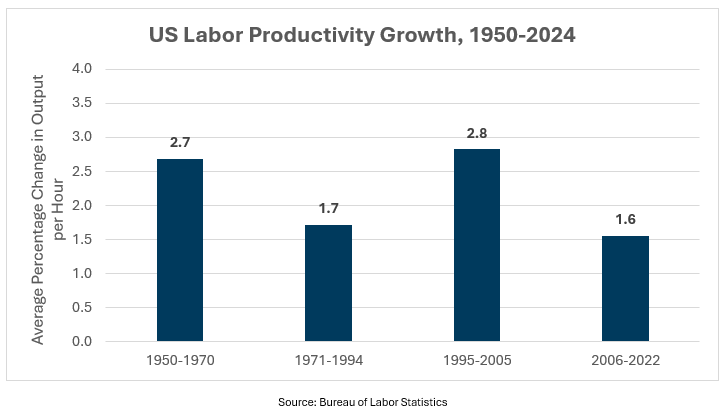
In 2023 and 2024, labor productivity grew at 1.9% and 2.7%, respectively, more in line with a long-term upswing in productivity. If we are entering a new cycle of stronger productivity growth, there are a few combining forces driving the acceleration:
- Artificial intelligence: Businesses are investing aggressively in AI technologies that reduce routine tasks and enhance efficiencies.
- Entrepreneurial boom: The U.S. has seen record new business formations, signaling an uptick in creative innovation.
- Reshoring and manufacturing: Strategic efforts to bring back production capacity, particularly in semiconductors and advanced manufacturing.
- Hybrid work models: More flexible work arrangements have in many cases increased output.
Taken together, these dynamics I think suggest more than just a post-pandemic bounce. They are structural shifts in how, when, and where work gets done.
Impact for Investors
Productivity is an important engine in long-term economic progress but also financial markets. When companies can produce more with the same labor force, margins expand and returns on capital improve, creating a powerful feedback loop:
Higher productivity → higher corporate earnings → higher wages →
higher consumption → stronger GDP → higher asset prices
But have investors been rewarded during cycles of increased productivity? Yes. Here’s the same chart with the average S&P annual return during the same periods:
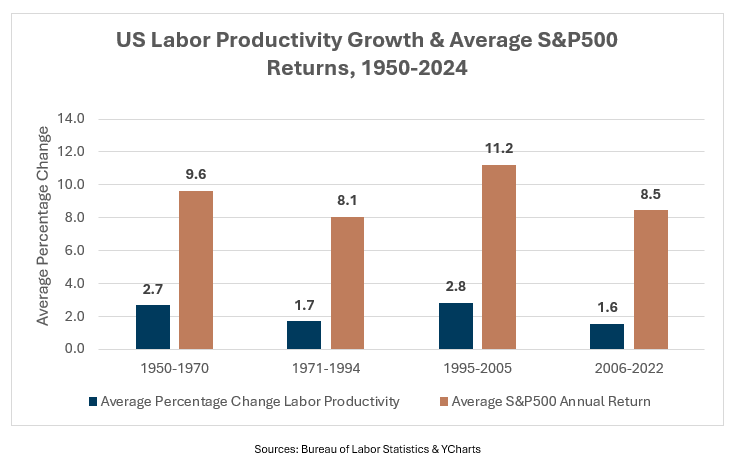
Of course, many factors influence equity returns, and past performance is not a guarantee of future results, but the recent uptick in productivity is a positive signal as we move ahead!
Enjoy the rest of your weekend!
-Matt
Sources: Bureau of Labor Statistics; YCharts
This communication and its contents are for informational and educational purposes only and should not be used as the sole basis for any investment decision. The information contained herein is based on publicly available sources believed to be reliable but is not a representation, expressed or implied, as to the accuracy, completeness, or correctness of said information. References to political figures or policies are for informational purposes only and do not represent an endorsement by Waddell & Associates. Any forward-looking statements reflect current opinions and assumptions and are subject to change without notice; actual results may differ materially. Past performance does not guarantee future results. Waddell & Associates may use artificial intelligence tools to help generate or summarize content; all outputs are reviewed by our team for accuracy and relevance.
">The Power of Productivity The Full Story:You might have missed it, and I wouldn’t blame you. Amid the daily whirlwind of political drama, from a federal takeover of Washington DC to a public spat with the Intel CEO, an important economic metric quietly beat expectations: US Labor Productivity rose 2.4% in the second quarter of 2025, continuing an upward trend that is worth paying attention to.
What is it?
At its core, labor productivity measures how much economic output (GDP) is generated per hour of work. It answers a fundamental question: How efficiently are workers turning time and effort into goods and services? GDP, remember, is just a comprehensive measure of the total value of all final goods and services produced, and there are two ways to grow it:
- Employ more workers.
- Make each worker more productive.
With aging populations and decreasing labor force participation rates, the productivity of each unit of labor is increasingly critical to GDP growth.
Why It Matters
Over the long-run, productivity growth is a key driver of economic prosperity. When a worker can produce more goods and services in an hour, businesses can afford to pay higher wages without raising their prices, improving the standard of living. This was a key principle of your painfully boring microeconomics class: Productivity growth drives wage gains, expands profit margins, and feeds a cycle of income growth and consumption.
The Long-Term Trends
Since WWII, US labor force productivity has shown strength over the long run, averaging over 2% per year, but the pace of growth has been cyclical. We can divide the post-WWII era into four distinct cycles of labor productivity growth:
- 1950-1970: +2.7% per year
- 1971-1994: +1.7% per year
- 1995-2005: +2.8% per year
- 2006-2022: +1.6% per year
In 2023 and 2024, labor productivity grew at 1.9% and 2.7%, respectively, more in line with a long-term upswing in productivity. If we are entering a new cycle of stronger productivity growth, there are a few combining forces driving the acceleration:
- Artificial intelligence: Businesses are investing aggressively in AI technologies that reduce routine tasks and enhance efficiencies.
- Entrepreneurial boom: The U.S. has seen record new business formations, signaling an uptick in creative innovation.
- Reshoring and manufacturing: Strategic efforts to bring back production capacity, particularly in semiconductors and advanced manufacturing.
- Hybrid work models: More flexible work arrangements have in many cases increased output.
Taken together, these dynamics I think suggest more than just a post-pandemic bounce. They are structural shifts in how, when, and where work gets done.
Impact for Investors
Productivity is an important engine in long-term economic progress but also financial markets. When companies can produce more with the same labor force, margins expand and returns on capital improve, creating a powerful feedback loop:
Higher productivity → higher corporate earnings → higher wages →
higher consumption → stronger GDP → higher asset prices
But have investors been rewarded during cycles of increased productivity? Yes. Here’s the same chart with the average S&P annual return during the same periods:
Of course, many factors influence equity returns, and past performance is not a guarantee of future results, but the recent uptick in productivity is a positive signal as we move ahead!
Enjoy the rest of your weekend!
-Matt
Sources: Bureau of Labor Statistics; YCharts
This communication and its contents are for informational and educational purposes only and should not be used as the sole basis for any investment decision. The information contained herein is based on publicly available sources believed to be reliable but is not a representation, expressed or implied, as to the accuracy, completeness, or correctness of said information. References to political figures or policies are for informational purposes only and do not represent an endorsement by Waddell & Associates. Any forward-looking statements reflect current opinions and assumptions and are subject to change without notice; actual results may differ materially. Past performance does not guarantee future results. Waddell & Associates may use artificial intelligence tools to help generate or summarize content; all outputs are reviewed by our team for accuracy and relevance.
" class="link-chevron">
Four times a year, companies report their prior quarter’s financial results. Analysts refer to this as earnings season. Remember that stock prices (P) represent earnings results (E) times a valuation multiple (P/E). We spend a great deal of our strategic efforts trying to divine the forward environment for earnings growth as well as the forward sentiment and interest rate combinations that ultimately drive valuations. These activities essentially require us to predict the future… a very hazardous career choice, I might add. Four times a year, we get to benchmark our predictions as companies reveal their actual earnings results (E). For much of the last two quarters, our faith in corporate management and their policy adaptability has outpaced our peers who feared that rising tariffs and falling consumer sentiment would limit, if not eliminate, corporate earnings. We wagered otherwise. Now that we have received roughly a third of Q2’s earnings results, let’s assess the merit of our optimism.
The Envelope Please
Of the 165 companies within the S&P 500 that have reported their second quarter results, 84% have beaten analyst expectations. Given that management tends to under-promise and over-deliver, beating expectations isn’t unusual, but the 84% beat rate outpaces the 75% average beat rate over the last decade.
For those concerned that companies have simply “managed” earnings, revenue growth rates have also beaten analyst expectations, but by a far wider margin. Eighty-three percent of reporting companies grew revenue more than expected compared with the 10-year average of 64%.
Investors have applauded these results with record highs for the S&P 500 and raised their expectations of future earnings growth rates:
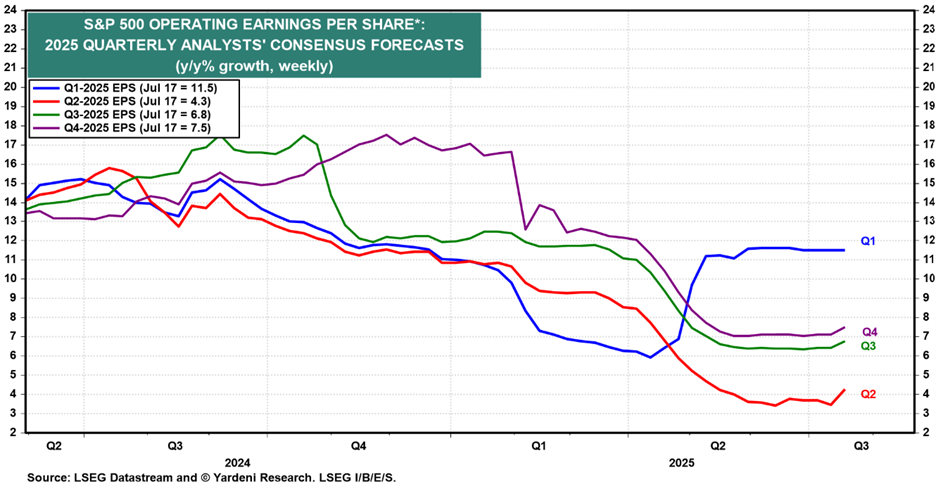
Each of these lines represents consensus analyst forecasts for earnings growth in each quarter of the year. Analysts typically initiate earnings forecasts with an optimistic bias only to become more insecure as the actual quarters end. Consider the blue line, which represents the expectations path for Q1 2025 earnings. A year ago, analysts expected a 14% growth rate for Q1, which they reduced to 6% prior to the reporting of actual results. Trump tariff policy fears drove much of the decline, only to be dispelled by registered growth of 11.5%. The same concerns have plagued expectations for Q2, Q3 and Q4 results as shown above. The anticipated double digit growth rates collapsed under the psychological weight of tariff impositions. However, while the surprising uptick in Q1 results visually stemmed further expectation declines, the surprising uptick so far in Q2 results has begun driving expectations higher for Q3 and Q4 earnings. Positively surprising results and rising future earnings expectations fully explain the speed of the stock market recovery off the April 8th lows and the persistent clip of new all-time highs.
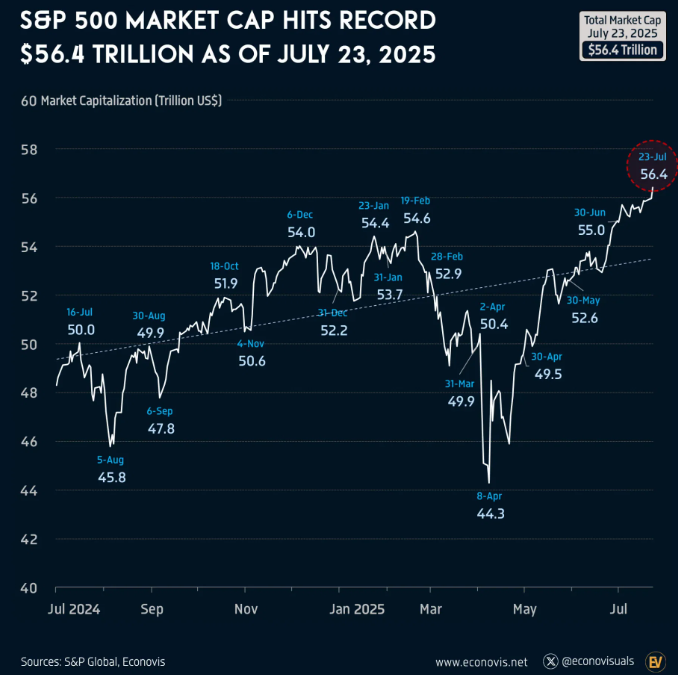
Enjoy the rest of your weekend!
-David
Sources: Yardeni Research, Econovis
This communication and its contents are for informational and educational purposes only and should not be used as the sole basis for any investment decision. The information contained herein is based on publicly available sources believed to be reliable but is not a representation, expressed or implied, as to the accuracy, completeness, or correctness of said information. References to political figures or policies are for informational purposes only and do not represent an endorsement by Waddell & Associates. Any forward-looking statements reflect current opinions and assumptions and are subject to change without notice; actual results may differ materially. Past performance does not guarantee future results. Waddell & Associates may use artificial intelligence tools to help generate or summarize content; all outputs are reviewed by our team for accuracy and relevance.
">The Reason for the Season
Four times a year, companies report their prior quarter’s financial results. Analysts refer to this as earnings season. Remember that stock prices (P) represent earnings results (E) times a valuation multiple (P/E). We spend a great deal of our strategic efforts trying to divine the forward environment for earnings growth as well as the forward sentiment and interest rate combinations that ultimately drive valuations. These activities essentially require us to predict the future… a very hazardous career choice, I might add. Four times a year, we get to benchmark our predictions as companies reveal their actual earnings results (E). For much of the last two quarters, our faith in corporate management and their policy adaptability has outpaced our peers who feared that rising tariffs and falling consumer sentiment would limit, if not eliminate, corporate earnings. We wagered otherwise. Now that we have received roughly a third of Q2’s earnings results, let’s assess the merit of our optimism.
The Envelope Please
Of the 165 companies within the S&P 500 that have reported their second quarter results, 84% have beaten analyst expectations. Given that management tends to under-promise and over-deliver, beating expectations isn’t unusual, but the 84% beat rate outpaces the 75% average beat rate over the last decade.
For those concerned that companies have simply “managed” earnings, revenue growth rates have also beaten analyst expectations, but by a far wider margin. Eighty-three percent of reporting companies grew revenue more than expected compared with the 10-year average of 64%.
Investors have applauded these results with record highs for the S&P 500 and raised their expectations of future earnings growth rates:
Each of these lines represents consensus analyst forecasts for earnings growth in each quarter of the year. Analysts typically initiate earnings forecasts with an optimistic bias only to become more insecure as the actual quarters end. Consider the blue line, which represents the expectations path for Q1 2025 earnings. A year ago, analysts expected a 14% growth rate for Q1, which they reduced to 6% prior to the reporting of actual results. Trump tariff policy fears drove much of the decline, only to be dispelled by registered growth of 11.5%. The same concerns have plagued expectations for Q2, Q3 and Q4 results as shown above. The anticipated double digit growth rates collapsed under the psychological weight of tariff impositions. However, while the surprising uptick in Q1 results visually stemmed further expectation declines, the surprising uptick so far in Q2 results has begun driving expectations higher for Q3 and Q4 earnings. Positively surprising results and rising future earnings expectations fully explain the speed of the stock market recovery off the April 8th lows and the persistent clip of new all-time highs.
Enjoy the rest of your weekend!
-David
Sources: Yardeni Research, Econovis
This communication and its contents are for informational and educational purposes only and should not be used as the sole basis for any investment decision. The information contained herein is based on publicly available sources believed to be reliable but is not a representation, expressed or implied, as to the accuracy, completeness, or correctness of said information. References to political figures or policies are for informational purposes only and do not represent an endorsement by Waddell & Associates. Any forward-looking statements reflect current opinions and assumptions and are subject to change without notice; actual results may differ materially. Past performance does not guarantee future results. Waddell & Associates may use artificial intelligence tools to help generate or summarize content; all outputs are reviewed by our team for accuracy and relevance.
" class="link-chevron">