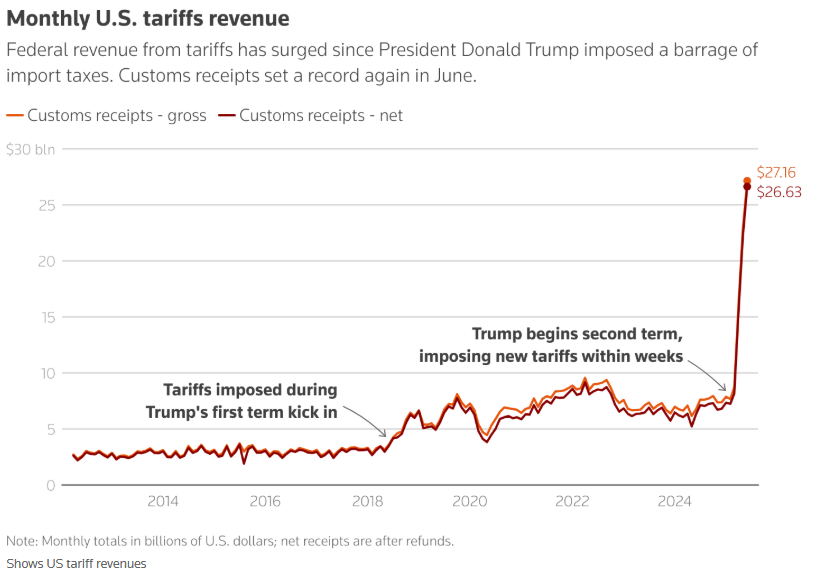
Trump promised that tariffs would boost Federal Revenue.
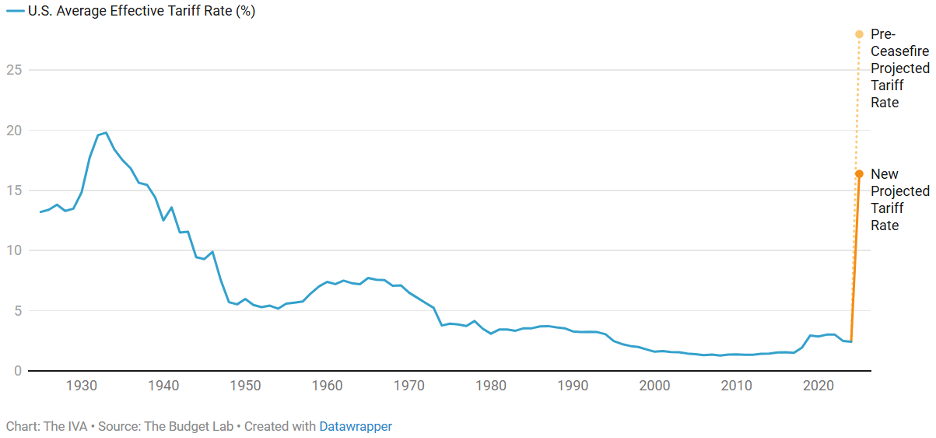
In July, the US Customs agency collected $27 billion in tariff duties on roughly $350 billion in imported goods. This equates to a roughly 8% effective rate so far, well below the “negotiating” rate currently levitating toward 20% as Trump applies maximum pressure worldwide into the August 1st deadline. It’s unclear where the rate will settle, but Treasury secretary Bessent stated recently, “we will be taking in $300 billion this year alone.” For that to be the case, let’s pick $350 billion as the anticipated take and run the numbers to calculate the post-negotiations tariff rate. For the first six months of the year, US customs collected $84 billion in tariff duties. To reach $350 billion in tariff revenues, customs would have to collect $266 billion over the remainder of the year. US imports totaled $4.1 trillion in 2024, or $340 billion per month. For 2025, imports totaled $2.3 trillion within the first six months, well above that run rate as companies front-ran the April tariffs. Assuming a $4.2 trillion total for 2025, the effective tariff rate for the back half of the year must equal 14%, 6% above current levels.
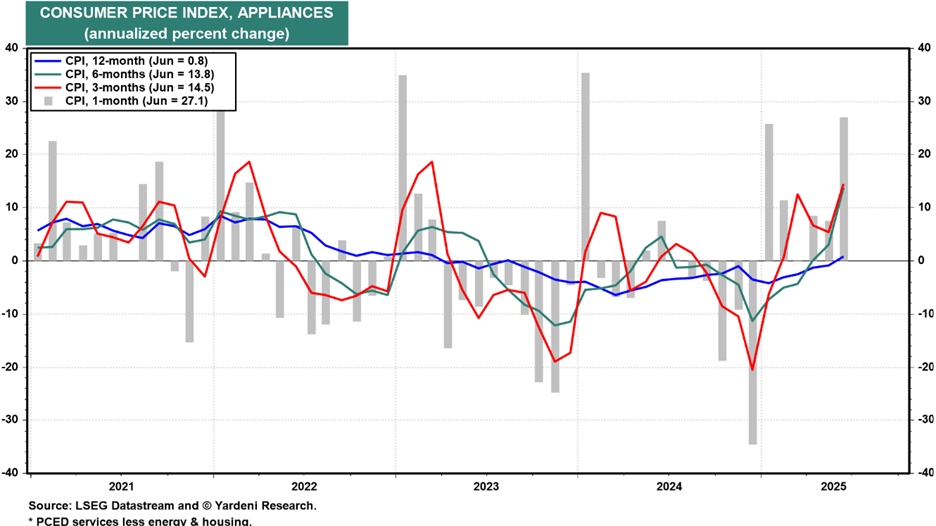
Several categories within the June CPI report reflected tariff impacts. For instance, for those of you shopping for stoves or refrigerators, I have some bad news:
While prices for home appliances rose a mere .8% over the past year, they have risen 27% over the past month (annualized). Economists lump appliances into a category called “durable goods.” Durable goods include products with longer than 3-year life spans like cars, home furnishings, machinery, electronics, toys, tools, etc. These categories account for over 60% of overall imports and bear the brunt of the tariffs. Therefore, the best way to track the acute impact of the tariffs on inflation is to examine the inflation within the durable goods category.
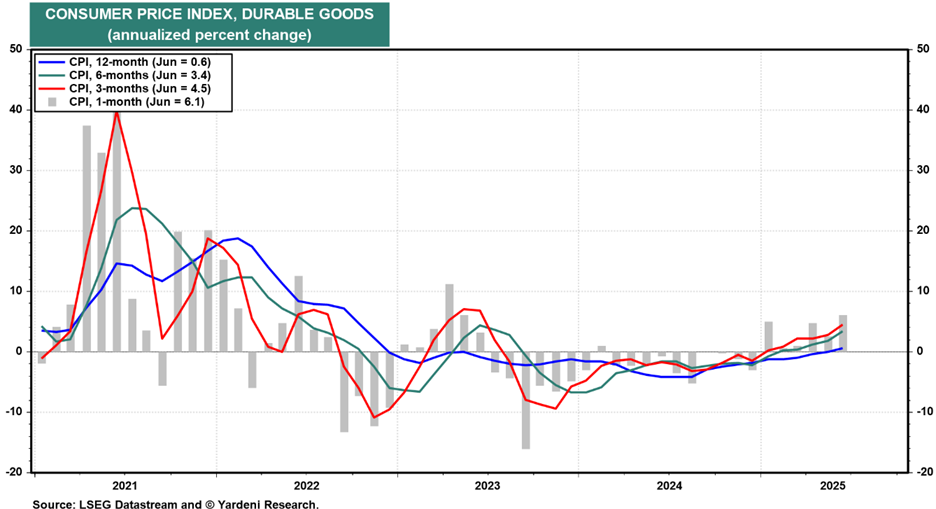
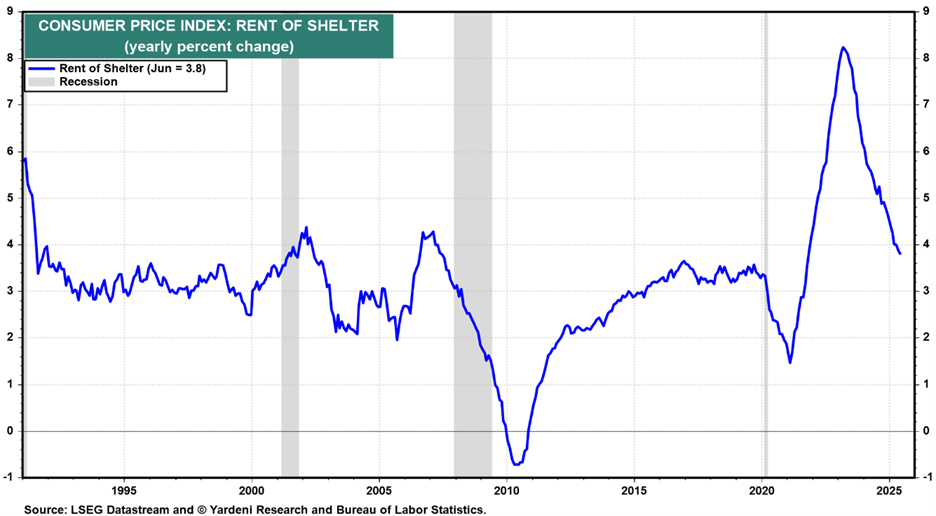
For June, durable goods inflation increased 6.1% annualized, accelerating from .6% over the past year. As you can see in the above chart, outside of the COVID distortions, durable goods prices typically deflate, which has been the primary benefit of globalization for consumers for years. Before we panic, here are two points lost in the media. First, durable goods represent less than 10% of overall US GDP. Our economy is largely domestic with services accounting for 68% of all economic activity. The COVID inflation that bit so badly wasn’t goods inflation, it was services inflation. Therefore, any decrease in services inflation will more than offset an increase in durable goods or tariff inflation. Housing costs represent the largest contributor to services inflation and roughly 34% of inflation overall. Note the current trend in housing inflation:
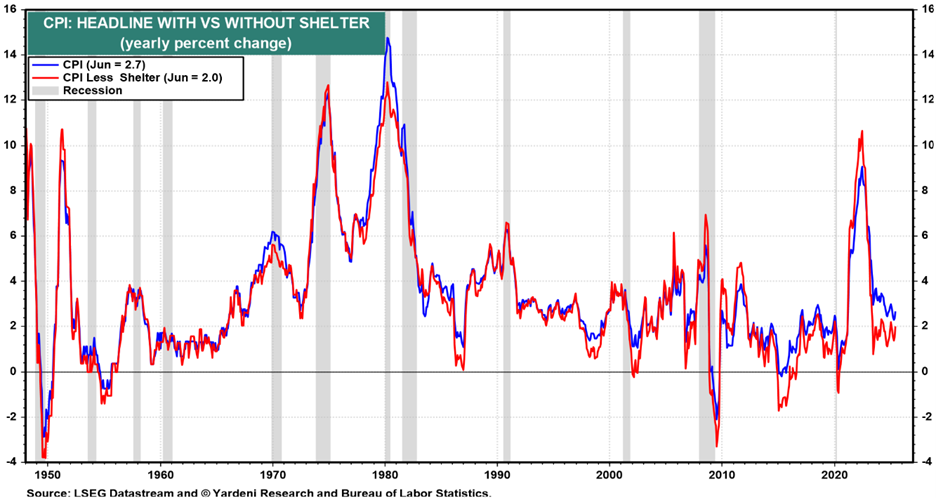
Housing’s steady trend of disinflation has provided the bulk of disinflation overall. Yet, housing inflation at 3.8% over the past year remains above the 3% pre-COVID average. If we remove shelter from the equation… the year-over-year inflation rate for the USA falls from 2.7% to 2%… spot on the Fed’s 2% target:
Lastly, a jump in the effective tariff rate from 3% to 14% creates an upward price adjustment in durable goods, but not persistent inflation. A $100 Lego Death Star could become a $111 Lego Death Star due to the 11% increase in tariffs if fully passed along, but once it does, the observable disinflationary trend should resume. In other words, there is a difference between inflation and price adjustment. The tariffs create price adjustments, not inflation. And depending on the timing of the adjustments and dynamics in housing and services inflation, they may underwhelm the excitable given their lesser weight within the economy overall. Expect price adjustments in durable goods as tariffs bite, but don’t expect them to conjure a return to COVID-like inflation.
Most economists, including us, expect tariff distortions to create some GDP drag. In fact, US GDP shrank .5% in the first quarter as imports surged in anticipation of tariff impositions. With trade somewhat normalizing in the second quarter, the Fed currently estimates a GDP growth rate of 2.6%, placing GDP growth for the first half just above 1%. This registers well below the 1.9% rate the Fed espouses as our long-term potential growth rate. However, while the first quarter growth rate anticipated tariffs, the second quarter growth rate included them. Given the disproportionate share of economic activity contributed by the US consumer, changes in unemployment and disposable income (spending capacity) influence GDP far more than tariff policy. A quick check of these vitals offers encouragement:
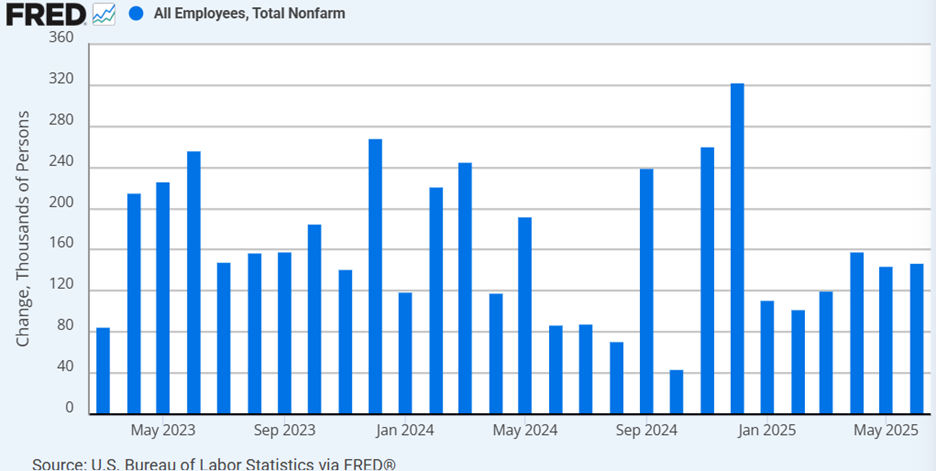
US employers added 147,000 jobs in June, up slightly from May and well within range of the last year’s average as the US economy grew nearly 3%.
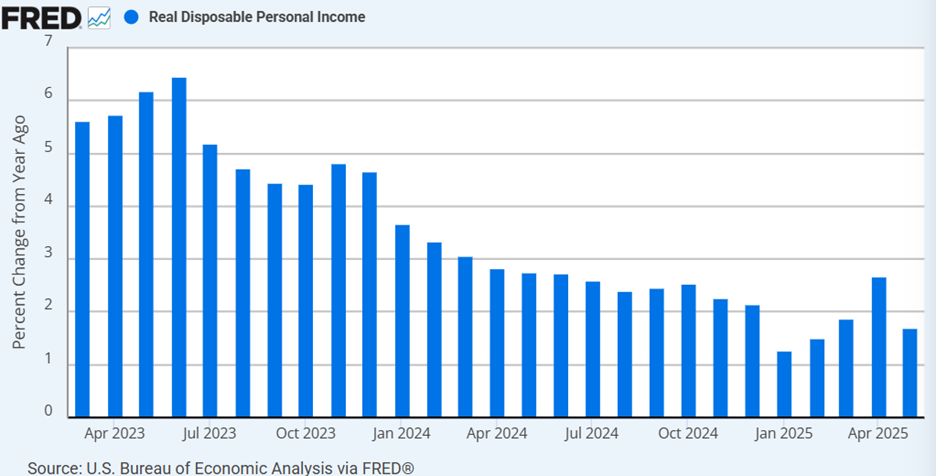
While job growth has maintained loft, real disposable personal income gains have fallen towards levels more consistent with slower economic growth as wage pressures abate. Tariff price adjustments reduce real disposable personal incomes as would any reductions in government benefits. However, real disposable personal income also includes tax payments. Any reduction in tax rates would thereby boost real disposable personal income and spending capacity for consumers. While tariffs may reduce spending power, tax cuts increase it. While economists expect tariffs to subtract less than .5% from GDP next year, they also expect the tax cuts to add over 1% to GDP.
Perhaps this explains why markets are trading at all-time highs.
Enjoy the rest of your weekend!
-David
Sources: Yardeni, Federal Reserve Bank of St. Louis, Reuters
This communication and its contents are for informational and educational purposes only and should not be used as the sole basis for any investment decision. The information contained herein is based on publicly available sources believed to be reliable but is not a representation, expressed or implied, as to the accuracy, completeness, or correctness of said information. References to political figures or policies are for informational purposes only and do not represent an endorsement by Waddell & Associates. Any forward-looking statements reflect current opinions and assumptions and are subject to change without notice; actual results may differ materially. Past performance does not guarantee future results. Waddell & Associates may use artificial intelligence tools to help generate or summarize content; all outputs are reviewed by our team for accuracy and relevance.
">
Trump promised that tariffs would boost Federal Revenue.
In July, the US Customs agency collected $27 billion in tariff duties on roughly $350 billion in imported goods. This equates to a roughly 8% effective rate so far, well below the “negotiating” rate currently levitating toward 20% as Trump applies maximum pressure worldwide into the August 1st deadline. It’s unclear where the rate will settle, but Treasury secretary Bessent stated recently, “we will be taking in $300 billion this year alone.” For that to be the case, let’s pick $350 billion as the anticipated take and run the numbers to calculate the post-negotiations tariff rate. For the first six months of the year, US customs collected $84 billion in tariff duties. To reach $350 billion in tariff revenues, customs would have to collect $266 billion over the remainder of the year. US imports totaled $4.1 trillion in 2024, or $340 billion per month. For 2025, imports totaled $2.3 trillion within the first six months, well above that run rate as companies front-ran the April tariffs. Assuming a $4.2 trillion total for 2025, the effective tariff rate for the back half of the year must equal 14%, 6% above current levels.
Several categories within the June CPI report reflected tariff impacts. For instance, for those of you shopping for stoves or refrigerators, I have some bad news:
While prices for home appliances rose a mere .8% over the past year, they have risen 27% over the past month (annualized). Economists lump appliances into a category called “durable goods.” Durable goods include products with longer than 3-year life spans like cars, home furnishings, machinery, electronics, toys, tools, etc. These categories account for over 60% of overall imports and bear the brunt of the tariffs. Therefore, the best way to track the acute impact of the tariffs on inflation is to examine the inflation within the durable goods category.
For June, durable goods inflation increased 6.1% annualized, accelerating from .6% over the past year. As you can see in the above chart, outside of the COVID distortions, durable goods prices typically deflate, which has been the primary benefit of globalization for consumers for years. Before we panic, here are two points lost in the media. First, durable goods represent less than 10% of overall US GDP. Our economy is largely domestic with services accounting for 68% of all economic activity. The COVID inflation that bit so badly wasn’t goods inflation, it was services inflation. Therefore, any decrease in services inflation will more than offset an increase in durable goods or tariff inflation. Housing costs represent the largest contributor to services inflation and roughly 34% of inflation overall. Note the current trend in housing inflation:
Housing’s steady trend of disinflation has provided the bulk of disinflation overall. Yet, housing inflation at 3.8% over the past year remains above the 3% pre-COVID average. If we remove shelter from the equation… the year-over-year inflation rate for the USA falls from 2.7% to 2%… spot on the Fed’s 2% target:
Lastly, a jump in the effective tariff rate from 3% to 14% creates an upward price adjustment in durable goods, but not persistent inflation. A $100 Lego Death Star could become a $111 Lego Death Star due to the 11% increase in tariffs if fully passed along, but once it does, the observable disinflationary trend should resume. In other words, there is a difference between inflation and price adjustment. The tariffs create price adjustments, not inflation. And depending on the timing of the adjustments and dynamics in housing and services inflation, they may underwhelm the excitable given their lesser weight within the economy overall. Expect price adjustments in durable goods as tariffs bite, but don’t expect them to conjure a return to COVID-like inflation.
Most economists, including us, expect tariff distortions to create some GDP drag. In fact, US GDP shrank .5% in the first quarter as imports surged in anticipation of tariff impositions. With trade somewhat normalizing in the second quarter, the Fed currently estimates a GDP growth rate of 2.6%, placing GDP growth for the first half just above 1%. This registers well below the 1.9% rate the Fed espouses as our long-term potential growth rate. However, while the first quarter growth rate anticipated tariffs, the second quarter growth rate included them. Given the disproportionate share of economic activity contributed by the US consumer, changes in unemployment and disposable income (spending capacity) influence GDP far more than tariff policy. A quick check of these vitals offers encouragement:
US employers added 147,000 jobs in June, up slightly from May and well within range of the last year’s average as the US economy grew nearly 3%.
While job growth has maintained loft, real disposable personal income gains have fallen towards levels more consistent with slower economic growth as wage pressures abate. Tariff price adjustments reduce real disposable personal incomes as would any reductions in government benefits. However, real disposable personal income also includes tax payments. Any reduction in tax rates would thereby boost real disposable personal income and spending capacity for consumers. While tariffs may reduce spending power, tax cuts increase it. While economists expect tariffs to subtract less than .5% from GDP next year, they also expect the tax cuts to add over 1% to GDP.
Perhaps this explains why markets are trading at all-time highs.
Enjoy the rest of your weekend!
-David
Sources: Yardeni, Federal Reserve Bank of St. Louis, Reuters
This communication and its contents are for informational and educational purposes only and should not be used as the sole basis for any investment decision. The information contained herein is based on publicly available sources believed to be reliable but is not a representation, expressed or implied, as to the accuracy, completeness, or correctness of said information. References to political figures or policies are for informational purposes only and do not represent an endorsement by Waddell & Associates. Any forward-looking statements reflect current opinions and assumptions and are subject to change without notice; actual results may differ materially. Past performance does not guarantee future results. Waddell & Associates may use artificial intelligence tools to help generate or summarize content; all outputs are reviewed by our team for accuracy and relevance.
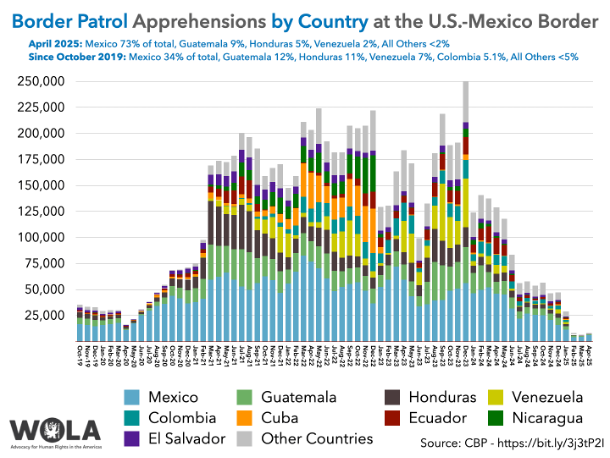
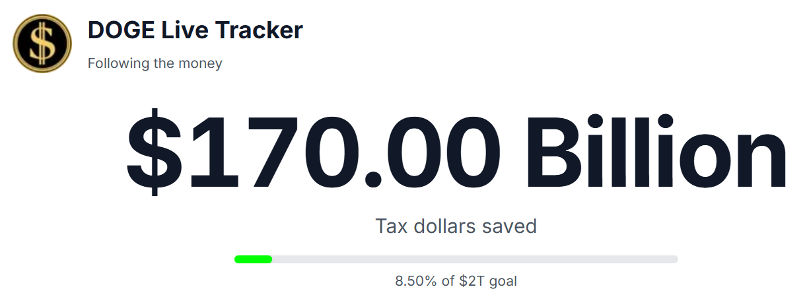
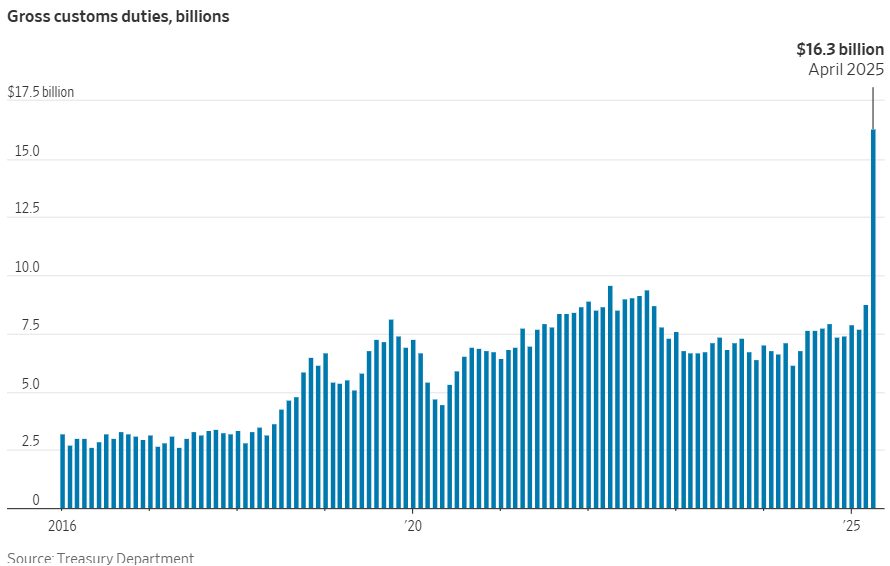
">Tallying Tariffs It’s July. Trump’s campaign promises have largely been fulfilled. DOGE blasted off and slashed $150 billion in expenses. Southern border encounters fell in June to 9,306 vs. 130,415 this month last year. Trump signed his $4.5 trillion OBBB on July 4th, the largest tax cut in history, and tariffs have begun pouring revenue into the US Treasury. Each of these major milestones contains intended and unintended economic consequences. Some will take time to evaluate, like the economic growth promises within the OBBB. Some have had time to simmer, like the tariff duties. This week, let’s examine the tariff digestion within the economy thus far.Trump promised that tariffs would boost Federal Revenue.
In July, the US Customs agency collected $27 billion in tariff duties on roughly $350 billion in imported goods. This equates to a roughly 8% effective rate so far, well below the “negotiating” rate currently levitating toward 20% as Trump applies maximum pressure worldwide into the August 1st deadline. It’s unclear where the rate will settle, but Treasury secretary Bessent stated recently, “we will be taking in $300 billion this year alone.” For that to be the case, let’s pick $350 billion as the anticipated take and run the numbers to calculate the post-negotiations tariff rate. For the first six months of the year, US customs collected $84 billion in tariff duties. To reach $350 billion in tariff revenues, customs would have to collect $266 billion over the remainder of the year. US imports totaled $4.1 trillion in 2024, or $340 billion per month. For 2025, imports totaled $2.3 trillion within the first six months, well above that run rate as companies front-ran the April tariffs. Assuming a $4.2 trillion total for 2025, the effective tariff rate for the back half of the year must equal 14%, 6% above current levels.
Several categories within the June CPI report reflected tariff impacts. For instance, for those of you shopping for stoves or refrigerators, I have some bad news:
While prices for home appliances rose a mere .8% over the past year, they have risen 27% over the past month (annualized). Economists lump appliances into a category called “durable goods.” Durable goods include products with longer than 3-year life spans like cars, home furnishings, machinery, electronics, toys, tools, etc. These categories account for over 60% of overall imports and bear the brunt of the tariffs. Therefore, the best way to track the acute impact of the tariffs on inflation is to examine the inflation within the durable goods category.
For June, durable goods inflation increased 6.1% annualized, accelerating from .6% over the past year. As you can see in the above chart, outside of the COVID distortions, durable goods prices typically deflate, which has been the primary benefit of globalization for consumers for years. Before we panic, here are two points lost in the media. First, durable goods represent less than 10% of overall US GDP. Our economy is largely domestic with services accounting for 68% of all economic activity. The COVID inflation that bit so badly wasn’t goods inflation, it was services inflation. Therefore, any decrease in services inflation will more than offset an increase in durable goods or tariff inflation. Housing costs represent the largest contributor to services inflation and roughly 34% of inflation overall. Note the current trend in housing inflation:
Housing’s steady trend of disinflation has provided the bulk of disinflation overall. Yet, housing inflation at 3.8% over the past year remains above the 3% pre-COVID average. If we remove shelter from the equation… the year-over-year inflation rate for the USA falls from 2.7% to 2%… spot on the Fed’s 2% target:
Lastly, a jump in the effective tariff rate from 3% to 14% creates an upward price adjustment in durable goods, but not persistent inflation. A $100 Lego Death Star could become a $111 Lego Death Star due to the 11% increase in tariffs if fully passed along, but once it does, the observable disinflationary trend should resume. In other words, there is a difference between inflation and price adjustment. The tariffs create price adjustments, not inflation. And depending on the timing of the adjustments and dynamics in housing and services inflation, they may underwhelm the excitable given their lesser weight within the economy overall. Expect price adjustments in durable goods as tariffs bite, but don’t expect them to conjure a return to COVID-like inflation.
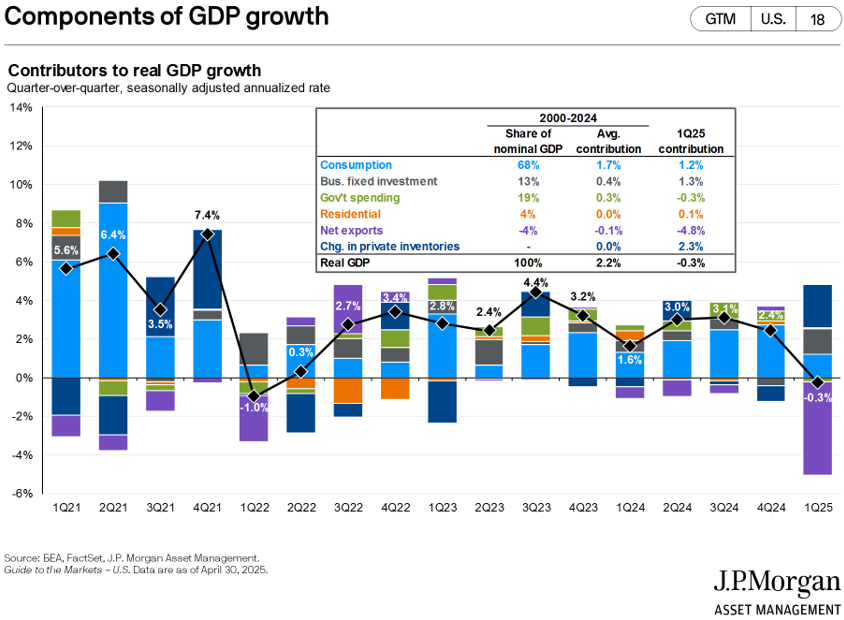
Most economists, including us, expect tariff distortions to create some GDP drag. In fact, US GDP shrank .5% in the first quarter as imports surged in anticipation of tariff impositions. With trade somewhat normalizing in the second quarter, the Fed currently estimates a GDP growth rate of 2.6%, placing GDP growth for the first half just above 1%. This registers well below the 1.9% rate the Fed espouses as our long-term potential growth rate. However, while the first quarter growth rate anticipated tariffs, the second quarter growth rate included them. Given the disproportionate share of economic activity contributed by the US consumer, changes in unemployment and disposable income (spending capacity) influence GDP far more than tariff policy. A quick check of these vitals offers encouragement:
US employers added 147,000 jobs in June, up slightly from May and well within range of the last year’s average as the US economy grew nearly 3%.
While job growth has maintained loft, real disposable personal income gains have fallen towards levels more consistent with slower economic growth as wage pressures abate. Tariff price adjustments reduce real disposable personal incomes as would any reductions in government benefits. However, real disposable personal income also includes tax payments. Any reduction in tax rates would thereby boost real disposable personal income and spending capacity for consumers. While tariffs may reduce spending power, tax cuts increase it. While economists expect tariffs to subtract less than .5% from GDP next year, they also expect the tax cuts to add over 1% to GDP.
Perhaps this explains why markets are trading at all-time highs.
Enjoy the rest of your weekend!
-David
Sources: Yardeni, Federal Reserve Bank of St. Louis, Reuters
This communication and its contents are for informational and educational purposes only and should not be used as the sole basis for any investment decision. The information contained herein is based on publicly available sources believed to be reliable but is not a representation, expressed or implied, as to the accuracy, completeness, or correctness of said information. References to political figures or policies are for informational purposes only and do not represent an endorsement by Waddell & Associates. Any forward-looking statements reflect current opinions and assumptions and are subject to change without notice; actual results may differ materially. Past performance does not guarantee future results. Waddell & Associates may use artificial intelligence tools to help generate or summarize content; all outputs are reviewed by our team for accuracy and relevance.
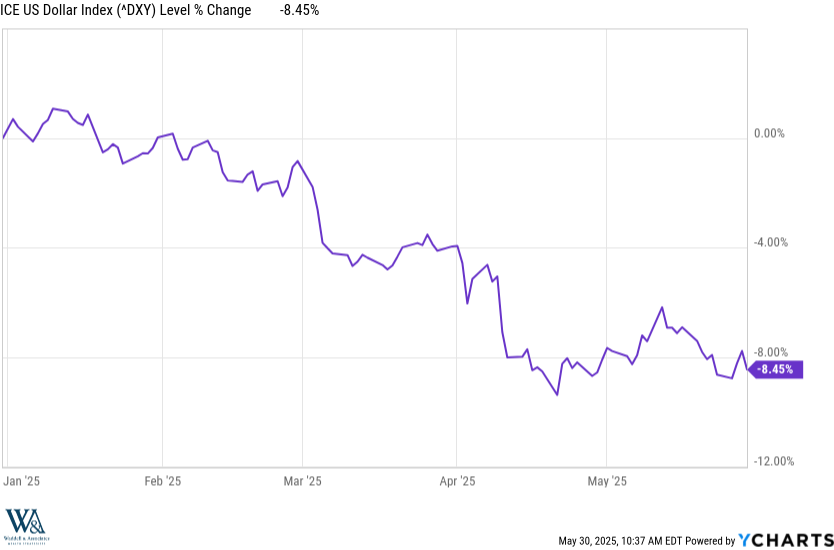
" class="link-chevron">As measured by the DXY (U.S. Dollar Index), the greenback is down roughly 10% year-to-date. The index, which tracks the dollar’s value relative to a basket of other currencies (The euro, Japanese yen, British pound, Canadian dollar, Swedish krona, and Swiss franc), hasn’t experienced a double-digit annual drop since 2017—and before that, 2002. Moves of this magnitude have been rare in recent memory, and it materially impacts investor portfolios.
For investors with international equity exposure, this year’s dollar decline has been a major tailwind. When the dollar weakens, gains in foreign markets, priced in local currency, translate into even stronger returns in dollar terms.
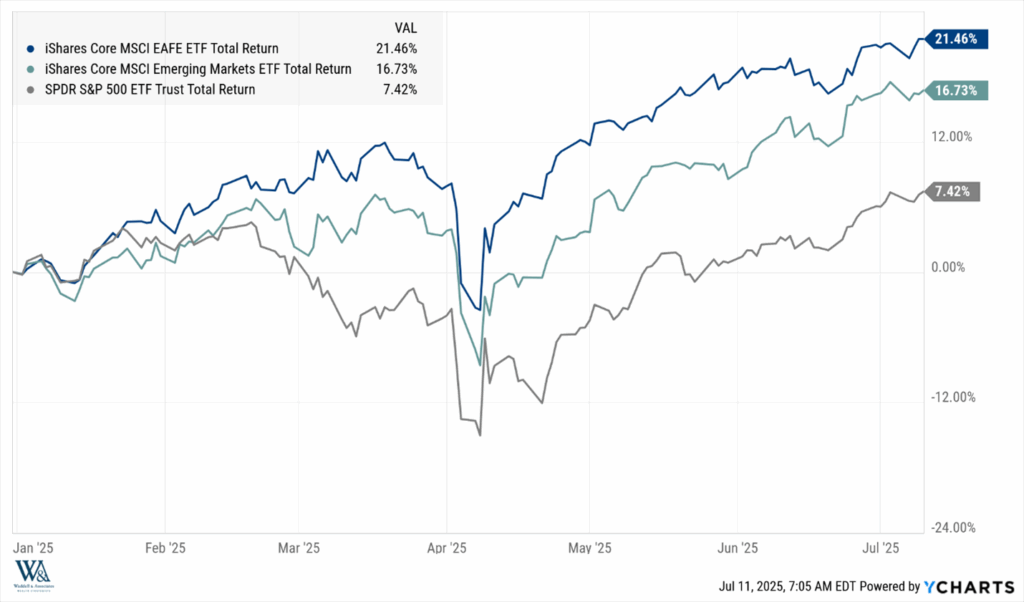
And the results have been impressive:
But if you remove the impact of the falling dollar, those returns fall to 11% and 6%, respectively. In other words, currency appreciation accounted for half the gains. That’s the power of foreign exchange working for, rather than against, global investors.
The shift represents a clear departure from recent history. For much of the past decade, a strong dollar suppressed foreign asset performance. When local currencies weakened against the dollar, U.S.-based investors often saw overseas gains erased in translation. The USD strength underpinned an era of U.S. asset outperformance and contributed to consistent home bias.
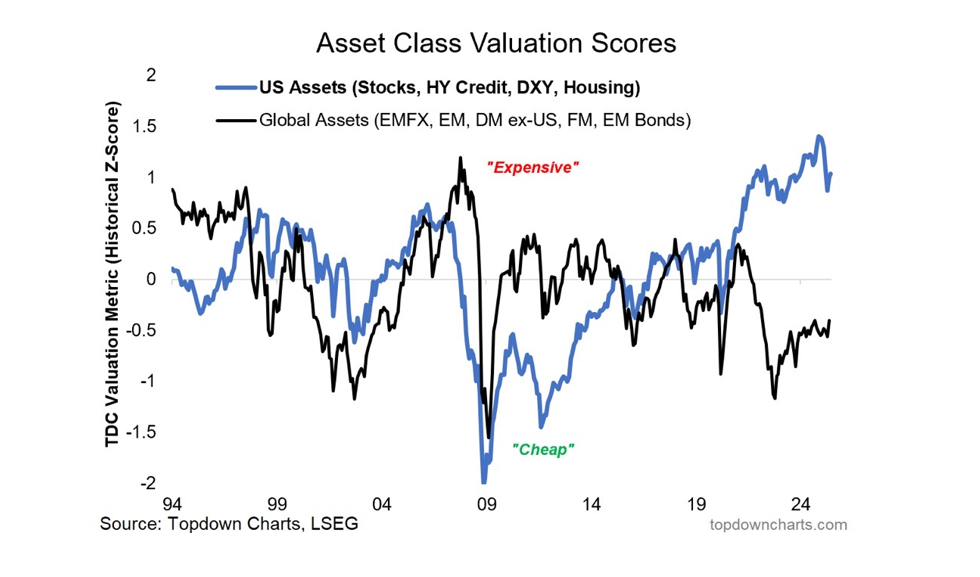
But 2025 is reminding investors that when the dollar falls, global diversification pays. And after 15 years of U.S. outperformance, the valuation gap between US and international assets has become increasingly difficult to ignore. U.S. assets are expensive relative to their global peers, and dollar weakness gives international markets both valuation appeal and performance momentum.
Reassessing Global Assumptions
It can be easy to fall victim to the narratives of recent market performance, but an environment with a weakening dollar necessitates a fresh look at portfolio factors, specifically:
Enjoy the rest of your weekend!
-Matt
Sources: Ycharts, Topdown Charts, LSEG
This communication and its contents are for informational and educational purposes only and should not be used as the sole basis for any investment decision. The information contained herein is based on publicly available sources believed to be reliable but is not a representation, expressed or implied, as to the accuracy, completeness, or correctness of said information. Past performance does not guarantee future results. Waddell & Associates may use artificial intelligence tools to help generate or summarize content; all outputs are reviewed by our team for accuracy and relevance.
">U.S. Dollar: Implications for Global ReturnsAs measured by the DXY (U.S. Dollar Index), the greenback is down roughly 10% year-to-date. The index, which tracks the dollar’s value relative to a basket of other currencies (The euro, Japanese yen, British pound, Canadian dollar, Swedish krona, and Swiss franc), hasn’t experienced a double-digit annual drop since 2017—and before that, 2002. Moves of this magnitude have been rare in recent memory, and it materially impacts investor portfolios.
For investors with international equity exposure, this year’s dollar decline has been a major tailwind. When the dollar weakens, gains in foreign markets, priced in local currency, translate into even stronger returns in dollar terms.
And the results have been impressive:
But if you remove the impact of the falling dollar, those returns fall to 11% and 6%, respectively. In other words, currency appreciation accounted for half the gains. That’s the power of foreign exchange working for, rather than against, global investors.
The shift represents a clear departure from recent history. For much of the past decade, a strong dollar suppressed foreign asset performance. When local currencies weakened against the dollar, U.S.-based investors often saw overseas gains erased in translation. The USD strength underpinned an era of U.S. asset outperformance and contributed to consistent home bias.
But 2025 is reminding investors that when the dollar falls, global diversification pays. And after 15 years of U.S. outperformance, the valuation gap between US and international assets has become increasingly difficult to ignore. U.S. assets are expensive relative to their global peers, and dollar weakness gives international markets both valuation appeal and performance momentum.
Reassessing Global Assumptions
It can be easy to fall victim to the narratives of recent market performance, but an environment with a weakening dollar necessitates a fresh look at portfolio factors, specifically:
Enjoy the rest of your weekend!
-Matt
Sources: Ycharts, Topdown Charts, LSEG
This communication and its contents are for informational and educational purposes only and should not be used as the sole basis for any investment decision. The information contained herein is based on publicly available sources believed to be reliable but is not a representation, expressed or implied, as to the accuracy, completeness, or correctness of said information. Past performance does not guarantee future results. Waddell & Associates may use artificial intelligence tools to help generate or summarize content; all outputs are reviewed by our team for accuracy and relevance.
" class="link-chevron">Inevitably, we find ourselves talking about deeper concerns: Will this money help or hurt my children? How do I prepare them for the responsibility that comes with wealth? What if they become entitled or lose their drive?
These aren’t financial questions—they’re emotional ones. And in my experience, the emotional complexity of inheritance often proves more challenging to navigate than the technical aspects.
For families stewarding significant wealth, inheritance carries profound emotional weight. Research shows that the majority of Americans believe passing on family values and traditions matters more than the monetary inheritance itself.
This perspective often becomes even more pronounced among high-net-worth families, where the stakes—both financial and emotional—are substantially higher.
I regularly work with clients who’ve built considerable wealth through entrepreneurship or executive careers. They’ve experienced firsthand the discipline, sacrifice, and strategic thinking required to create that wealth. Now they’re grappling with how to transfer not just the assets, but the wisdom and values that created them.
One of the most emotionally charged aspects of inheritance planning involves distribution decisions. Should everything be divided equally among children? What if one child has special needs? What if another has demonstrated poor financial judgment?
Fair isn’t always equal, and equal isn’t always fair.
I’ve seen parents struggle with leaving more to a child with disabilities or fewer financial resources. Without clear communication about their reasoning, these well-intentioned decisions can create lasting resentment among siblings.
The solution isn’t necessarily changing the distribution—it’s having honest conversations about the “why” behind your decisions. When parents share their reasoning, heirs typically accept the plan, even when it’s unequal. Without this context, siblings are left to speculate about motivations after you’re gone.
Perhaps no concern weighs more heavily on wealthy parents than the fear of raising children who are over-reliant on family wealth. How do you provide security without destroying motivation?
I don’t advocate hiding wealth from your heirs, but I do recommend thoughtful structure. Many families use milestone distributions, where heirs receive portions of their inheritance at different life stages—perhaps at ages 25, 35, and 45. This approach allows time for personal development and career establishment before accessing larger amounts.
For more complex situations involving addiction or persistent poor judgment, we often recommend professional trustees or co-trustees. This protects the assets while giving heirs time and support to address their challenges.
Financial literacy becomes critical when significant wealth is involved. You may assume your children understand money because you raised them, but without explicit financial education, they’ll struggle to manage their inheritance responsibly.
Start this education early, but recognize it’s an ongoing process. As your children mature, consider connecting them with financial professionals who can provide mentorship on increasingly complex topics. Whether they ultimately inherit hundreds of thousands or tens of millions, they’ll be better prepared with a solid foundation.
One of the most effective approaches for managing inheritance emotions is the structured family meeting. These gatherings serve multiple purposes: education, transparency, and relationship building.
Before any family meeting, we work with clients to determine appropriate information sharing. Not every young adult needs complete financial details, but adult children taking on family responsibilities do need to understand the broader landscape.
These meetings can evolve as your children mature. What begins as basic financial education can grow into strategic discussions about family values, philanthropic goals, and long-term wealth management.
At Waddell & Associates, we view inheritance planning as one component of our comprehensive wealth strategy relationship. We’re not just implementing your vision—we’re helping you think through the emotional and psychological complexities that come with significant wealth transfers.
This is where having a strategic thinking partner can become invaluable. We can help you navigate the difficult conversations, structure distributions that reflect your values, and prepare the next generation for the responsibilities ahead.
In my experience, managing generational wealth transfer requires both technical expertise and emotional intelligence. With thoughtful planning and clear communication, inheritance can strengthen family bonds rather than strain them, creating a legacy that reflects your values for generations to come.
Ready to explore how thoughtful inheritance planning can strengthen your family’s future?
We’d welcome the opportunity to discuss your specific situation and help you navigate both the financial and emotional aspects of wealth transfer. Learn about the Waddell & Associates difference and explore how you can work with us. We’d love to hear from you.
Sean Gould is a Senior Wealth Strategist with Waddell & Associates based in Memphis.
This communication and its contents are for informational and educational purposes only and should not be used as the sole basis for any investment decision. The information contained herein is based on publicly available sources believed to be reliable but is not a representation, expressed or implied, as to the accuracy, completeness, or correctness of said information. Past performance does not guarantee future results.

">
Inevitably, we find ourselves talking about deeper concerns: Will this money help or hurt my children? How do I prepare them for the responsibility that comes with wealth? What if they become entitled or lose their drive?
These aren’t financial questions—they’re emotional ones. And in my experience, the emotional complexity of inheritance often proves more challenging to navigate than the technical aspects.
For families stewarding significant wealth, inheritance carries profound emotional weight. Research shows that the majority of Americans believe passing on family values and traditions matters more than the monetary inheritance itself.
This perspective often becomes even more pronounced among high-net-worth families, where the stakes—both financial and emotional—are substantially higher.
I regularly work with clients who’ve built considerable wealth through entrepreneurship or executive careers. They’ve experienced firsthand the discipline, sacrifice, and strategic thinking required to create that wealth. Now they’re grappling with how to transfer not just the assets, but the wisdom and values that created them.
One of the most emotionally charged aspects of inheritance planning involves distribution decisions. Should everything be divided equally among children? What if one child has special needs? What if another has demonstrated poor financial judgment?
Fair isn’t always equal, and equal isn’t always fair.
I’ve seen parents struggle with leaving more to a child with disabilities or fewer financial resources. Without clear communication about their reasoning, these well-intentioned decisions can create lasting resentment among siblings.
The solution isn’t necessarily changing the distribution—it’s having honest conversations about the “why” behind your decisions. When parents share their reasoning, heirs typically accept the plan, even when it’s unequal. Without this context, siblings are left to speculate about motivations after you’re gone.
Perhaps no concern weighs more heavily on wealthy parents than the fear of raising children who are over-reliant on family wealth. How do you provide security without destroying motivation?
I don’t advocate hiding wealth from your heirs, but I do recommend thoughtful structure. Many families use milestone distributions, where heirs receive portions of their inheritance at different life stages—perhaps at ages 25, 35, and 45. This approach allows time for personal development and career establishment before accessing larger amounts.
For more complex situations involving addiction or persistent poor judgment, we often recommend professional trustees or co-trustees. This protects the assets while giving heirs time and support to address their challenges.
Financial literacy becomes critical when significant wealth is involved. You may assume your children understand money because you raised them, but without explicit financial education, they’ll struggle to manage their inheritance responsibly.
Start this education early, but recognize it’s an ongoing process. As your children mature, consider connecting them with financial professionals who can provide mentorship on increasingly complex topics. Whether they ultimately inherit hundreds of thousands or tens of millions, they’ll be better prepared with a solid foundation.
One of the most effective approaches for managing inheritance emotions is the structured family meeting. These gatherings serve multiple purposes: education, transparency, and relationship building.
Before any family meeting, we work with clients to determine appropriate information sharing. Not every young adult needs complete financial details, but adult children taking on family responsibilities do need to understand the broader landscape.
These meetings can evolve as your children mature. What begins as basic financial education can grow into strategic discussions about family values, philanthropic goals, and long-term wealth management.
At Waddell & Associates, we view inheritance planning as one component of our comprehensive wealth strategy relationship. We’re not just implementing your vision—we’re helping you think through the emotional and psychological complexities that come with significant wealth transfers.
This is where having a strategic thinking partner can become invaluable. We can help you navigate the difficult conversations, structure distributions that reflect your values, and prepare the next generation for the responsibilities ahead.
In my experience, managing generational wealth transfer requires both technical expertise and emotional intelligence. With thoughtful planning and clear communication, inheritance can strengthen family bonds rather than strain them, creating a legacy that reflects your values for generations to come.
Ready to explore how thoughtful inheritance planning can strengthen your family’s future?
We’d welcome the opportunity to discuss your specific situation and help you navigate both the financial and emotional aspects of wealth transfer. Learn about the Waddell & Associates difference and explore how you can work with us. We’d love to hear from you.
Sean Gould is a Senior Wealth Strategist with Waddell & Associates based in Memphis.
This communication and its contents are for informational and educational purposes only and should not be used as the sole basis for any investment decision. The information contained herein is based on publicly available sources believed to be reliable but is not a representation, expressed or implied, as to the accuracy, completeness, or correctness of said information. Past performance does not guarantee future results.

">How Money Shapes Family Dynamics: The Emotional Side of Inheritance When I sit across from clients discussing their estate plans, the conversation rarely stays focused on tax strategies or trust structures for long.Inevitably, we find ourselves talking about deeper concerns: Will this money help or hurt my children? How do I prepare them for the responsibility that comes with wealth? What if they become entitled or lose their drive?
These aren’t financial questions—they’re emotional ones. And in my experience, the emotional complexity of inheritance often proves more challenging to navigate than the technical aspects.
For families stewarding significant wealth, inheritance carries profound emotional weight. Research shows that the majority of Americans believe passing on family values and traditions matters more than the monetary inheritance itself.
This perspective often becomes even more pronounced among high-net-worth families, where the stakes—both financial and emotional—are substantially higher.
I regularly work with clients who’ve built considerable wealth through entrepreneurship or executive careers. They’ve experienced firsthand the discipline, sacrifice, and strategic thinking required to create that wealth. Now they’re grappling with how to transfer not just the assets, but the wisdom and values that created them.
One of the most emotionally charged aspects of inheritance planning involves distribution decisions. Should everything be divided equally among children? What if one child has special needs? What if another has demonstrated poor financial judgment?
Fair isn’t always equal, and equal isn’t always fair.
I’ve seen parents struggle with leaving more to a child with disabilities or fewer financial resources. Without clear communication about their reasoning, these well-intentioned decisions can create lasting resentment among siblings.
The solution isn’t necessarily changing the distribution—it’s having honest conversations about the “why” behind your decisions. When parents share their reasoning, heirs typically accept the plan, even when it’s unequal. Without this context, siblings are left to speculate about motivations after you’re gone.
Perhaps no concern weighs more heavily on wealthy parents than the fear of raising children who are over-reliant on family wealth. How do you provide security without destroying motivation?
I don’t advocate hiding wealth from your heirs, but I do recommend thoughtful structure. Many families use milestone distributions, where heirs receive portions of their inheritance at different life stages—perhaps at ages 25, 35, and 45. This approach allows time for personal development and career establishment before accessing larger amounts.
For more complex situations involving addiction or persistent poor judgment, we often recommend professional trustees or co-trustees. This protects the assets while giving heirs time and support to address their challenges.
Financial literacy becomes critical when significant wealth is involved. You may assume your children understand money because you raised them, but without explicit financial education, they’ll struggle to manage their inheritance responsibly.
Start this education early, but recognize it’s an ongoing process. As your children mature, consider connecting them with financial professionals who can provide mentorship on increasingly complex topics. Whether they ultimately inherit hundreds of thousands or tens of millions, they’ll be better prepared with a solid foundation.
One of the most effective approaches for managing inheritance emotions is the structured family meeting. These gatherings serve multiple purposes: education, transparency, and relationship building.
Before any family meeting, we work with clients to determine appropriate information sharing. Not every young adult needs complete financial details, but adult children taking on family responsibilities do need to understand the broader landscape.
These meetings can evolve as your children mature. What begins as basic financial education can grow into strategic discussions about family values, philanthropic goals, and long-term wealth management.
At Waddell & Associates, we view inheritance planning as one component of our comprehensive wealth strategy relationship. We’re not just implementing your vision—we’re helping you think through the emotional and psychological complexities that come with significant wealth transfers.
This is where having a strategic thinking partner can become invaluable. We can help you navigate the difficult conversations, structure distributions that reflect your values, and prepare the next generation for the responsibilities ahead.
In my experience, managing generational wealth transfer requires both technical expertise and emotional intelligence. With thoughtful planning and clear communication, inheritance can strengthen family bonds rather than strain them, creating a legacy that reflects your values for generations to come.
Ready to explore how thoughtful inheritance planning can strengthen your family’s future?
We’d welcome the opportunity to discuss your specific situation and help you navigate both the financial and emotional aspects of wealth transfer. Learn about the Waddell & Associates difference and explore how you can work with us. We’d love to hear from you.
Sean Gould is a Senior Wealth Strategist with Waddell & Associates based in Memphis.
This communication and its contents are for informational and educational purposes only and should not be used as the sole basis for any investment decision. The information contained herein is based on publicly available sources believed to be reliable but is not a representation, expressed or implied, as to the accuracy, completeness, or correctness of said information. Past performance does not guarantee future results.

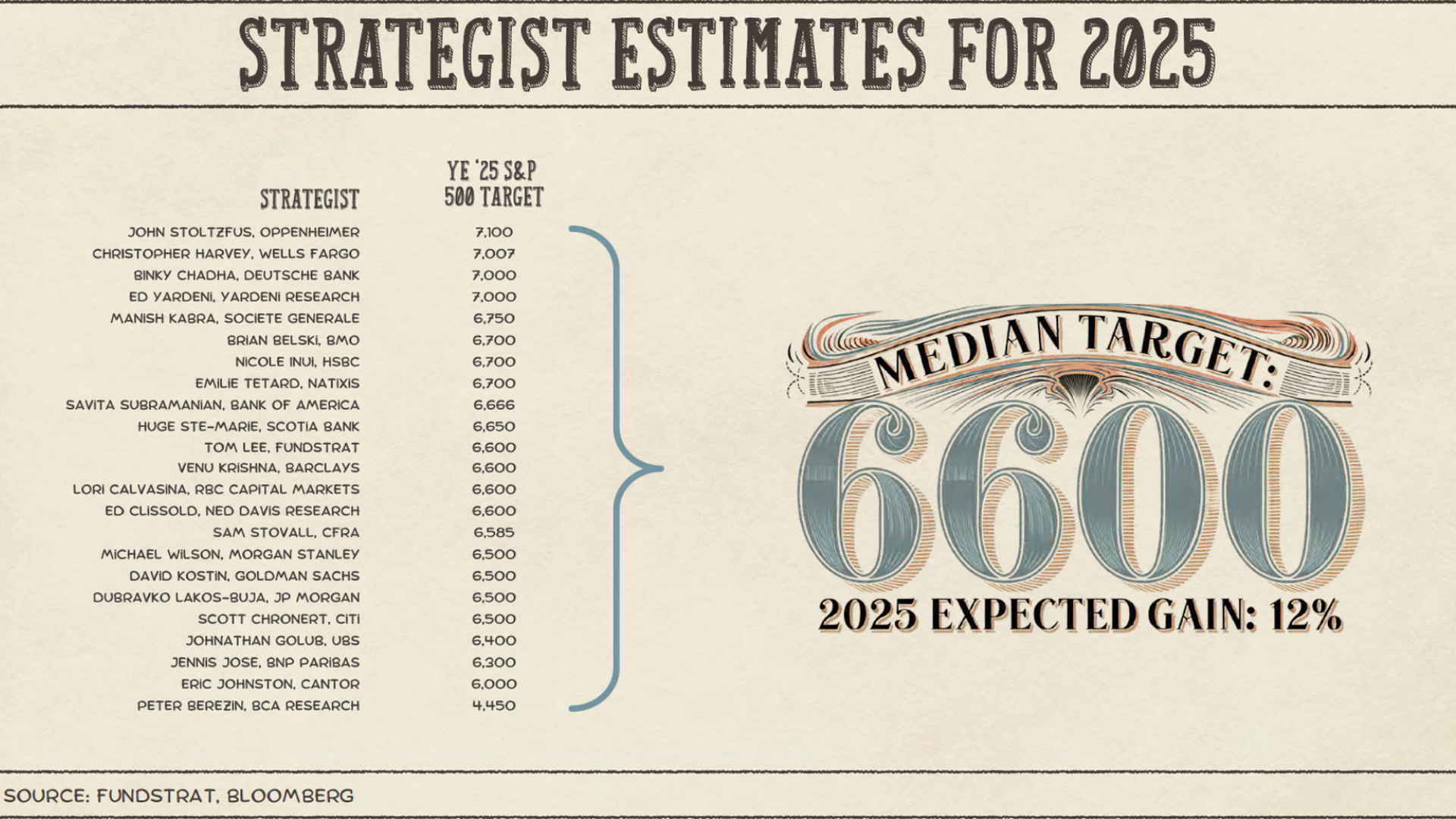
" class="link-chevron">At the outset of the year, the median 2025 year-end target for the S&P 500 from strategists across Wall Street sat at 6,600, or a 12% gain. Today the index sits at nearly 6,175, up ~5% on the year. Most strategists were forecasting some market appreciation, while strategists at Oppenheimer, Wells, Deutchse, and even Yardeni predicted nearly 20% returns this year.
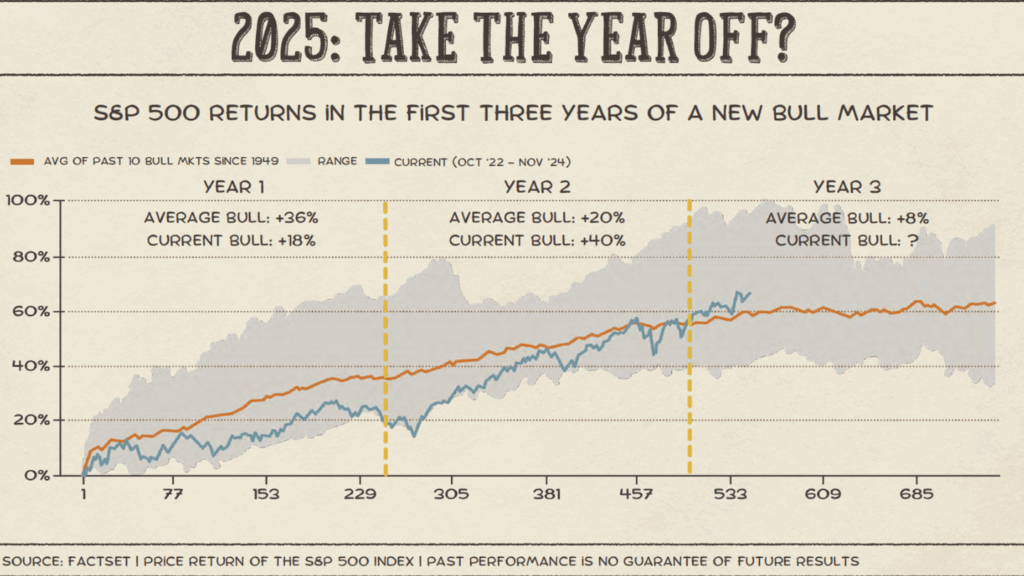
As we opined in our 2025 outlook presentation, we were cautiously optimistic that the bull market would continue, but likely in a more muted fashion. After big returns in 2023 and 2024, returns in year 3 of bull markets typically take a breather, averaging a modest 8%. Halfway through the year, we’re right on track.
If you missed the first half of the year and woke up today +5% year-to-date, congratulations on avoiding the news cycles. Funny how that works! Volatility, as measured by the VIX, ballooned north of 60 on April 7th and crashed to near 16 today (Friday, June 27th, 2025).
Similarly, high yield spreads are down 33% over the same time. Even oil prices that once rocketed on escalating tensions in the Middle East cratered -12% last week on news of a ceasefire. Many markets are back at all-time highs, having recalibrated to the news frequency and distribution methods of the new US administration.
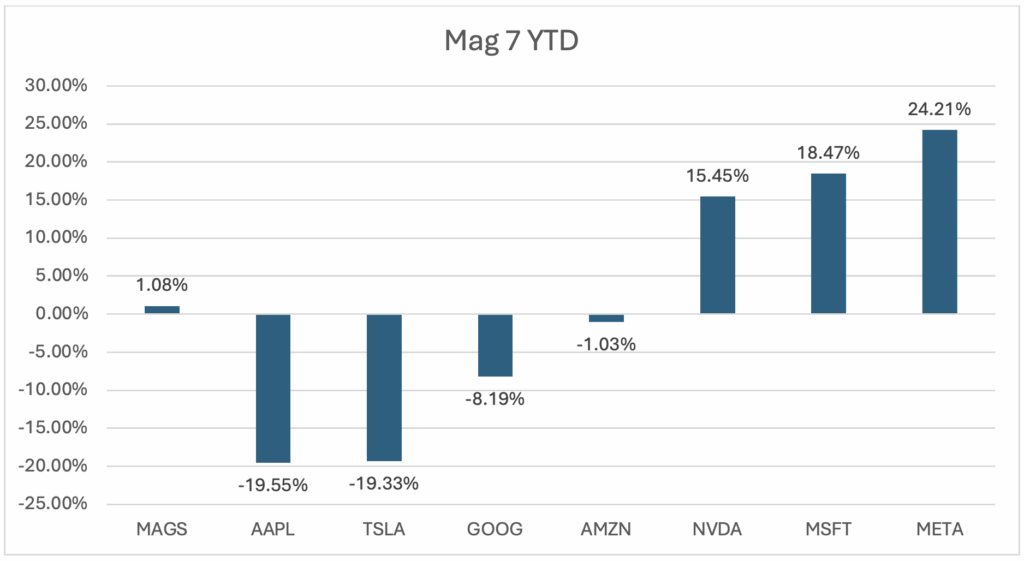
Though the S&P sits +5% this year, the source of return inside the US has varied. Take the Mag-7. Combined, they are mostly flat on the year, with Apple and Tesla lagging and Meta, Microsoft, and Nvidia leading the way:
Source: YCharts, 6/27/2025
Outside of US equities, international stocks are up 19% (ETF: IEFA), while emerging markets are up 16% (ETF: EEM). Bond investors have been paid as well, with various US bond indices up between 3-4% year-to-date (AGG, LQD, and HYG, etc.). Not to be outdone, gold and silver are both up 25% (ETF: GLD & SLV). Overall, it’s been a great start to the year across most asset classes!
Of course we can’t just look backwards, though! Looking ahead, we are moving towards what are known as the seasonally weak months of the early fall. However, we first need to navigate July.
What makes this July unique is the volatility wind-down from April. When volatility blows out like it did in April, volatility-control funds, by nature of their rules, pare down exposure to keep overall portfolio volatility at a certain level. But, as realized volatility rolls off, they go from net sellers to net buyers. And for the folks that follow this space closely, next month the volatility metrics tell us vol-control funds will be big buyers—so big that the projected monthly purchase from vol-control funds is the biggest it’s ever been as far back as the data has been tracked (2004). On to the second half!
Have a great weekend!
-Matt
Sources: YCharts, Nomura Asset Management
This communication and its contents are for informational and educational purposes only and should not be used as the sole basis for any investment decision. Waddell & Associates does not provide personalized investment advice through this communication. The information contained herein is based on publicly available sources believed to be reliable but is not a representation, expressed or implied, as to the accuracy, completeness, or correctness of said information. Past performance does not guarantee future results.

At the outset of the year, the median 2025 year-end target for the S&P 500 from strategists across Wall Street sat at 6,600, or a 12% gain. Today the index sits at nearly 6,175, up ~5% on the year. Most strategists were forecasting some market appreciation, while strategists at Oppenheimer, Wells, Deutchse, and even Yardeni predicted nearly 20% returns this year.
As we opined in our 2025 outlook presentation, we were cautiously optimistic that the bull market would continue, but likely in a more muted fashion. After big returns in 2023 and 2024, returns in year 3 of bull markets typically take a breather, averaging a modest 8%. Halfway through the year, we’re right on track.
If you missed the first half of the year and woke up today +5% year-to-date, congratulations on avoiding the news cycles. Funny how that works! Volatility, as measured by the VIX, ballooned north of 60 on April 7th and crashed to near 16 today (Friday, June 27th, 2025).
Similarly, high yield spreads are down 33% over the same time. Even oil prices that once rocketed on escalating tensions in the Middle East cratered -12% last week on news of a ceasefire. Many markets are back at all-time highs, having recalibrated to the news frequency and distribution methods of the new US administration.
Though the S&P sits +5% this year, the source of return inside the US has varied. Take the Mag-7. Combined, they are mostly flat on the year, with Apple and Tesla lagging and Meta, Microsoft, and Nvidia leading the way:
Source: YCharts, 6/27/2025
Outside of US equities, international stocks are up 19% (ETF: IEFA), while emerging markets are up 16% (ETF: EEM). Bond investors have been paid as well, with various US bond indices up between 3-4% year-to-date (AGG, LQD, and HYG, etc.). Not to be outdone, gold and silver are both up 25% (ETF: GLD & SLV). Overall, it’s been a great start to the year across most asset classes!
Of course we can’t just look backwards, though! Looking ahead, we are moving towards what are known as the seasonally weak months of the early fall. However, we first need to navigate July.
What makes this July unique is the volatility wind-down from April. When volatility blows out like it did in April, volatility-control funds, by nature of their rules, pare down exposure to keep overall portfolio volatility at a certain level. But, as realized volatility rolls off, they go from net sellers to net buyers. And for the folks that follow this space closely, next month the volatility metrics tell us vol-control funds will be big buyers—so big that the projected monthly purchase from vol-control funds is the biggest it’s ever been as far back as the data has been tracked (2004). On to the second half!
Have a great weekend!
-Matt
Sources: YCharts, Nomura Asset Management
This communication and its contents are for informational and educational purposes only and should not be used as the sole basis for any investment decision. Waddell & Associates does not provide personalized investment advice through this communication. The information contained herein is based on publicly available sources believed to be reliable but is not a representation, expressed or implied, as to the accuracy, completeness, or correctness of said information. Past performance does not guarantee future results.
" class="link-chevron">
As we discussed in our Market Outlook from February, it was likely a year to take off, and my guess is that most of Wall Street is out enjoying the Hamptons. For now, investors should continue to capitalize on opportunities when sentiment is overly bullish or bearish and allow it to serve as a guide for intermediate-term price action.
All this means is it’s officially baseball season. As has been said before, sports are more than entertainment—they’re a classroom for life. They deliver lessons, memories, and moments that shape our character. Last week, Arkansas exited the Men’s College World Series after a couple of tough breaks. It stings. Those players will carry that taste for a while. But the most powerful moment came after the final out, and it offered a lesson that’s just as relevant to our work as it is to theirs.
The Razorbacks led 5–3 in the bottom of the ninth. Two outs. Runners on first and second. A line drive heads to left field—straight to Charles Davalan, the Hogs’ left fielder. He hadn’t made an error all season. Seriously. But in this moment, he misjudges the ball. It skips past him to the wall, the runners score, and the game is tied. Arkansas would eventually lose in extra innings. Ouch. Here’s the replay.
Imagine the replay in his head… a single play that will live with him for a long time.
But then, something awesome happened. As cameras kept rolling, Charles was swarmed—not with criticism, but compassion. Coaches and teammates. Tears and hugs. Encouragement and support. Here’s the video. Charles was in a rough spot, but his coaches and teammates were there when he needed them most.
So, what does this have to do with financial planning?
It’s a question we hear often: Why should I hire an advisor to manage my financial life?
Here’s why: because, like Arkansas’ coaches and teammates, we’re not just there when you hit a home run. We’re by your side through the errors, the strikeouts, the walks, the wild pitches. When faced with an obstacle, we’re right alongside. A good advisor—like a good coach or teammate—offers insight, advice, perspective, and calm in the midst of a storm. Financial planning isn’t one-size-fits-all. It’s personal. It’s long-term. And it’s a journey best traveled with someone who’s invested in you.
So, build your village. Find your coach, and partner with a strategist who’s there for the big moments and the hard ones. As markets revisit all-time highs, the value of your advisor relationship will provide the most alpha to your financial plan over time.
That’s all for this week.
Cheers,
Matt
Sources: LSEG Datastream and Yardeni Research
This communication and its contents are for informational and educational purposes only and should not be used as the sole basis for any investment decision. Waddell & Associates does not provide personalized investment advice through this communication. The information contained herein is based on publicly available sources believed to be reliable but is not a representation, expressed or implied, as to the accuracy, completeness, or correctness of said information. Past performance does not guarantee future results.
">
As we discussed in our Market Outlook from February, it was likely a year to take off, and my guess is that most of Wall Street is out enjoying the Hamptons. For now, investors should continue to capitalize on opportunities when sentiment is overly bullish or bearish and allow it to serve as a guide for intermediate-term price action.
All this means is it’s officially baseball season. As has been said before, sports are more than entertainment—they’re a classroom for life. They deliver lessons, memories, and moments that shape our character. Last week, Arkansas exited the Men’s College World Series after a couple of tough breaks. It stings. Those players will carry that taste for a while. But the most powerful moment came after the final out, and it offered a lesson that’s just as relevant to our work as it is to theirs.
The Razorbacks led 5–3 in the bottom of the ninth. Two outs. Runners on first and second. A line drive heads to left field—straight to Charles Davalan, the Hogs’ left fielder. He hadn’t made an error all season. Seriously. But in this moment, he misjudges the ball. It skips past him to the wall, the runners score, and the game is tied. Arkansas would eventually lose in extra innings. Ouch. Here’s the replay.
Imagine the replay in his head… a single play that will live with him for a long time.
But then, something awesome happened. As cameras kept rolling, Charles was swarmed—not with criticism, but compassion. Coaches and teammates. Tears and hugs. Encouragement and support. Here’s the video. Charles was in a rough spot, but his coaches and teammates were there when he needed them most.
So, what does this have to do with financial planning?
It’s a question we hear often: Why should I hire an advisor to manage my financial life?
Here’s why: because, like Arkansas’ coaches and teammates, we’re not just there when you hit a home run. We’re by your side through the errors, the strikeouts, the walks, the wild pitches. When faced with an obstacle, we’re right alongside. A good advisor—like a good coach or teammate—offers insight, advice, perspective, and calm in the midst of a storm. Financial planning isn’t one-size-fits-all. It’s personal. It’s long-term. And it’s a journey best traveled with someone who’s invested in you.
So, build your village. Find your coach, and partner with a strategist who’s there for the big moments and the hard ones. As markets revisit all-time highs, the value of your advisor relationship will provide the most alpha to your financial plan over time.
That’s all for this week.
Cheers,
Matt
Sources: LSEG Datastream and Yardeni Research
This communication and its contents are for informational and educational purposes only and should not be used as the sole basis for any investment decision. Waddell & Associates does not provide personalized investment advice through this communication. The information contained herein is based on publicly available sources believed to be reliable but is not a representation, expressed or implied, as to the accuracy, completeness, or correctness of said information. Past performance does not guarantee future results.
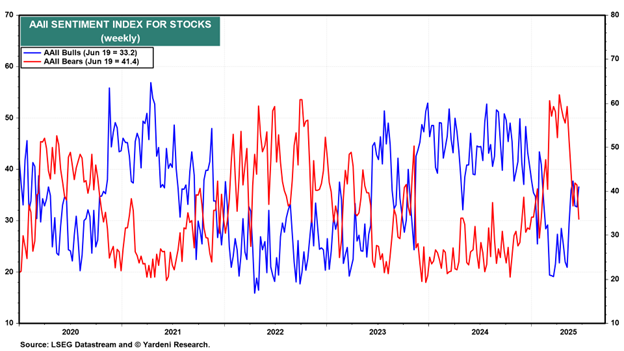
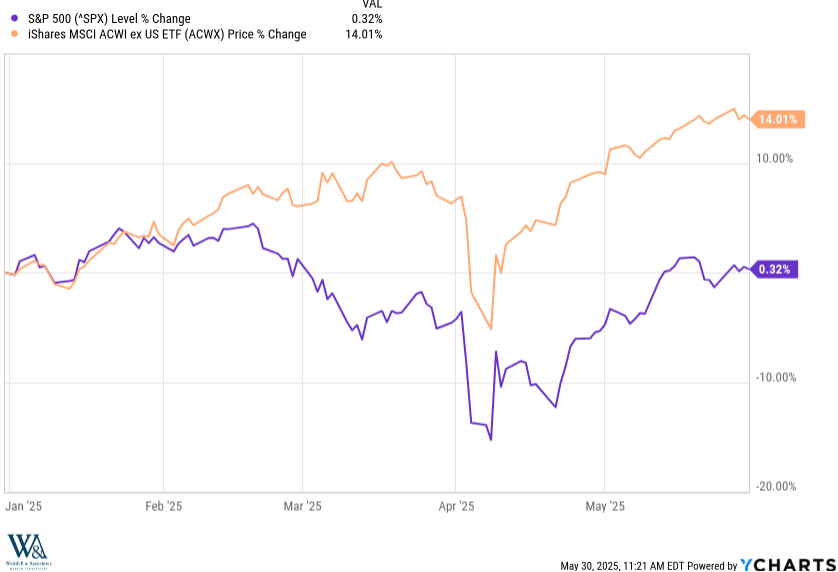
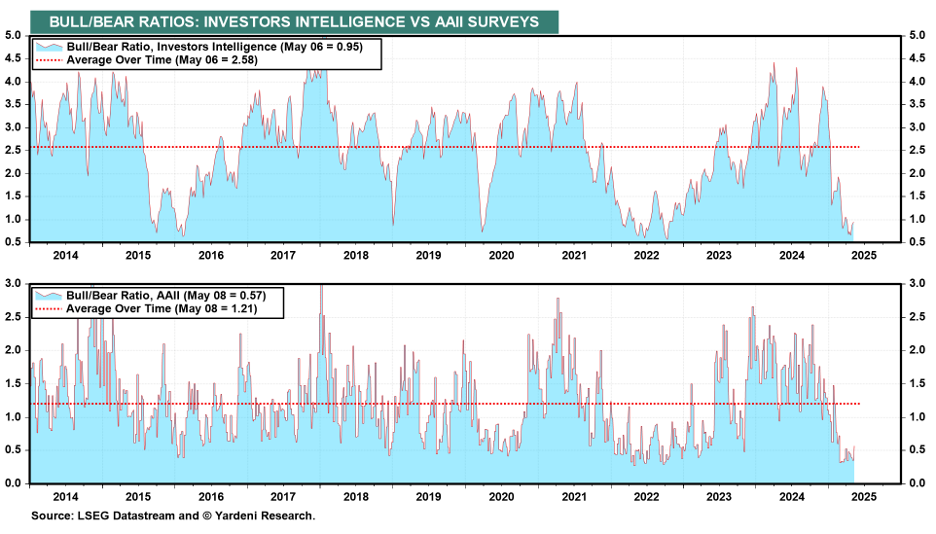
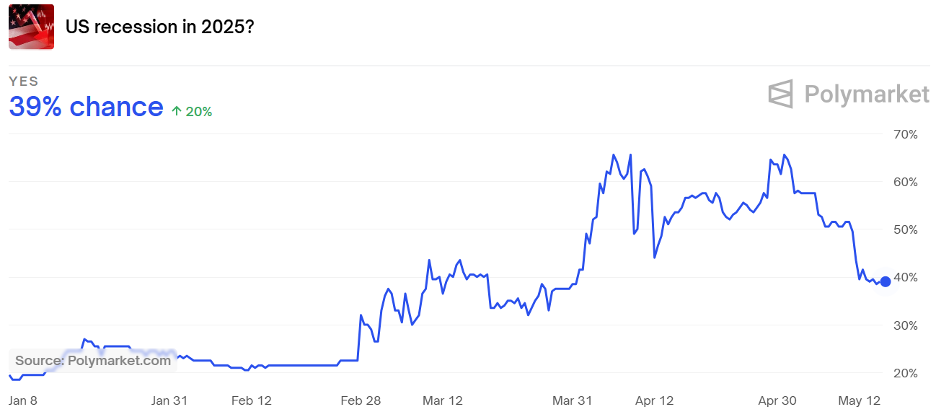
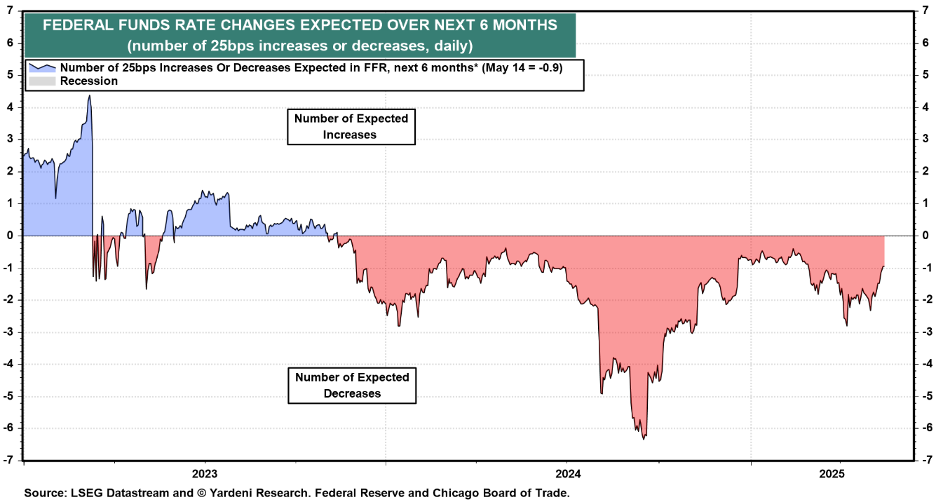
">The Value of a Good Teammate (and Advisor) Football is wrapped. Basketball is (nearly) in the books. We’ve officially entered the dog days of summer. With it, US equity markets have rebounded sharply from the lows of “Liberation Day”, and the S&P 500 sits less than 3% from the all-time closing high on February 19th. Stock sentiment has recalibrated with this V-shape recovery:
As we discussed in our Market Outlook from February, it was likely a year to take off, and my guess is that most of Wall Street is out enjoying the Hamptons. For now, investors should continue to capitalize on opportunities when sentiment is overly bullish or bearish and allow it to serve as a guide for intermediate-term price action.
All this means is it’s officially baseball season. As has been said before, sports are more than entertainment—they’re a classroom for life. They deliver lessons, memories, and moments that shape our character. Last week, Arkansas exited the Men’s College World Series after a couple of tough breaks. It stings. Those players will carry that taste for a while. But the most powerful moment came after the final out, and it offered a lesson that’s just as relevant to our work as it is to theirs.
The Razorbacks led 5–3 in the bottom of the ninth. Two outs. Runners on first and second. A line drive heads to left field—straight to Charles Davalan, the Hogs’ left fielder. He hadn’t made an error all season. Seriously. But in this moment, he misjudges the ball. It skips past him to the wall, the runners score, and the game is tied. Arkansas would eventually lose in extra innings. Ouch. Here’s the replay.
Imagine the replay in his head… a single play that will live with him for a long time.
But then, something awesome happened. As cameras kept rolling, Charles was swarmed—not with criticism, but compassion. Coaches and teammates. Tears and hugs. Encouragement and support. Here’s the video. Charles was in a rough spot, but his coaches and teammates were there when he needed them most.
So, what does this have to do with financial planning?
It’s a question we hear often: Why should I hire an advisor to manage my financial life?
Here’s why: because, like Arkansas’ coaches and teammates, we’re not just there when you hit a home run. We’re by your side through the errors, the strikeouts, the walks, the wild pitches. When faced with an obstacle, we’re right alongside. A good advisor—like a good coach or teammate—offers insight, advice, perspective, and calm in the midst of a storm. Financial planning isn’t one-size-fits-all. It’s personal. It’s long-term. And it’s a journey best traveled with someone who’s invested in you.
So, build your village. Find your coach, and partner with a strategist who’s there for the big moments and the hard ones. As markets revisit all-time highs, the value of your advisor relationship will provide the most alpha to your financial plan over time.
That’s all for this week.
Cheers,
Matt
Sources: LSEG Datastream and Yardeni Research
This communication and its contents are for informational and educational purposes only and should not be used as the sole basis for any investment decision. Waddell & Associates does not provide personalized investment advice through this communication. The information contained herein is based on publicly available sources believed to be reliable but is not a representation, expressed or implied, as to the accuracy, completeness, or correctness of said information. Past performance does not guarantee future results.
" class="link-chevron">
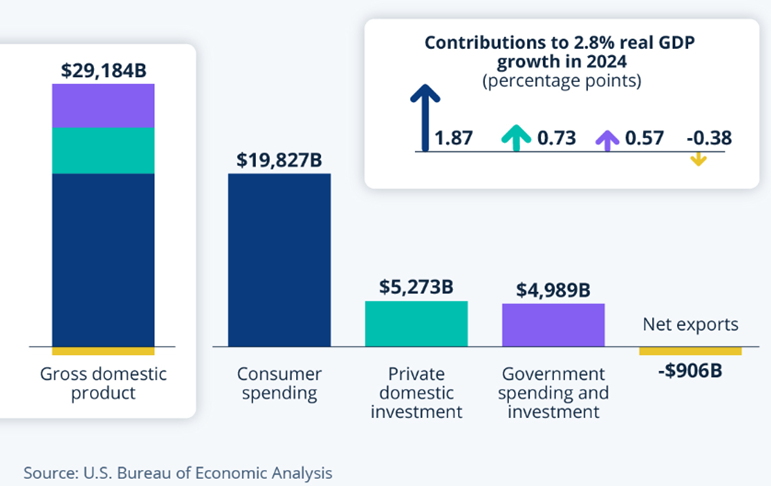
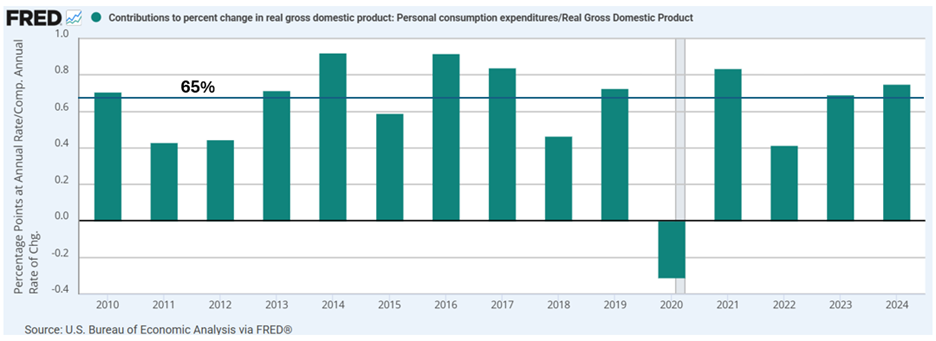
US nominal GDP for the calendar year ending 12/31/24 totaled $29 trillion. Consumer spending accounted for $19.8 trillion of that figure. To put this in perspective, China’s entire economy generated $18.8 trillion of GDP in 2024. Not only does consumption comprise the lion’s share of US GDP, but also the lion’s share of US GDP growth. The chart below chronicles the percentage of total GDP growth contributed by consumer spending growth:
Over the last decade and a half, consumer spending growth has driven 65% of annual US GDP growth. The one year when consumption declined, the US economy fell into recession. As is said, “As goes the US consumer…”
This week, amid all the confusion, anxiety, misinformation, and marketplace turmoil that Trump’s “Liberation Day” and Israel’s attack on Iran have triggered, let’s check the U.S. consumer’s vitals to see if any apparent weakness there might be fermenting hidden weakness elsewhere.
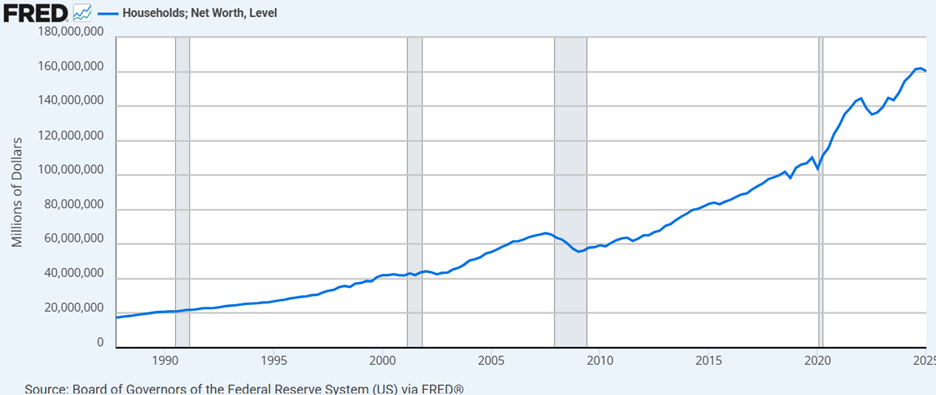
The US consumer net worth dipped slightly from record levels in the first quarter due to a pullback in equity prices. Equity prices have since recovered, reclaiming lost ground. With one-fifth of the US population now over the age of 65, net worth levels must remain healthy to support consumer confidence and retiree spending levels. For now, healthy net worth should sustain healthy spending.
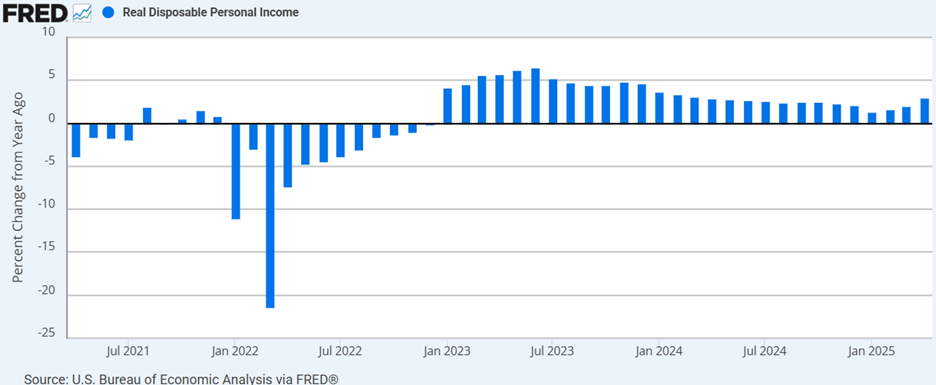
While net worth supports spending capacity, real disposable income powers it daily. This calculation measures after-tax income adjusted for inflation. While many analysts focus on the employment data to determine consumer viability, jobs serve as a means to an end, and wages are the end. This number also includes government support inflows and investment income. The monthly employment reports do not capture these meaningful contributors. In the most recent data, real disposable income spending capacity rose 3% year-over-year, reflecting wage growth, social security inflation, and lower overall inflation levels. The US consumer exited April with substantial income-supported purchasing power.
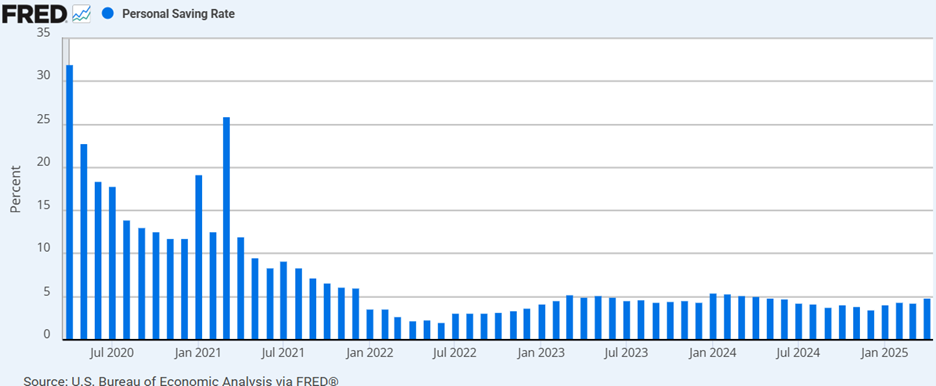
The chart above captures consumer saving patterns, including the COVID stimulus anomaly. Note that consumers saved a significant portion of their stimulus payments, greatly enhancing household net worth during the period. The rapid drawdown into mid-2022 reflects the impact of record inflation, which rapidly depleted spending capacity. Since then, consumer savings have returned to more normal levels around 5%. Changes in savings activity serve as a psychological barometer for economists. For example, while consumers received healthy income gains in April, they spent less of it than in previous months, boosting savings levels. This likely correlates with the slight downtick in net worth and the large uptick in uncertainty caused by “Liberation Day”. This could indicate more cautious consumer behavior ahead, even with resilient income flows, but not enough to drive the economy into recession.
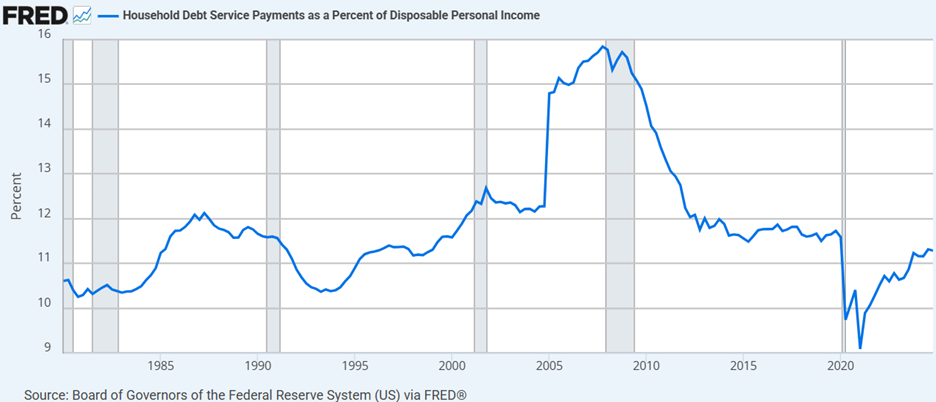
Consumers have multiple sources to fund their spending. As discussed, net worth levels remain healthy, disposable income levels remain healthy, and savings levels fall well within the historic norms that support spending. If needed, consumers can also draw on mortgages, credit cards, and credit lines to fund their consumption. During the current cycle, elevated interest rate levels make this somewhat problematic with 7% mortgage rates and 25% credit card rates. Fortunately, because the government overfilled our net worth reservoirs, consumers have relied less on credit during this cycle than in previous cycles. Media commentary on credit card debt levels and defaults rings false alarms. As my father taught me, it’s not the size of the note that matters – it’s your ability to tote the note that matters. Currently, US consumers spend less on debt service today than they did pre-COVID, even with far higher interest rates. These levels reflect early economic cycle behavior rather than late economic cycle behavior.
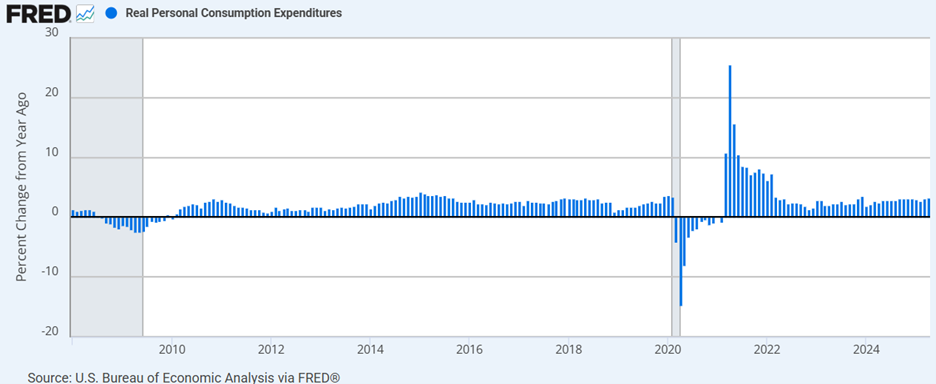
Consumers spent 3% more in May of 2025 than they did in May of 2024. This pace continues the robust spending levels that powered the 2024 economy to a nearly 3% growth rate overall. I have added the long lookback on the chart above to highlight just how impressive post-COVID consumption trends have been. Despite the pandemic, massive supply chain disruptions, historic inflation, the most aggressive interest rate hikes in history, the war in Europe, the global tariff shock and now elevated conflict in the Middle East, the US consumer has continued spending with historic vigor, without depleting savings and without overusing. Should some exogenous shock trigger recession, the health of the US consumer would likely restrict its depth. Absent an exogenous shock, the health of the US consumer foretells continued health for the US economy.
Have a great weekend!
-David
Sources: US Bureau of Economic Analysis, Federal Reserve Bank of St. Louis
This communication and its contents are for informational and educational purposes only and should not be used as the sole basis for any investment decision. Waddell & Associates does not provide personalized investment advice through this communication. The information contained herein is based on publicly available sources believed to be reliable but is not a representation, expressed or implied, as to the accuracy, completeness, or correctness of said information. Past performance does not guarantee future results.
">As Goes the US Consumer…
US nominal GDP for the calendar year ending 12/31/24 totaled $29 trillion. Consumer spending accounted for $19.8 trillion of that figure. To put this in perspective, China’s entire economy generated $18.8 trillion of GDP in 2024. Not only does consumption comprise the lion’s share of US GDP, but also the lion’s share of US GDP growth. The chart below chronicles the percentage of total GDP growth contributed by consumer spending growth:
Over the last decade and a half, consumer spending growth has driven 65% of annual US GDP growth. The one year when consumption declined, the US economy fell into recession. As is said, “As goes the US consumer…”
This week, amid all the confusion, anxiety, misinformation, and marketplace turmoil that Trump’s “Liberation Day” and Israel’s attack on Iran have triggered, let’s check the U.S. consumer’s vitals to see if any apparent weakness there might be fermenting hidden weakness elsewhere.
The US consumer net worth dipped slightly from record levels in the first quarter due to a pullback in equity prices. Equity prices have since recovered, reclaiming lost ground. With one-fifth of the US population now over the age of 65, net worth levels must remain healthy to support consumer confidence and retiree spending levels. For now, healthy net worth should sustain healthy spending.
While net worth supports spending capacity, real disposable income powers it daily. This calculation measures after-tax income adjusted for inflation. While many analysts focus on the employment data to determine consumer viability, jobs serve as a means to an end, and wages are the end. This number also includes government support inflows and investment income. The monthly employment reports do not capture these meaningful contributors. In the most recent data, real disposable income spending capacity rose 3% year-over-year, reflecting wage growth, social security inflation, and lower overall inflation levels. The US consumer exited April with substantial income-supported purchasing power.
The chart above captures consumer saving patterns, including the COVID stimulus anomaly. Note that consumers saved a significant portion of their stimulus payments, greatly enhancing household net worth during the period. The rapid drawdown into mid-2022 reflects the impact of record inflation, which rapidly depleted spending capacity. Since then, consumer savings have returned to more normal levels around 5%. Changes in savings activity serve as a psychological barometer for economists. For example, while consumers received healthy income gains in April, they spent less of it than in previous months, boosting savings levels. This likely correlates with the slight downtick in net worth and the large uptick in uncertainty caused by “Liberation Day”. This could indicate more cautious consumer behavior ahead, even with resilient income flows, but not enough to drive the economy into recession.
Consumers have multiple sources to fund their spending. As discussed, net worth levels remain healthy, disposable income levels remain healthy, and savings levels fall well within the historic norms that support spending. If needed, consumers can also draw on mortgages, credit cards, and credit lines to fund their consumption. During the current cycle, elevated interest rate levels make this somewhat problematic with 7% mortgage rates and 25% credit card rates. Fortunately, because the government overfilled our net worth reservoirs, consumers have relied less on credit during this cycle than in previous cycles. Media commentary on credit card debt levels and defaults rings false alarms. As my father taught me, it’s not the size of the note that matters – it’s your ability to tote the note that matters. Currently, US consumers spend less on debt service today than they did pre-COVID, even with far higher interest rates. These levels reflect early economic cycle behavior rather than late economic cycle behavior.
Consumers spent 3% more in May of 2025 than they did in May of 2024. This pace continues the robust spending levels that powered the 2024 economy to a nearly 3% growth rate overall. I have added the long lookback on the chart above to highlight just how impressive post-COVID consumption trends have been. Despite the pandemic, massive supply chain disruptions, historic inflation, the most aggressive interest rate hikes in history, the war in Europe, the global tariff shock and now elevated conflict in the Middle East, the US consumer has continued spending with historic vigor, without depleting savings and without overusing. Should some exogenous shock trigger recession, the health of the US consumer would likely restrict its depth. Absent an exogenous shock, the health of the US consumer foretells continued health for the US economy.
Have a great weekend!
-David
Sources: US Bureau of Economic Analysis, Federal Reserve Bank of St. Louis
This communication and its contents are for informational and educational purposes only and should not be used as the sole basis for any investment decision. Waddell & Associates does not provide personalized investment advice through this communication. The information contained herein is based on publicly available sources believed to be reliable but is not a representation, expressed or implied, as to the accuracy, completeness, or correctness of said information. Past performance does not guarantee future results.
" class="link-chevron">Research indicates that the number of publicly traded U.S. companies has roughly halved over the past two decades. This isn’t mere coincidence—it’s a fundamental shift in how businesses approach capital.
Companies are strategically choosing to remain private longer, which means their most dynamic growth phases often occur well before they ever appear on a public exchange. Some high-performing enterprises have no intention of going public at all.
For sophisticated investors, focusing exclusively on public markets means potentially missing an entire universe of opportunity.
This is precisely where alternative investments can play a significant role in a sophisticated portfolio. Beyond just private equity and debt, the alternatives ecosystem encompasses a diverse array of strategies—from hedge funds and venture capital to real assets like infrastructure, farmland, and commercial real estate.
I often describe alternatives as the essential “third leg of the stool.” When thoughtfully integrated, alternatives complement traditional public equities and fixed income to create a more structurally stable portfolio. This strategic advantage explains why alternatives have become a cornerstone for institutional investors like university endowments and sovereign wealth funds.
Yet, despite their compelling benefits, individual investors—even those with significant wealth—have been comparatively slower to incorporate alternatives into their wealth strategy. This presents both a challenge and an opportunity for families seeking to preserve and grow their wealth across generations.
Alternatives have some compelling advantages.
First, they can provide diversification through low correlation* with traditional investments. In other words, they don’t tend to move in lockstep with stocks or bonds. During periods of volatility, that can help smooth returns and reduce portfolio swings.
*Correlation, in this context, measures how investments move relative to each other. Assets with low or negative correlation don’t rise and fall together, which can help balance a portfolio.
Second, some alternative strategies have historically outpaced public markets. Private equity, for example, has outperformed the S&P 500 in different periods over the last 20 years.
Third, alternatives can provide exposure to innovative sectors and companies that are still in their early, high-growth years. Because companies today stay private longer, investors in private equity, venture capital, and other alternative strategies can access opportunities that aren’t available through the public markets alone.
Finally, alternatives can provide a psychological buffer during market volatility.
Unlike publicly traded investments, many alternatives are not priced daily. This lack of constant valuation can help investors stay focused on long-term goals rather than reacting to short-term market swings.
Nonetheless, alternatives remain surrounded by misconceptions that can prevent investors from leveraging these powerful tools.
Costs:
The first reaction I hear from clients exploring alternatives is sticker shock. Some alternative investments do carry higher fees—typically between 1% to 2% of assets under management plus a performance fee of 10% to 20% of profits.
However, this isn’t universally true. Mutual and exchange-traded funds that offer alternative strategies are typically prohibited from charging performance fees, although their expenses are higher than most other mutual funds and ETFs.
Transparency:
Transparency is another common concern. Unlike buying shares of Apple or Nvidia through a brokerage account, alternatives typically involve hiring managers to execute strategies through more complex structures. Managers usually disclose their investments quarterly, offering a limited view into their holdings.
Unrealistic expectations:
Some investors also have inflated expectations about alternatives based on stories they’ve heard, usually from a boastful relative around the Thanksgiving table. These anecdotes create misconceptions about the role alternatives should play in a sophisticated portfolio.
When we explore alternatives with you here at Waddell & Associates, we focus on how these assets might enhance your overall wealth strategy. This evaluation centers around several key dimensions:
Investment Time Horizon
Some alternative investments, like typical drawdown structure private equity, require commitments of 7-10 years or longer—an important consideration we explore in depth:
How does this timeline align with your wealth transition plans? Will these funds need to be accessible during a particular life season?
If you have multi-generational wealth objectives, longer-term alternative investments can serve as ideal vehicles for wealth earmarked for future generations.
Liquidity Strategy
We also examine a client’s comprehensive liquidity profile:
How might periodic or limited access to these funds affect your lifestyle needs and other financial objectives?
Rather than simply asking if clients are comfortable with illiquidity, we help visualize specific scenarios where limited access might impact plans, then develop strategies to address those potential situations.
Portfolio Integration
Alternatives should complement your existing investment approach, not dominate it. We consider:
How do these alternatives interact with your current holdings? What exposures are you seeking to enhance or minimize?
Remember, our conversations about alternatives are simply one aspect of our broader strategic partnership. As we explore these opportunities together, we’ll continue to place them in context with your complete wealth picture—ensuring any decisions align with both your long-term vision and near-term priorities.
New here? Learn about the Waddell & Associates difference and explore how you can work with us. We’d love to hear from you.
Matt Gentzkow is an Investment Strategist with Waddell & Associates
Sources: Commonfund.org, FSInvestments.com, Credit-Suisse.com
This communication and its contents are for informational and educational purposes only and should not be used as the sole basis for any investment decision. Waddell & Associates does not provide personalized investment advice through this communication. The information contained herein is based on publicly available sources believed to be reliable but is not a representation, expressed or implied, as to the accuracy, completeness, or correctness of said information. Past performance does not guarantee future results.
">
Research indicates that the number of publicly traded U.S. companies has roughly halved over the past two decades. This isn’t mere coincidence—it’s a fundamental shift in how businesses approach capital.
Companies are strategically choosing to remain private longer, which means their most dynamic growth phases often occur well before they ever appear on a public exchange. Some high-performing enterprises have no intention of going public at all.
For sophisticated investors, focusing exclusively on public markets means potentially missing an entire universe of opportunity.
This is precisely where alternative investments can play a significant role in a sophisticated portfolio. Beyond just private equity and debt, the alternatives ecosystem encompasses a diverse array of strategies—from hedge funds and venture capital to real assets like infrastructure, farmland, and commercial real estate.
I often describe alternatives as the essential “third leg of the stool.” When thoughtfully integrated, alternatives complement traditional public equities and fixed income to create a more structurally stable portfolio. This strategic advantage explains why alternatives have become a cornerstone for institutional investors like university endowments and sovereign wealth funds.
Yet, despite their compelling benefits, individual investors—even those with significant wealth—have been comparatively slower to incorporate alternatives into their wealth strategy. This presents both a challenge and an opportunity for families seeking to preserve and grow their wealth across generations.
Alternatives have some compelling advantages.
First, they can provide diversification through low correlation* with traditional investments. In other words, they don’t tend to move in lockstep with stocks or bonds. During periods of volatility, that can help smooth returns and reduce portfolio swings.
*Correlation, in this context, measures how investments move relative to each other. Assets with low or negative correlation don’t rise and fall together, which can help balance a portfolio.
Second, some alternative strategies have historically outpaced public markets. Private equity, for example, has outperformed the S&P 500 in different periods over the last 20 years.
Third, alternatives can provide exposure to innovative sectors and companies that are still in their early, high-growth years. Because companies today stay private longer, investors in private equity, venture capital, and other alternative strategies can access opportunities that aren’t available through the public markets alone.
Finally, alternatives can provide a psychological buffer during market volatility.
Unlike publicly traded investments, many alternatives are not priced daily. This lack of constant valuation can help investors stay focused on long-term goals rather than reacting to short-term market swings.
Nonetheless, alternatives remain surrounded by misconceptions that can prevent investors from leveraging these powerful tools.
Costs:
The first reaction I hear from clients exploring alternatives is sticker shock. Some alternative investments do carry higher fees—typically between 1% to 2% of assets under management plus a performance fee of 10% to 20% of profits.
However, this isn’t universally true. Mutual and exchange-traded funds that offer alternative strategies are typically prohibited from charging performance fees, although their expenses are higher than most other mutual funds and ETFs.
Transparency:
Transparency is another common concern. Unlike buying shares of Apple or Nvidia through a brokerage account, alternatives typically involve hiring managers to execute strategies through more complex structures. Managers usually disclose their investments quarterly, offering a limited view into their holdings.
Unrealistic expectations:
Some investors also have inflated expectations about alternatives based on stories they’ve heard, usually from a boastful relative around the Thanksgiving table. These anecdotes create misconceptions about the role alternatives should play in a sophisticated portfolio.
When we explore alternatives with you here at Waddell & Associates, we focus on how these assets might enhance your overall wealth strategy. This evaluation centers around several key dimensions:
Investment Time Horizon
Some alternative investments, like typical drawdown structure private equity, require commitments of 7-10 years or longer—an important consideration we explore in depth:
How does this timeline align with your wealth transition plans? Will these funds need to be accessible during a particular life season?
If you have multi-generational wealth objectives, longer-term alternative investments can serve as ideal vehicles for wealth earmarked for future generations.
Liquidity Strategy
We also examine a client’s comprehensive liquidity profile:
How might periodic or limited access to these funds affect your lifestyle needs and other financial objectives?
Rather than simply asking if clients are comfortable with illiquidity, we help visualize specific scenarios where limited access might impact plans, then develop strategies to address those potential situations.
Portfolio Integration
Alternatives should complement your existing investment approach, not dominate it. We consider:
How do these alternatives interact with your current holdings? What exposures are you seeking to enhance or minimize?
Remember, our conversations about alternatives are simply one aspect of our broader strategic partnership. As we explore these opportunities together, we’ll continue to place them in context with your complete wealth picture—ensuring any decisions align with both your long-term vision and near-term priorities.
New here? Learn about the Waddell & Associates difference and explore how you can work with us. We’d love to hear from you.
Matt Gentzkow is an Investment Strategist with Waddell & Associates
Sources: Commonfund.org, FSInvestments.com, Credit-Suisse.com
This communication and its contents are for informational and educational purposes only and should not be used as the sole basis for any investment decision. Waddell & Associates does not provide personalized investment advice through this communication. The information contained herein is based on publicly available sources believed to be reliable but is not a representation, expressed or implied, as to the accuracy, completeness, or correctness of said information. Past performance does not guarantee future results.
">Beyond Stocks and Bonds: The Strategic Role of Alternative Investments Before we discuss alternative investments, it’s worth noting an important shift in the investment landscape: public markets have contracted, and significantly so.Research indicates that the number of publicly traded U.S. companies has roughly halved over the past two decades. This isn’t mere coincidence—it’s a fundamental shift in how businesses approach capital.
Companies are strategically choosing to remain private longer, which means their most dynamic growth phases often occur well before they ever appear on a public exchange. Some high-performing enterprises have no intention of going public at all.
For sophisticated investors, focusing exclusively on public markets means potentially missing an entire universe of opportunity.
This is precisely where alternative investments can play a significant role in a sophisticated portfolio. Beyond just private equity and debt, the alternatives ecosystem encompasses a diverse array of strategies—from hedge funds and venture capital to real assets like infrastructure, farmland, and commercial real estate.
I often describe alternatives as the essential “third leg of the stool.” When thoughtfully integrated, alternatives complement traditional public equities and fixed income to create a more structurally stable portfolio. This strategic advantage explains why alternatives have become a cornerstone for institutional investors like university endowments and sovereign wealth funds.
Yet, despite their compelling benefits, individual investors—even those with significant wealth—have been comparatively slower to incorporate alternatives into their wealth strategy. This presents both a challenge and an opportunity for families seeking to preserve and grow their wealth across generations.
Alternatives have some compelling advantages.
First, they can provide diversification through low correlation* with traditional investments. In other words, they don’t tend to move in lockstep with stocks or bonds. During periods of volatility, that can help smooth returns and reduce portfolio swings.
*Correlation, in this context, measures how investments move relative to each other. Assets with low or negative correlation don’t rise and fall together, which can help balance a portfolio.
Second, some alternative strategies have historically outpaced public markets. Private equity, for example, has outperformed the S&P 500 in different periods over the last 20 years.
Third, alternatives can provide exposure to innovative sectors and companies that are still in their early, high-growth years. Because companies today stay private longer, investors in private equity, venture capital, and other alternative strategies can access opportunities that aren’t available through the public markets alone.
Finally, alternatives can provide a psychological buffer during market volatility.
Unlike publicly traded investments, many alternatives are not priced daily. This lack of constant valuation can help investors stay focused on long-term goals rather than reacting to short-term market swings.
Nonetheless, alternatives remain surrounded by misconceptions that can prevent investors from leveraging these powerful tools.
Costs:
The first reaction I hear from clients exploring alternatives is sticker shock. Some alternative investments do carry higher fees—typically between 1% to 2% of assets under management plus a performance fee of 10% to 20% of profits.
However, this isn’t universally true. Mutual and exchange-traded funds that offer alternative strategies are typically prohibited from charging performance fees, although their expenses are higher than most other mutual funds and ETFs.
Transparency:
Transparency is another common concern. Unlike buying shares of Apple or Nvidia through a brokerage account, alternatives typically involve hiring managers to execute strategies through more complex structures. Managers usually disclose their investments quarterly, offering a limited view into their holdings.
Unrealistic expectations:
Some investors also have inflated expectations about alternatives based on stories they’ve heard, usually from a boastful relative around the Thanksgiving table. These anecdotes create misconceptions about the role alternatives should play in a sophisticated portfolio.
When we explore alternatives with you here at Waddell & Associates, we focus on how these assets might enhance your overall wealth strategy. This evaluation centers around several key dimensions:
Investment Time Horizon
Some alternative investments, like typical drawdown structure private equity, require commitments of 7-10 years or longer—an important consideration we explore in depth:
How does this timeline align with your wealth transition plans? Will these funds need to be accessible during a particular life season?
If you have multi-generational wealth objectives, longer-term alternative investments can serve as ideal vehicles for wealth earmarked for future generations.
Liquidity Strategy
We also examine a client’s comprehensive liquidity profile:
How might periodic or limited access to these funds affect your lifestyle needs and other financial objectives?
Rather than simply asking if clients are comfortable with illiquidity, we help visualize specific scenarios where limited access might impact plans, then develop strategies to address those potential situations.
Portfolio Integration
Alternatives should complement your existing investment approach, not dominate it. We consider:
How do these alternatives interact with your current holdings? What exposures are you seeking to enhance or minimize?
Remember, our conversations about alternatives are simply one aspect of our broader strategic partnership. As we explore these opportunities together, we’ll continue to place them in context with your complete wealth picture—ensuring any decisions align with both your long-term vision and near-term priorities.
New here? Learn about the Waddell & Associates difference and explore how you can work with us. We’d love to hear from you.
Matt Gentzkow is an Investment Strategist with Waddell & Associates
Sources: Commonfund.org, FSInvestments.com, Credit-Suisse.com
This communication and its contents are for informational and educational purposes only and should not be used as the sole basis for any investment decision. Waddell & Associates does not provide personalized investment advice through this communication. The information contained herein is based on publicly available sources believed to be reliable but is not a representation, expressed or implied, as to the accuracy, completeness, or correctness of said information. Past performance does not guarantee future results.
" class="link-chevron">
Trump’s elimination of asylum and decisive efforts to close the southern border have reduced migrant flows to historic lows. The flow of immigration attempts over the last year has collapsed by 93%.
To no one’s surprise, inflation became the deciding issue in the 2024 election. Trump promised to slash inflation while Biden’s record grafted him to it. As an offset, analysts warned that Trump’s trade and immigration agenda would drive inflation higher, not lower. While the impacts of the tariff rates (also uncertain) haven’t fully registered, on Friday we received another pleasantly surprising inflation report. CPI and PCE inflation rates started the year at 2.99% and 2.54%, respectively. They have since fallen to 2.3% and 2.1% through April.
Interest rates have acted as the disciplinarian in the Trump trade war. The spike higher in the 10-year Treasury Yield following liberation day led to the leadership ascent of Treasury Secretary Bessent and a 90-day pause on all reciprocal tariffs. Since then, recession odds have fallen, and longer-term Treasury yields have vacillated within a reasonable range. Budget anxieties and the Moody’s downgrade have led to periodic spikes, but auctions overall remain healthy. To date, Trump’s pressure on Powell hasn’t resulted in lower overnight rates. The Federal Funds rate began the year at 4.5% and remains at 4.5% today. Further out on the curve, 2-year Treasury rates have fallen .30% this year, while 10-year Treasury rates have fallen .16%.
Last week the House of Representatives passed Trump’s Big Beautiful Bill on to the Senate. With a thin Senate majority and dispute resolution from both houses required for passage, tax cuts remain unassured. However, the betting markets seem pretty confident Trump will achieve this objective:
TBD.
Elon Musk returned to the private sector this week with DOGE falling well short of his objectives. However, the Trump administration’s efforts to “drain the swamp” will undoubtedly continue. Unfortunately, continued DOGE cost savings efforts within the discretionary budget will themselves get swamped by higher interest expenses, unchecked entitlement expansions, and increased defense spending.
In the first quarter of 2025, the US Government spent $140 billion more than it did in the first three months of 2024. Trump’s fiscal year will not officially begin until October 1st, 2025, so it’s a little early to judge his results, but so far, government expenditures have been growing, not shrinking.
Conversely, we have seen deregulatory efforts bear fruit. Through executive orders, Trump has slashed 31 EPA regulations and rescinded 78 Biden-era orders and regulations targeting DEI, climate change, immigration, and COVID-19. He also instituted a 10-1 mandate requiring the elimination of 10 regulations for every new regulation and a directive that the total cost of new regulations must be “significantly less than zero” ensuring a net reduction in regulatory costs.
The Federal Government collected $16.3 billion in tariff revenue in April. This number far exceeds the $7 billion collected last April and annualizes out to nearly $200 billion in collections. With the tariff rates and retaliation measures uncertain, these annualization figures could move far higher or far lower, but for the moment, US collections at its borders have surged.
While US Presidents and Treasury Secretaries historically default to promoting US Dollar strength, Trump and Bessent have noted that much of our trade deficit issues can be explained by over-valuation of the US dollar. Trump’s trade negotiations—including currency concessions and pressure on Powell to lower rates—align with his weak dollar objective. Of our largest trading partners, the Euro has appreciated nearly 10% against the US dollar so far this year, the yen Yen more than 9%, and the Yuan just over 1.5%. Textbook economics suggests that higher tariffs that reduce import volumes and increase export volumes should strengthen currency, but Trump’s negotiation style has produced just the opposite. Whether this has been an accident or not I leave for cocktail chatter. Per the data, the US dollar has weakened as intended.
Nope. First quarter GDP shrank .2% as the BEA reported in this week’s revision. That marks a significant slowing from 4th quarter’s GDP growth rate of 2.4% and 2.5% for last year overall. However, stripping away the historic import levels in anticipation of “Liberation Day” would have resulted in decidedly positive GDP growth for the quarter. Stripping out imports and inventory builds, the combination of consumer, government, and housing activity would have produced a GDP growth rate of 2.3%. Deducting average net export contributions would have resulted in a 2.2% growth rate—still lower than Q4 and last year’s average, but above the 1.9% seen as our long-run potential by the Federal Reserve. Nonetheless, the numbers are the numbers, and in the first quarter, US GDP shrank.
The S&P 500 hit an all-time high on February 19th, 2025—technically achieving Trump’s campaign objective. However, since then, the market has experienced both a historic decline and a historic recovery. While slightly positive on the year, the S&P 500 stands 4% below record highs.
Comically, while the US markets remain below their all-time highs, this week, the international markets—as measured by the MSCI All Country World ex-USA (ACWX)—hit new all-time highs. So far, Trump’s 2nd term has made ex-USA stock markets the greatest they have ever been. In sum, the market has begun to build up a tolerance for Trumps tactics as it gets more comfortable with the results.
Have a fantastic weekend!
-David
Sources: Federal Reserve Bank of St. Louis, Yardeni Research, YCharts, Polymarket, doge-tracker.com, US Treasury, JP Morgan Asset Management
This communication and its contents are for informational and educational purposes only and should not be used as the sole basis for any investment decision. Waddell & Associates does not provide personalized investment advice through this communication. The information contained herein is based on publicly available sources believed to be reliable but is not a representation, expressed or implied, as to the accuracy, completeness, or correctness of said information. Past performance does not guarantee future results.
">Tallying Trump
Trump’s elimination of asylum and decisive efforts to close the southern border have reduced migrant flows to historic lows. The flow of immigration attempts over the last year has collapsed by 93%.
To no one’s surprise, inflation became the deciding issue in the 2024 election. Trump promised to slash inflation while Biden’s record grafted him to it. As an offset, analysts warned that Trump’s trade and immigration agenda would drive inflation higher, not lower. While the impacts of the tariff rates (also uncertain) haven’t fully registered, on Friday we received another pleasantly surprising inflation report. CPI and PCE inflation rates started the year at 2.99% and 2.54%, respectively. They have since fallen to 2.3% and 2.1% through April.
Interest rates have acted as the disciplinarian in the Trump trade war. The spike higher in the 10-year Treasury Yield following liberation day led to the leadership ascent of Treasury Secretary Bessent and a 90-day pause on all reciprocal tariffs. Since then, recession odds have fallen, and longer-term Treasury yields have vacillated within a reasonable range. Budget anxieties and the Moody’s downgrade have led to periodic spikes, but auctions overall remain healthy. To date, Trump’s pressure on Powell hasn’t resulted in lower overnight rates. The Federal Funds rate began the year at 4.5% and remains at 4.5% today. Further out on the curve, 2-year Treasury rates have fallen .30% this year, while 10-year Treasury rates have fallen .16%.
Last week the House of Representatives passed Trump’s Big Beautiful Bill on to the Senate. With a thin Senate majority and dispute resolution from both houses required for passage, tax cuts remain unassured. However, the betting markets seem pretty confident Trump will achieve this objective:
TBD.
Elon Musk returned to the private sector this week with DOGE falling well short of his objectives. However, the Trump administration’s efforts to “drain the swamp” will undoubtedly continue. Unfortunately, continued DOGE cost savings efforts within the discretionary budget will themselves get swamped by higher interest expenses, unchecked entitlement expansions, and increased defense spending.
In the first quarter of 2025, the US Government spent $140 billion more than it did in the first three months of 2024. Trump’s fiscal year will not officially begin until October 1st, 2025, so it’s a little early to judge his results, but so far, government expenditures have been growing, not shrinking.
Conversely, we have seen deregulatory efforts bear fruit. Through executive orders, Trump has slashed 31 EPA regulations and rescinded 78 Biden-era orders and regulations targeting DEI, climate change, immigration, and COVID-19. He also instituted a 10-1 mandate requiring the elimination of 10 regulations for every new regulation and a directive that the total cost of new regulations must be “significantly less than zero” ensuring a net reduction in regulatory costs.
The Federal Government collected $16.3 billion in tariff revenue in April. This number far exceeds the $7 billion collected last April and annualizes out to nearly $200 billion in collections. With the tariff rates and retaliation measures uncertain, these annualization figures could move far higher or far lower, but for the moment, US collections at its borders have surged.
While US Presidents and Treasury Secretaries historically default to promoting US Dollar strength, Trump and Bessent have noted that much of our trade deficit issues can be explained by over-valuation of the US dollar. Trump’s trade negotiations—including currency concessions and pressure on Powell to lower rates—align with his weak dollar objective. Of our largest trading partners, the Euro has appreciated nearly 10% against the US dollar so far this year, the yen Yen more than 9%, and the Yuan just over 1.5%. Textbook economics suggests that higher tariffs that reduce import volumes and increase export volumes should strengthen currency, but Trump’s negotiation style has produced just the opposite. Whether this has been an accident or not I leave for cocktail chatter. Per the data, the US dollar has weakened as intended.
Nope. First quarter GDP shrank .2% as the BEA reported in this week’s revision. That marks a significant slowing from 4th quarter’s GDP growth rate of 2.4% and 2.5% for last year overall. However, stripping away the historic import levels in anticipation of “Liberation Day” would have resulted in decidedly positive GDP growth for the quarter. Stripping out imports and inventory builds, the combination of consumer, government, and housing activity would have produced a GDP growth rate of 2.3%. Deducting average net export contributions would have resulted in a 2.2% growth rate—still lower than Q4 and last year’s average, but above the 1.9% seen as our long-run potential by the Federal Reserve. Nonetheless, the numbers are the numbers, and in the first quarter, US GDP shrank.
The S&P 500 hit an all-time high on February 19th, 2025—technically achieving Trump’s campaign objective. However, since then, the market has experienced both a historic decline and a historic recovery. While slightly positive on the year, the S&P 500 stands 4% below record highs.
Comically, while the US markets remain below their all-time highs, this week, the international markets—as measured by the MSCI All Country World ex-USA (ACWX)—hit new all-time highs. So far, Trump’s 2nd term has made ex-USA stock markets the greatest they have ever been. In sum, the market has begun to build up a tolerance for Trumps tactics as it gets more comfortable with the results.
Have a fantastic weekend!
-David
Sources: Federal Reserve Bank of St. Louis, Yardeni Research, YCharts, Polymarket, doge-tracker.com, US Treasury, JP Morgan Asset Management
This communication and its contents are for informational and educational purposes only and should not be used as the sole basis for any investment decision. Waddell & Associates does not provide personalized investment advice through this communication. The information contained herein is based on publicly available sources believed to be reliable but is not a representation, expressed or implied, as to the accuracy, completeness, or correctness of said information. Past performance does not guarantee future results.
" class="link-chevron">As anticipated, stocks are slightly higher despite the Mag 7 becoming the Lag 7, the sectors most closely aligned with Trump’s American re-industrialization ambitions (including industrials and financials) have outperformed, and the yields on longer-dated Treasuries remain lofty, supported by resilient economics.
The heightened animal spirits that concerned us most entering the year have also reset. The following chart divides professional and retail investor bulls (optimists) by the bears (pessimists):
Even after a V-shaped recovery in stocks, investor sentiment remains well below its long-term average, particularly for professional investors. As sentiment has plunged, so have economic and earnings expectations, lowering the bar for upside surprises offering support for markets as we near the year’s midpoint.
In sum, the economy and markets have once again proven their resiliency despite the most recent macro shock called “Liberation Day.” From here, the combination of lower sentiment and fundamental expectations mixed with the three cuts to come should ratify early April’s lows.
Tax cuts provide economic stimulus. This week, the House republicans within the Ways and Means Committee approved its 389-page version of the tax reconciliation bill. Their version includes the permanent extension of the 2017 TCJA legislation “status quo,” but also tacked on an another trillion or so in tax relief—including accelerated depreciation for businesses, an increase in the SALT deduction for homeowners, tax elimination on tips and overtime for consumers, and more relief for parents and seniors.
Among several other provisions was the introduction of the “MAGA account,” which aims to encourage tax exempt savings for kids under the age of 18. The House budget committee now has the bill, anticipating House passage before the month’s end. The Senate will then begin their approval process, calibrated towards a camera worthy July 4th signing for President Trump.
Rate cuts provide economic stimulus. April’s Consumer Price Inflation data, released on Tuesday, pleasantly surprised investors. Over the past twelve months, prices have risen a mere 2.3%, the lowest level of annual inflation since February of 2021 and well within range of the Fed’s 2% target. This should add comfort for the Fed that absent temporary tariff impacts, underlying inflation rates remain in descent.
Conversely, as we mentioned above, the hard economic data has proven surprisingly resilient. The Fed’s GDPNow model forecasts a 2.4% GDP growth rate for the second quarter, well above the negative .3% registered in the first quarter, distorted by the surge in imports. Given the economic drag associated with higher tariffs, tariff reductions simultaneously reduce recession odds and rate cut expectations as seen below:
Investors have reduced recession odds from near 70% after Liberation Day to less than 40% while Fed Funds forecasters have cut their expectations to only one rate cut over the next six months—compared with three just a month ago. However, even with tariffs lingering in the foreground, the market expects the Fed will cut rates two more times, for three total, between now and May of 2026.
Tariff cuts provide economic stimulus. While it seems paradoxical to highlight Trump’s Tariff cuts as a source of support given that he raised them from 2% to nearly 30% last month, they have also fallen by 40% since Liberation Day.
Markets care more about trends than levels, and at this point, any trade deal qualifies as economic stimulus, like tax cuts and rate cuts. President Trump has recently reached an agreement with the UK, de-escalated massively with China, and secured a $600 billion investment from Saudi Arabia.
According to Kevin Hassett, the Director of the White House National Economic Council, we should see 24 more trade deals in short order. Each of these represents mini-stimulus injections for the US economy.
We forecast that Trump’s tariff campaign would result in a 10% increase in tariff rates overall in 2025. Based upon the UK deal as a blueprint, the 10% universal tariff rate will likely remain post trade negotiations worldwide. If so, GDP growth, inflation rates, and corporate earnings growth should all support mild stock market appreciation and longer-term interest rates within these levels into year end.
Have a great week!
-David
Sources: Polymarket, Yardeni, The Budget Lab
This communication and its contents are for informational and educational purposes only and should not be used as the sole basis for any investment decision. Waddell & Associates does not provide personalized investment advice through this communication. The information contained herein is based on publicly available sources believed to be reliable but is not a representation, expressed or implied, as to the accuracy, completeness, or correctness of said information. Past performance does not guarantee future results.
">Hitting ResetAs anticipated, stocks are slightly higher despite the Mag 7 becoming the Lag 7, the sectors most closely aligned with Trump’s American re-industrialization ambitions (including industrials and financials) have outperformed, and the yields on longer-dated Treasuries remain lofty, supported by resilient economics.
The heightened animal spirits that concerned us most entering the year have also reset. The following chart divides professional and retail investor bulls (optimists) by the bears (pessimists):
Even after a V-shaped recovery in stocks, investor sentiment remains well below its long-term average, particularly for professional investors. As sentiment has plunged, so have economic and earnings expectations, lowering the bar for upside surprises offering support for markets as we near the year’s midpoint.
In sum, the economy and markets have once again proven their resiliency despite the most recent macro shock called “Liberation Day.” From here, the combination of lower sentiment and fundamental expectations mixed with the three cuts to come should ratify early April’s lows.
Tax cuts provide economic stimulus. This week, the House republicans within the Ways and Means Committee approved its 389-page version of the tax reconciliation bill. Their version includes the permanent extension of the 2017 TCJA legislation “status quo,” but also tacked on an another trillion or so in tax relief—including accelerated depreciation for businesses, an increase in the SALT deduction for homeowners, tax elimination on tips and overtime for consumers, and more relief for parents and seniors.
Among several other provisions was the introduction of the “MAGA account,” which aims to encourage tax exempt savings for kids under the age of 18. The House budget committee now has the bill, anticipating House passage before the month’s end. The Senate will then begin their approval process, calibrated towards a camera worthy July 4th signing for President Trump.
Rate cuts provide economic stimulus. April’s Consumer Price Inflation data, released on Tuesday, pleasantly surprised investors. Over the past twelve months, prices have risen a mere 2.3%, the lowest level of annual inflation since February of 2021 and well within range of the Fed’s 2% target. This should add comfort for the Fed that absent temporary tariff impacts, underlying inflation rates remain in descent.
Conversely, as we mentioned above, the hard economic data has proven surprisingly resilient. The Fed’s GDPNow model forecasts a 2.4% GDP growth rate for the second quarter, well above the negative .3% registered in the first quarter, distorted by the surge in imports. Given the economic drag associated with higher tariffs, tariff reductions simultaneously reduce recession odds and rate cut expectations as seen below:
Investors have reduced recession odds from near 70% after Liberation Day to less than 40% while Fed Funds forecasters have cut their expectations to only one rate cut over the next six months—compared with three just a month ago. However, even with tariffs lingering in the foreground, the market expects the Fed will cut rates two more times, for three total, between now and May of 2026.
Tariff cuts provide economic stimulus. While it seems paradoxical to highlight Trump’s Tariff cuts as a source of support given that he raised them from 2% to nearly 30% last month, they have also fallen by 40% since Liberation Day.
Markets care more about trends than levels, and at this point, any trade deal qualifies as economic stimulus, like tax cuts and rate cuts. President Trump has recently reached an agreement with the UK, de-escalated massively with China, and secured a $600 billion investment from Saudi Arabia.
According to Kevin Hassett, the Director of the White House National Economic Council, we should see 24 more trade deals in short order. Each of these represents mini-stimulus injections for the US economy.
We forecast that Trump’s tariff campaign would result in a 10% increase in tariff rates overall in 2025. Based upon the UK deal as a blueprint, the 10% universal tariff rate will likely remain post trade negotiations worldwide. If so, GDP growth, inflation rates, and corporate earnings growth should all support mild stock market appreciation and longer-term interest rates within these levels into year end.
Have a great week!
-David
Sources: Polymarket, Yardeni, The Budget Lab
This communication and its contents are for informational and educational purposes only and should not be used as the sole basis for any investment decision. Waddell & Associates does not provide personalized investment advice through this communication. The information contained herein is based on publicly available sources believed to be reliable but is not a representation, expressed or implied, as to the accuracy, completeness, or correctness of said information. Past performance does not guarantee future results.
" class="link-chevron">Q1 2025 earnings growth of the S&P500 sits at 12.1%, and while companies have cut guidance and expectations for Q2 and Q3, their management teams have also agreed to hit the buy button on their own company stocks. Corporate buybacks, or when a company repurchases its own shares in the open market, are hitting record highs:
Corporate buybacks are important to investors for a few different reasons:
I’ve written here before about market structure and its dynamics, but not specifically on buybacks. Markets, and specifically equity prices, are a constant valuation of supply and demand. Buybacks have been around for a few decades; however, the practice has grown substantially over the last fifteen years:
Though measured quarterly, you can see that in 2009, just roughly $150 billion was spent on share repurchases. In 2022? Well over $1 trillion. US companies are scooping up their own stock at depressed prices. These buyback flows prove supportive to equity prices on both sides of supply and demand, as the actual number of shares outstanding decreases, while simultaneously driving demand higher as they purchase the shares themselves on the open market.
The underlying strength in buybacks during periods of market distress can help guide us through corrective phases in prices. Peaks in recent share repurchases came in 2018, 2020, 2022, and now 2025. As US companies generate record profit margins, they increasingly deliver capital back to shareholders through repurchases. Management teams have been some of the best price dip buyers over the last decade. If the recent record increase in announced buybacks in the S&P is any indication, we should have positive flows in the market supporting equities over the intermediate term as the announced plans are executed.
Though corporate buybacks are positive for investors, there are some who argue that corporate buybacks are glorified financial engineering, because corporate buybacks augment underlying valuation metrics. Let’s explore.
When a company decides to buy back its stock on the open market, it reduces the shares outstanding for the company. If net income remains constant, it will increase the company’s earnings per share metric:
Earnings Per Share = Net Income / Shares Outstanding
For example:
$100 million net income / 50 million shares = $2.00 Earnings Per Share
After buying back 10 million shares:
$100 million net income / 40 million shares = $2.50 Earnings Per Share
Voila! An increase in EPS!
Even further, an increase in EPS is supportive of valuation metrics like P/E ratios (price/earnings). Again, this is just math, but follow me here. If EPS increases via a corporate buyback, and stock prices remain unchanged, the P/E ratio will fall simply because the denominator (EPS) has increased. Given the decrease in P/E, a company’s stock or even an index could look “cheaper” from a valuation standpoint, perpetuating more buy-side demand for the stock or index. Why does this matter for investors? As I touched on last week, companies have begun reducing guidance and EPS growth for the latter half of the year, while now also announcing stock buybacks. Since companies are mathematically increasing EPS through reducing shares outstanding (denominator of EPS), if they at all beat expectations on net income in the coming quarters (numerator of EPS), and market prices stay relatively unchanged, the market could be “undervalued” from a P/E ratio perspective later this year, perpetuating more demand for equities. You can call it a buyback or financial engineering, but it’s just math, and buybacks are naturally supportive of equity prices, ultimately benefiting investors.
Have a great weekend!
-Matt
Sources: Yardeni, Bloomberg Finance LP, Deutsche Bank
This communication and its contents are for informational and educational purposes only and should not be used as the sole basis for any investment decision. Waddell & Associates does not provide personalized investment advice through this communication. The information contained herein is based on publicly available sources believed to be reliable but is not a representation, expressed or implied, as to the accuracy, completeness, or correctness of said information. Past performance does not guarantee future results.
">Corporate Buybacks: Inspiring Confidence or Engineering Financials?Q1 2025 earnings growth of the S&P500 sits at 12.1%, and while companies have cut guidance and expectations for Q2 and Q3, their management teams have also agreed to hit the buy button on their own company stocks. Corporate buybacks, or when a company repurchases its own shares in the open market, are hitting record highs:
Corporate buybacks are important to investors for a few different reasons:
I’ve written here before about market structure and its dynamics, but not specifically on buybacks. Markets, and specifically equity prices, are a constant valuation of supply and demand. Buybacks have been around for a few decades; however, the practice has grown substantially over the last fifteen years:
Though measured quarterly, you can see that in 2009, just roughly $150 billion was spent on share repurchases. In 2022? Well over $1 trillion. US companies are scooping up their own stock at depressed prices. These buyback flows prove supportive to equity prices on both sides of supply and demand, as the actual number of shares outstanding decreases, while simultaneously driving demand higher as they purchase the shares themselves on the open market.
The underlying strength in buybacks during periods of market distress can help guide us through corrective phases in prices. Peaks in recent share repurchases came in 2018, 2020, 2022, and now 2025. As US companies generate record profit margins, they increasingly deliver capital back to shareholders through repurchases. Management teams have been some of the best price dip buyers over the last decade. If the recent record increase in announced buybacks in the S&P is any indication, we should have positive flows in the market supporting equities over the intermediate term as the announced plans are executed.
Though corporate buybacks are positive for investors, there are some who argue that corporate buybacks are glorified financial engineering, because corporate buybacks augment underlying valuation metrics. Let’s explore.
When a company decides to buy back its stock on the open market, it reduces the shares outstanding for the company. If net income remains constant, it will increase the company’s earnings per share metric:
Earnings Per Share = Net Income / Shares Outstanding
For example:
$100 million net income / 50 million shares = $2.00 Earnings Per Share
After buying back 10 million shares:
$100 million net income / 40 million shares = $2.50 Earnings Per Share
Voila! An increase in EPS!
Even further, an increase in EPS is supportive of valuation metrics like P/E ratios (price/earnings). Again, this is just math, but follow me here. If EPS increases via a corporate buyback, and stock prices remain unchanged, the P/E ratio will fall simply because the denominator (EPS) has increased. Given the decrease in P/E, a company’s stock or even an index could look “cheaper” from a valuation standpoint, perpetuating more buy-side demand for the stock or index. Why does this matter for investors? As I touched on last week, companies have begun reducing guidance and EPS growth for the latter half of the year, while now also announcing stock buybacks. Since companies are mathematically increasing EPS through reducing shares outstanding (denominator of EPS), if they at all beat expectations on net income in the coming quarters (numerator of EPS), and market prices stay relatively unchanged, the market could be “undervalued” from a P/E ratio perspective later this year, perpetuating more demand for equities. You can call it a buyback or financial engineering, but it’s just math, and buybacks are naturally supportive of equity prices, ultimately benefiting investors.
Have a great weekend!
-Matt
Sources: Yardeni, Bloomberg Finance LP, Deutsche Bank
This communication and its contents are for informational and educational purposes only and should not be used as the sole basis for any investment decision. Waddell & Associates does not provide personalized investment advice through this communication. The information contained herein is based on publicly available sources believed to be reliable but is not a representation, expressed or implied, as to the accuracy, completeness, or correctness of said information. Past performance does not guarantee future results.
" class="link-chevron">